
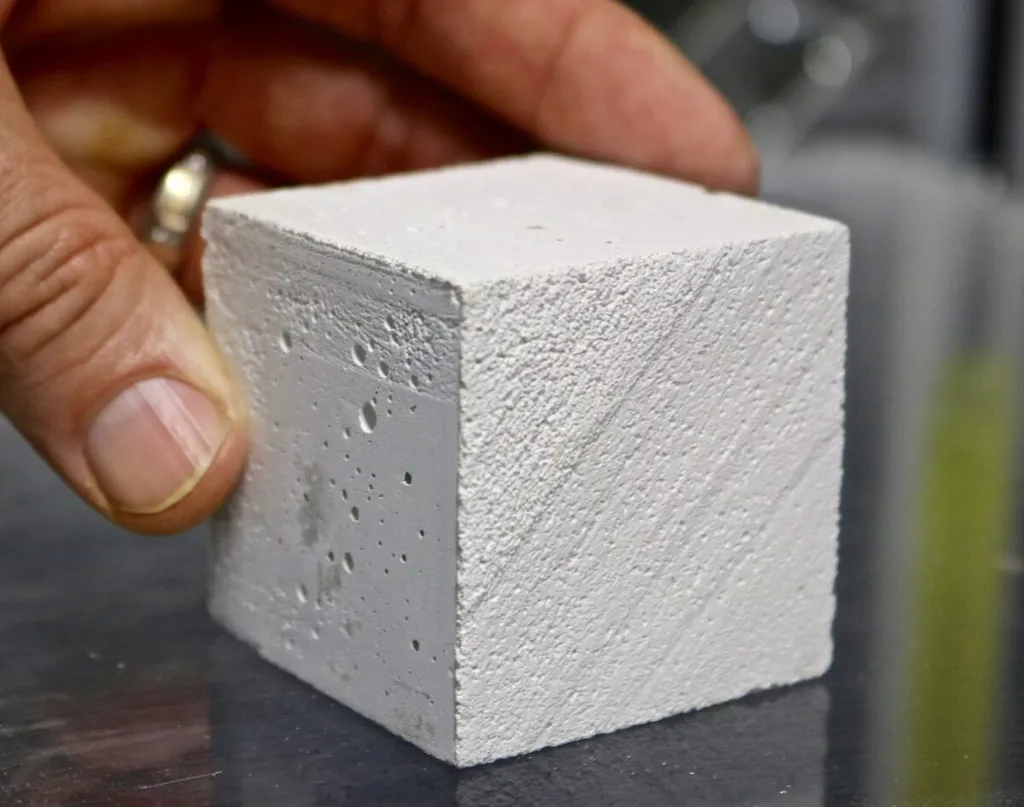
In a groundbreaking study published in the *Emerging Technologies and Engineering Journal* (translated from Kurdish as *Journal of Emerging Technologies and Engineering*), researchers have uncovered a promising avenue for sustainable concrete production using natural admixtures. The research, led by Twana Othman M.Amin from the Civil Engineering Department at the University of Sulaimani in Iraq, explores the potential of organic materials as eco-friendly alternatives to traditional chemical admixtures in concrete.
Concrete, the world’s second most utilized material, often relies on chemical admixtures to enhance its properties. However, these chemicals can pose significant health and environmental risks. Amin’s research highlights a more sustainable solution: natural admixtures derived from fruits, herbs, and animal products. These organic alternatives not only reduce environmental impact but also cut costs, making them an attractive option for the construction industry.
The study identifies several natural additives that significantly enhance the mechanical properties of concrete. Among these are palm liquor, mulberry extract, and okra extract. “The findings emphasize the importance of utilizing naturally occurring materials in concrete construction,” Amin explains. “This shift toward organic admixtures is not only effective but also environmentally friendly.”
The research underscores the potential of these natural admixtures to improve the durability and compressive strength of concrete. For instance, additives like grape extract, black pulp, and cactus have shown promising results in enhancing the mechanical properties of mortar and concrete. These natural alternatives are not only more environmentally friendly but also less expensive than their chemical counterparts.
One of the key advantages of natural admixtures is their accessibility and ease of production. “Advanced technology is not needed to manufacture them,” Amin notes. This makes them particularly suitable for regions with limited resources, offering a cost-effective and sustainable solution for the concrete industry.
The implications of this research are far-reaching, particularly for the energy sector. As the demand for sustainable construction practices grows, the use of natural admixtures could significantly reduce the environmental footprint of large-scale construction projects. This shift could also lead to cost savings, making it an attractive option for developers and contractors alike.
Moreover, the study highlights the potential for further research into the behavior of natural additives. Understanding how different plant and animal sources affect the properties of concrete could open up new avenues for innovation in the field. “The behavior of natural additives is strongly influenced by the plant or resource source,” Amin explains. This suggests that there is still much to learn about the optimal use of these materials.
As the construction industry continues to evolve, the adoption of natural admixtures could play a crucial role in shaping the future of sustainable building practices. By embracing these eco-friendly alternatives, the industry can enhance performance while addressing ecological concerns. This research not only provides a compelling case for the use of natural admixtures but also sets the stage for further exploration into the potential of organic materials in construction.
In conclusion, the study published in the *Emerging Technologies and Engineering Journal* offers a glimpse into the future of sustainable concrete production. By leveraging the power of natural admixtures, the construction industry can take a significant step toward reducing its environmental impact while improving the durability and strength of concrete structures. This research is a testament to the potential of organic materials and their role in shaping the future of construction.