
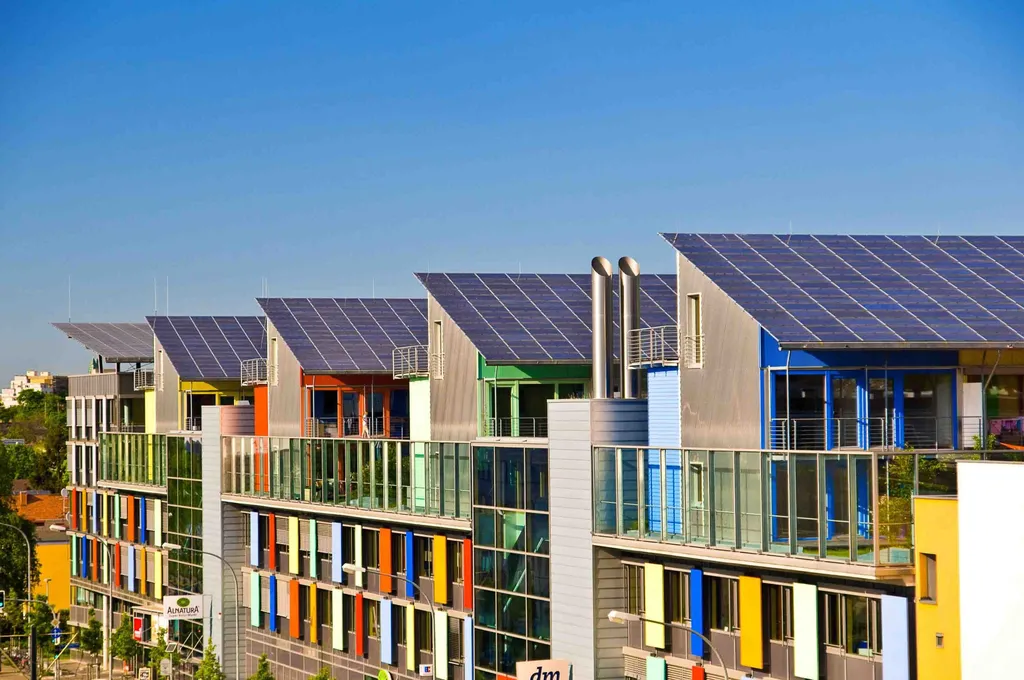
In the face of escalating environmental challenges and natural disasters, the concept of “resilient cities” has emerged as a critical focus in global urban planning and risk management. A recent study published in *Fengjing Yuanlin* (translated as “Scenery and Gardens”) by Yinong Li of the School of Landscape Architecture at Beijing Forestry University sheds light on Germany’s pioneering efforts in this arena, offering valuable insights for the construction industry and energy sector.
Germany’s journey towards resilient city construction has been marked by significant milestones, including the 2020 COVID-19 pandemic and the devastating 2021 Ahr Valley floods. These events have propelled the country’s theoretical and practical approaches to resilient urban development. “Resilient city” has gradually become a core concept in German urban master planning, particularly in the latter half of the 2010s.
Li’s research, which employs bibliometric analysis and visualization of publications from 2010 to 2025, reveals a steady increase in academic interest in resilient cities. The study highlights that climate-related terms such as climate change, climate change adaptation, and climate resilience are frequently discussed, reflecting the mainstream influence of the United Nations Sustainable Development Goals (SDGs). “The core definition of a ‘resilient city’ involves the robustness, redundancy, diversity, and flexibility of various urban elements during crises or disasters, as well as the recovery and innovative learning capabilities to maintain basic system functions,” Li explains.
The study also underscores the importance of decentralized economic and infrastructure systems, efficient response mechanisms, and cross-sectoral planning. These elements are crucial for enhancing the resilience of urban systems and minimizing disruption duration during sudden disasters or crises.
For the energy sector, the implications are profound. Resilient city construction necessitates robust and adaptable infrastructure, including energy systems that can withstand and quickly recover from disruptions. This could drive demand for innovative energy solutions, such as microgrids, energy storage systems, and decentralized energy generation, all of which are critical for ensuring energy security and sustainability in the face of climate change and other risks.
Moreover, the study’s recommendations for China’s resilient city construction—developing targeted action guidelines, creating comprehensive risk maps, and enhancing interdisciplinary collaboration—could serve as a blueprint for other countries aiming to bolster their urban resilience. As Li notes, “Enhancing interdisciplinary and cross-departmental collaboration is essential to promote goal-coordinated and systematic resilient city construction.”
The research published in *Fengjing Yuanlin* not only provides a comprehensive overview of Germany’s progress in resilient city construction but also offers practical guidance for other nations. By learning from Germany’s experiences and challenges, the global construction industry and energy sector can better prepare for and mitigate the impacts of environmental changes and natural disasters, ultimately fostering more sustainable and resilient urban environments.