
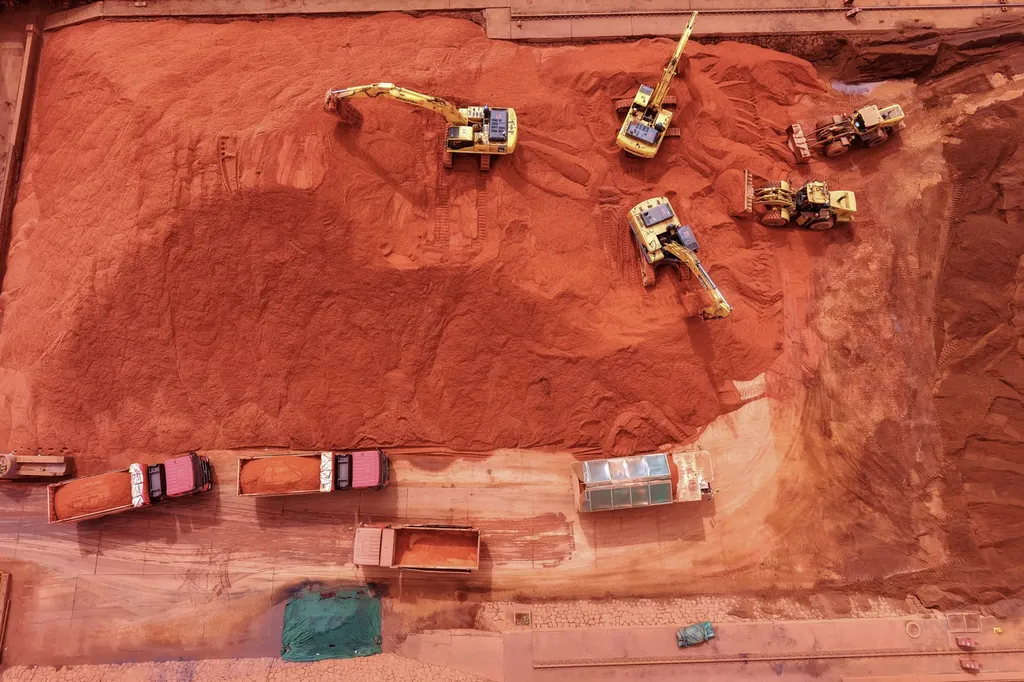
In the heart of China, researchers are turning waste into strength, quite literally. Yongwei Gao, a professor at the School of Mechanical Engineering, North China University of Water Resources and Electric Power, has led a groundbreaking study that could revolutionize the mining industry’s approach to tailings management. The research, published in the journal Buildings (translated as “建筑物” in English), focuses on developing a high-performance grouting material using coal gangue and sludge, two common byproducts of coal mining.
The study, which employed an orthogonal experimental design, systematically investigated the effects of various factors on the compressive strength of the geopolymer created from these waste materials. The results were promising, with the optimal mix achieving a 3-day compressive strength of 34.5 MPa. This is a significant finding, as it demonstrates the potential of these waste materials to be transformed into a valuable resource.
“The water–binder ratio had the most significant effect on the polymerization performance of the coal gangue/sludge-based geopolymer,” Gao explained. “We found that as the water–binder ratio decreased, the compressive strength increased. Moreover, the Ca²⁺ provided by the sludge directly promoted the formation of new calcium-containing products, which played a crucial role in improving the strength of the geopolymer.”
The implications of this research for the energy sector are substantial. The mining industry has long grappled with the challenge of managing tailings, the waste materials left over after the extraction of valuable minerals. These tailings often end up in tailings dams, which can pose significant environmental and safety risks. By transforming these waste materials into a high-performance grouting material, the mining industry could not only reduce its environmental footprint but also create a new revenue stream.
Furthermore, the developed geopolymer exhibits a significantly lower carbon footprint compared to conventional cement-based grouting materials. This aligns with the growing global push towards sustainable and green construction practices. As the world increasingly prioritizes environmental sustainability, innovations like this could become a key differentiator for companies in the energy sector.
The study also sheds light on the microstructure of the geopolymer, with microscopic test methods such as XRD and SEM revealing the mineral composition and microstructure. This understanding could pave the way for further advancements in the field, as researchers gain a deeper insight into the behavior of these materials.
As the world continues to grapple with the challenges of climate change and resource depletion, innovations like this offer a glimmer of hope. They demonstrate that with the right approach, waste can be transformed into a valuable resource, and sustainability can go hand in hand with profitability. The research led by Gao is a testament to this, and it will be fascinating to see how this field evolves in the coming years.