
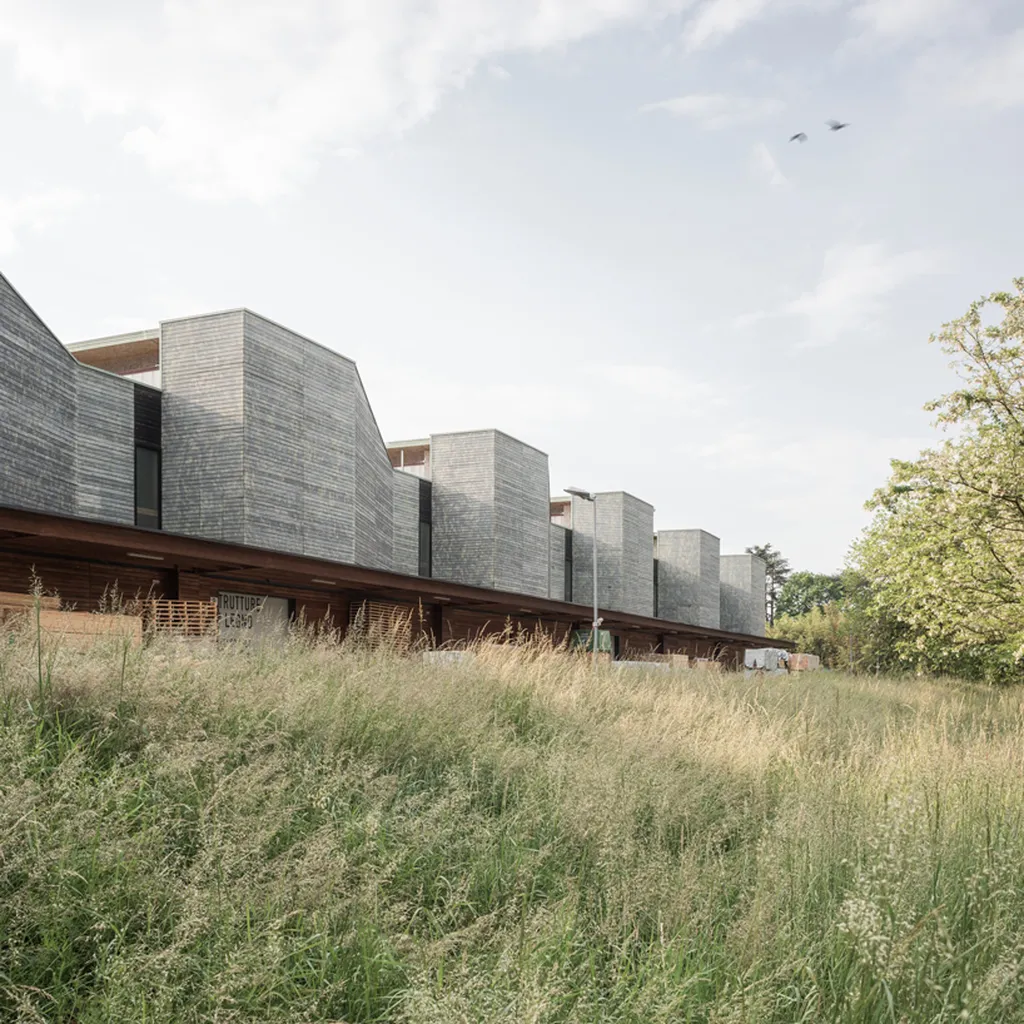
In the ever-evolving world of construction and energy efficiency, a groundbreaking study led by Antonello Monsù Scolaro from the Department of Architecture, Design and Urban Planning at the University of Sassari in Italy is set to redefine how we think about building facades. Published in the journal *Energies* (which translates to “Energies” in English), this research delves into the realm of adaptive facades, offering a fresh perspective on their potential to revolutionize energy performance in buildings.
Adaptive facades are not your average building envelopes. They are a sophisticated blend of innovative technologies, materials, and components, often incorporating mechanical, electronic, or digital advancements from other industries. These facades go beyond mere aesthetics; they integrate functionality and energy performance into a single, dynamic system. As Monsù Scolaro explains, “Adaptive facades represent a complex combination of various technologies and materials, requiring a constant multidisciplinary systemic approach.”
The study, which analyzed a database of 329 building envelopes, reveals that most adaptive facade systems focus on short-term strategies, with response times measured in seconds or minutes. However, the research highlights a significant gap in the exploration of medium- to long-term adaptability. This is where the true potential lies, according to Monsù Scolaro. “We need to consider durability and circularity to extend the perspective beyond the building’s service life,” he asserts.
The implications for the energy sector are profound. By incorporating long-term strategies that focus on material durability and resilience through system regeneration and reuse, buildings can maintain their energy performance over time. This not only reduces degradation but also supports sustainable lifecycle approaches, a critical factor in today’s environmentally conscious world.
The research suggests that the future of adaptive facades lies in integrating these long-term strategies with reusability and circularity. This shift could lead to a paradigm change in how buildings are designed and constructed, with a greater emphasis on sustainability and energy efficiency.
For the energy sector, this means new opportunities for innovation and development. As buildings become more energy-efficient, the demand for advanced facade technologies is likely to grow. This could spur investment in research and development, leading to the creation of new products and services that cater to this evolving market.
In conclusion, Monsù Scolaro’s research offers a compelling vision for the future of adaptive facades. By embracing a multidisciplinary approach and focusing on durability and circularity, the construction industry can take a significant step towards achieving its sustainability goals. For the energy sector, this represents a unique opportunity to drive innovation and shape the buildings of tomorrow.