
In the quest for sustainable construction materials, a recent study published in the journal *Buildings* (translated from Romanian) has shed light on the long-term performance of wood–cement composites, offering promising insights for the industry. Led by Dorin Maier from the Faculty of Civil Engineering at the Technical University of Cluj-Napoca in Romania, the research explores how different types of wood waste can be valorized in cement-based materials, potentially reducing the environmental footprint of the construction sector.
The study focused on the long-term mechanical behavior of Portland-cement mortars incorporating 5% by mass of four types of wood waste: spruce, oak, beech, and oriented strand board (OSB). Specimens were tested after 28 days and approximately 242 days of curing under natural laboratory conditions to assess the evolution of their properties.
The results were revealing. Composites with spruce sawdust, oak, beech, and OSB exhibited remarkable stability, with strength variations generally within ±8% over the extended period. “This supports a scenario of matrix stabilization,” Maier explained, indicating that these materials could be reliable for long-term use. However, mortar with spruce shavings suffered a significant strength reduction of approximately 25%, likely due to its high water demand and porous resulting matrix.
All wood-composite mortars showed a substantial density reduction of 20–36% compared to the reference, highlighting their potential as lightweight materials. The findings confirm that OSB and oak waste provide the best overall performance, combining higher initial strength with excellent long-term stability.
This research is a significant step forward in understanding the long-term durability of wood–cement composites. “Unlike previous studies that primarily assessed short-term strength, this paper provides one of the few comparative long-term assessments under natural curing conditions,” Maier noted. The study highlights the stabilization–degradation mechanisms across different wood types, offering valuable insights for the construction industry.
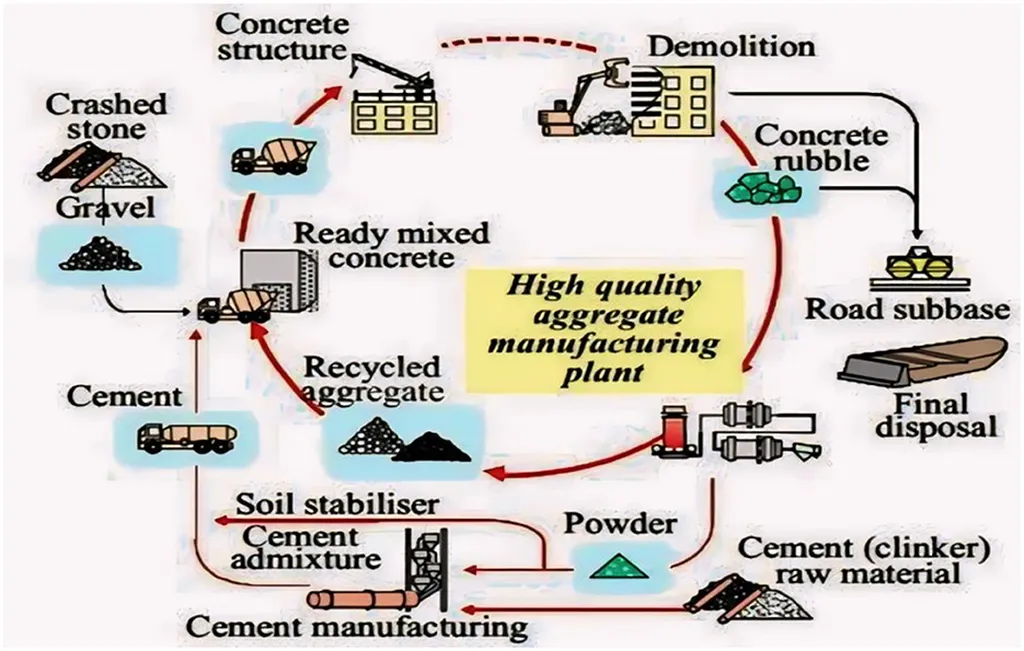
The commercial implications are substantial. As the construction sector seeks to reduce its environmental impact, the integration of carefully selected wood waste into cement composites can support the principles of the circular economy. This approach not only reduces waste but also produces durable, lightweight materials suitable for non-structural applications.
The research underscores the importance of selecting the right type of wood waste to ensure long-term performance. As Maier and his team continue to explore this field, their work could pave the way for more sustainable and efficient construction practices, benefiting both the environment and the industry.
In an era where sustainability is paramount, this study offers a compelling case for the valorization of wood waste in cement-based materials. As the construction industry looks to the future, the insights from this research could shape the development of new, eco-friendly materials that meet the demands of modern construction.