
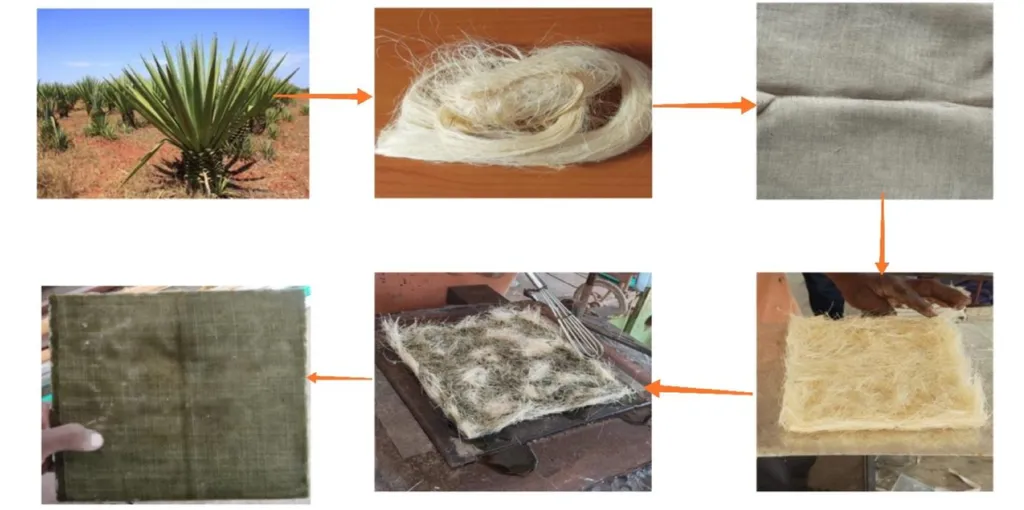
In the quest for sustainable materials that can withstand the rigors of modern industry, researchers are increasingly turning to natural fiber-reinforced composites. A recent study published in *Engineering Reports* (translated from Amharic as “Engineering Reports”), led by Kassahun Gashu Melese from the Department of Mechanical Engineering at Hawassa University Institute of Technology in Ethiopia, sheds light on the potential of sisal fiber-reinforced high-density polyethylene (HDPE) composites, particularly in the context of ultrasonic welding (USW). This research could have significant implications for sectors like automotive, construction, and household goods, where sustainable and durable materials are in high demand.
The study focuses on optimizing the ultrasonic welding process for sisal/HDPE composites, a technique that uses high-frequency vibrations to create strong bonds without melting the material. “Ultrasonic welding is a solid-state fusion bonding technique that is both efficient and environmentally friendly,” explains Melese. “It generates frictional heat at the mating surfaces, facilitating bonding without the need for additional adhesives or solvents.”
The research team fabricated the composites using compression molding and then subjected them to various welding parameters to determine the optimal conditions for achieving superior joint strength and weld quality. The mechanical performance of the welded joints was rigorously evaluated through failure load and tensile strength measurements. Post-failure analysis included thermal behavior assessment, crystallinity degree evaluation, and scanning electron microscopy (SEM) to understand the fracture mechanisms under tensile loading.
One of the key findings of the study is the identification of optimal welding parameters that significantly enhance the joint strength of sisal/HDPE composites. “By fine-tuning the welding parameters, we were able to achieve a notable improvement in the mechanical properties of the welded joints,” says Melese. This optimization process is crucial for the broader industrial adoption of natural fiber-reinforced thermoplastic composites, as it ensures that the materials can meet the stringent requirements of various applications.
The implications of this research extend beyond the immediate scope of the study. As the demand for sustainable and eco-friendly materials continues to grow, the development of optimized joining techniques for natural fiber-reinforced composites becomes increasingly important. The findings of this study could pave the way for more efficient and cost-effective manufacturing processes, ultimately benefiting industries that rely on durable and environmentally responsible materials.
Moreover, the use of sisal fibers, which are abundant and renewable, offers a sustainable alternative to traditional reinforcement materials. This not only reduces the environmental impact but also supports the development of local industries, particularly in regions where sisal cultivation is prevalent.
In conclusion, the research led by Kassahun Gashu Melese represents a significant step forward in the field of sustainable materials. By optimizing the ultrasonic welding process for sisal/HDPE composites, the study provides valuable insights into the potential of natural fiber-reinforced polymers for various industrial applications. As the world continues to seek innovative solutions to environmental challenges, such research is crucial for driving technological advancements and promoting sustainable development.