
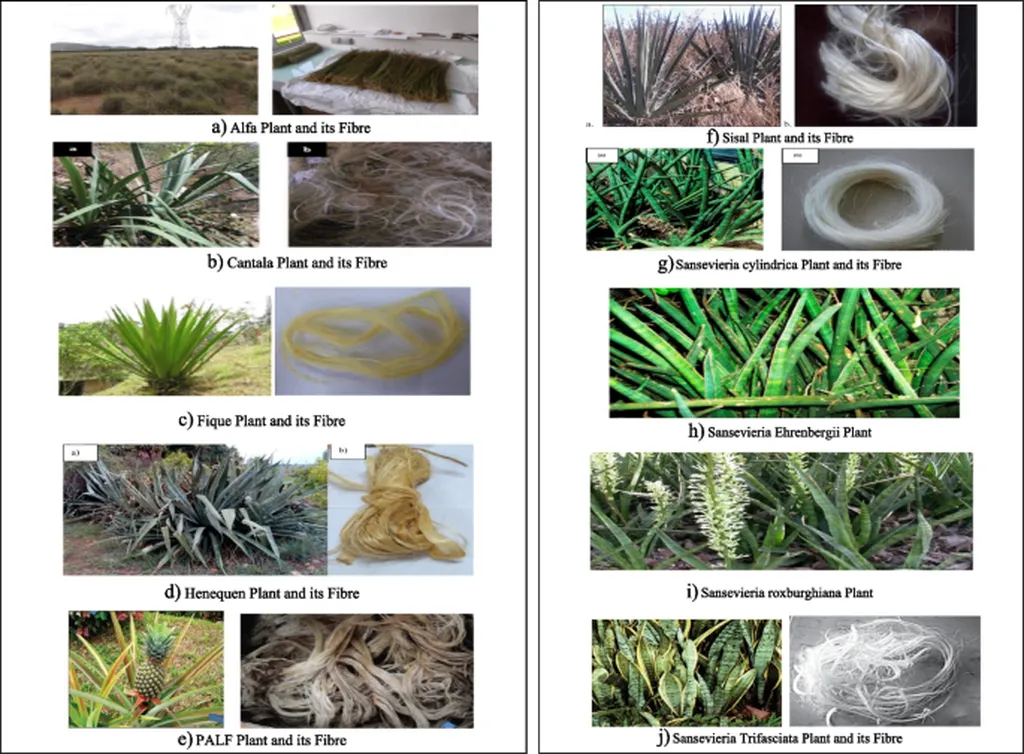
In the quest for sustainable construction materials, researchers have turned to nature’s own building blocks—henequen and sisal fibers. A recent study published in the *Journal of Engineering and Applied Science* (translated from Arabic as ‘Engineering and Technology Journal’) has revealed promising insights into the potential of these natural fibers to reinforce mortar, offering a greener alternative to synthetic fibers.
Led by Akintayo Adeniji, a researcher affiliated with the Civil Engineering Department at Tshwane University of Technology in Pretoria, South Africa, and the University of Ibadan in Ibadan, Nigeria, the study explores how henequen and sisal fibers can enhance the tensile properties of mortar. The findings suggest that these natural fibers not only improve the material’s strength but also pave the way for more sustainable construction practices.
The research involved preparing mortar samples with varying concentrations of henequen and sisal fibers, ranging from 0% to 2% by weight. The samples were then subjected to compressive and splitting tensile strength tests at intervals of 7, 14, 21, and 28 days. The results were analyzed using both traditional statistical methods and an artificial neural network (ANN) model, which demonstrated high predictive accuracy.
“Henequen fiber exhibited lower water absorption and higher tensile strength,” noted Adeniji. This characteristic makes it particularly suitable for construction applications where durability and strength are paramount. The study found that the optimal compressive strength was achieved with a 1% fiber content, while the split tensile strength improved up to 0.5%.
The use of natural fibers in construction is not just a matter of environmental responsibility; it also has significant commercial implications. As the demand for sustainable building materials grows, the construction industry stands to benefit from innovative solutions that reduce reliance on synthetic fibers. The ANN model used in this study, with its high predictive accuracy, could revolutionize how construction materials are tested and validated, potentially speeding up the development and deployment of new, eco-friendly materials.
“This research supports the application of natural fibers in sustainable construction,” Adeniji explained. “The ANN model’s ability to predict material performance accurately could streamline the development process, making it easier for companies to adopt these sustainable alternatives.”
The study’s findings are a testament to the potential of natural fibers in the construction industry. By leveraging the strengths of henequen and sisal fibers, researchers and industry professionals can work together to create more sustainable and resilient buildings. As the world continues to grapple with the challenges of climate change and environmental degradation, the need for such innovative solutions has never been greater.
The research published in the *Journal of Engineering and Applied Science* offers a glimpse into a future where natural fibers play a central role in construction, driving both environmental sustainability and economic growth. As the industry continues to evolve, the insights gained from this study will undoubtedly shape the development of new materials and technologies, paving the way for a more sustainable future.