
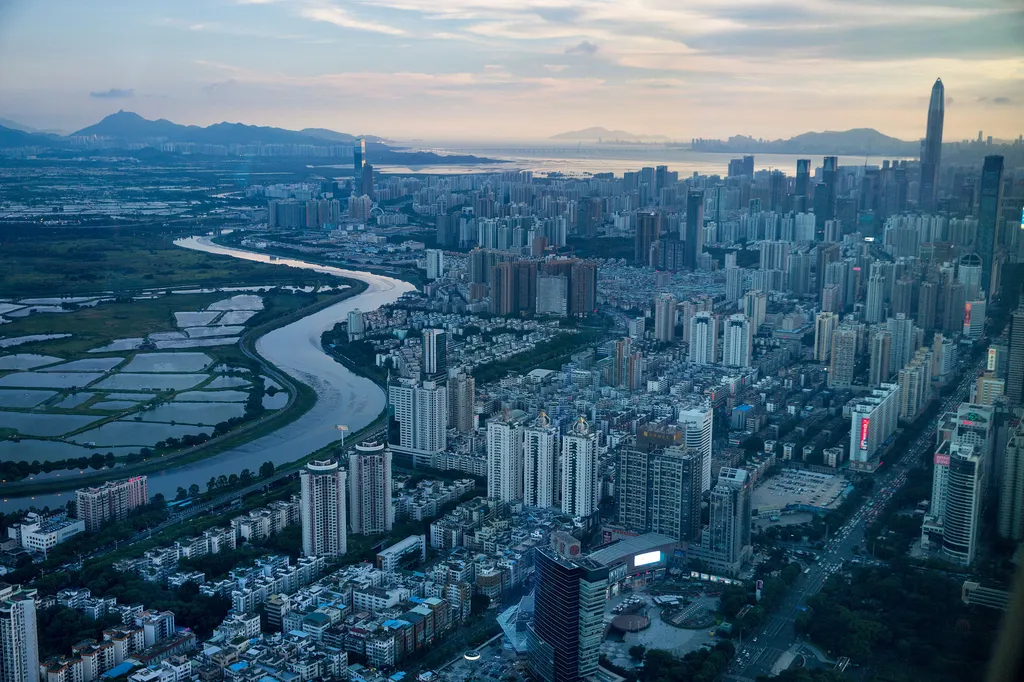
In the face of escalating climate change, the specter of rising sea levels looms large over coastal regions, threatening infrastructure and economies. A recent study, led by Haolei Zheng from the Faculty of Geography at Yunnan Normal University, quantifies the potential building losses in China’s coastal provinces due to extreme climate-induced sea-level rise. Published in *Environmental Research Letters* (translated as “Environmental Research Letters”), the research offers a sobering look at the economic stakes for these vulnerable areas.
Zheng and his team integrated extreme sea level data, digital elevation models, and building data to assess the spatial distribution of land inundation and building loss. Their findings reveal that under a 100-year return period of extreme climate conditions, the total potentially inundated area in China’s coastal provinces reaches a staggering 49,366.22 square kilometers. This inundation exposes buildings in 93 cities to varying degrees of flooding, with economically developed regions like Jiangsu and Guangdong bearing the brunt of the losses.
“The losses are primarily concentrated in economically developed regions such as Jiangsu and Guangdong,” Zheng noted. “In some areas, the potential density of inundated buildings exceeds 200 buildings per square kilometer, which, coupled with high housing prices and dense construction, leads to extremely severe economic losses.”
The study underscores the urgent need for adaptive protection measures tailored to local conditions. As sea levels continue to rise, the economic impacts on coastal regions could be profound, particularly for sectors like energy, which rely heavily on coastal infrastructure for operations and supply chains.
“This research highlights the critical need for proactive planning and investment in resilient infrastructure,” Zheng added. “The economic losses projected in this study should serve as a wake-up call for policymakers and industry leaders to prioritize climate adaptation strategies.”
The findings also suggest that the energy sector, with its significant investments in coastal facilities, must consider the long-term implications of sea-level rise. From power plants to distribution networks, the potential for inundation poses a substantial risk to operational continuity and economic stability.
As the world grapples with the realities of climate change, studies like Zheng’s provide invaluable insights into the potential impacts and the necessity of adaptive measures. The research not only quantifies the risks but also underscores the importance of proactive planning to mitigate the comprehensive threats posed by rising sea levels.
In the broader context, this study serves as a clarion call for increased investment in climate resilience. For the energy sector, it emphasizes the need for robust infrastructure planning that accounts for extreme weather events and long-term sea-level rise. By integrating these considerations into their strategies, energy companies can better protect their assets and ensure operational continuity in the face of a changing climate.
As Zheng’s research makes clear, the stakes are high, and the time to act is now. The future of coastal regions—and the economies that depend on them—hangs in the balance.