
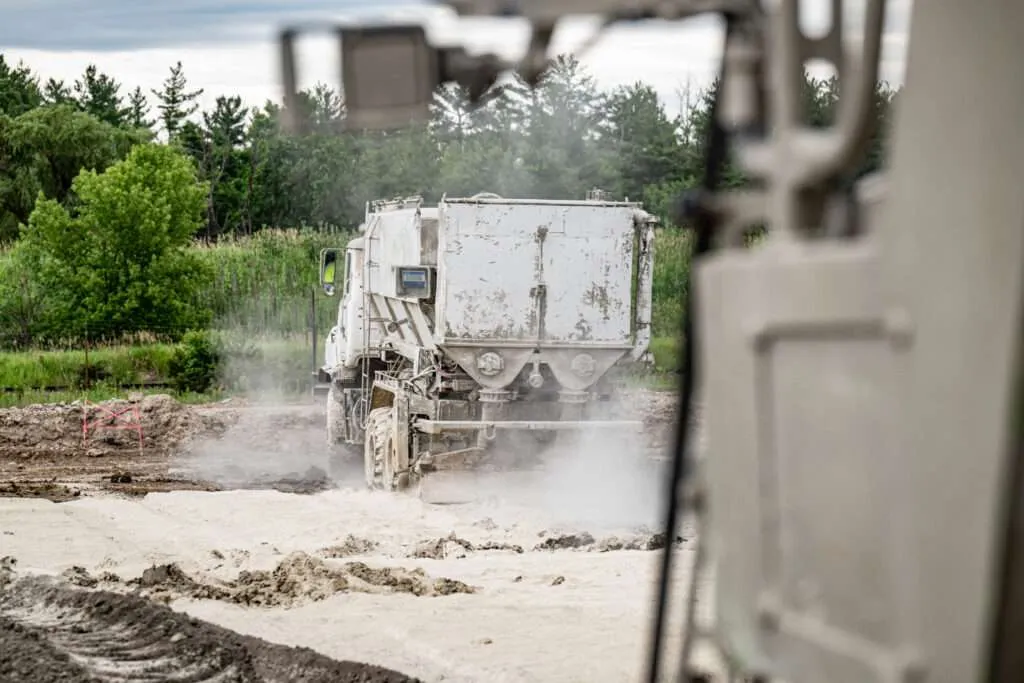
In a groundbreaking study published in *Materials Research Express*, researchers have uncovered a promising sustainable alternative for the asphalt industry, potentially revolutionizing pavement construction and reducing environmental impact. The research, led by Oumar Orozi Sougui from the School of Civil Engineering at Universiti Sains Malaysia and the University of N’Djamena, explores the use of lime kiln dust (LKD) as a mineral filler in asphalt mixtures, demonstrating significant improvements in performance and durability.
The global asphalt industry is under increasing pressure to adopt more sustainable practices. Traditional mineral fillers, often derived from natural resources, have environmental and economic drawbacks. Enter lime kiln dust, an industrial by-product typically discarded as waste. Sougui and his team saw an opportunity to transform this by-product into a valuable resource, aligning with circular economy principles.
Through rigorous laboratory testing, the researchers prepared asphalt mixtures with LKD and subjected them to a battery of mechanical and microstructural tests. The results were striking. The AC14 + 2%LKD mixture exhibited a 27% increase in resilient modulus compared to the standard AC14 + 2%OPC mixture, indicating enhanced structural integrity. “The improvement in resilient modulus is a game-changer,” Sougui explained. “It means that pavements made with LKD-filled asphalt can withstand heavier loads and last longer, reducing maintenance costs and downtime.”
The study also highlighted significant improvements in moisture resistance and rutting resistance. The AC20 + 2%LKD mix achieved a tensile strength ratio of 1.21, suggesting superior resistance to moisture damage. Moreover, the AC14 + 2%LKD mixture demonstrated a 44% reduction in rut depth compared to traditional mixtures, a critical factor in extending the lifespan of road surfaces.
The commercial implications for the energy sector are substantial. Asphalt pavements are integral to infrastructure development, and the adoption of LKD as a mineral filler could lead to more durable and sustainable roads. “This research opens up new avenues for the asphalt industry,” Sougui noted. “By utilizing LKD, we not only reduce waste but also enhance the performance of our pavements, making them more resilient and cost-effective.”
The study’s findings were published in *Materials Research Express*, a journal that translates to “Materials Research Expressions” in English, underscoring the innovative and expressive nature of the research. The research team’s collaborative efforts, involving both university and industry laboratories, ensured a comprehensive investigation from sample preparation to performance testing.
As the world moves towards more sustainable and efficient construction practices, the use of lime kiln dust in asphalt mixtures represents a significant step forward. This research not only highlights the potential of industrial by-products as valuable resources but also paves the way for future developments in the field of pavement construction. With further exploration and adoption, LKD-filled asphalt could become a standard in the industry, benefiting both the environment and the economy.