
On 3 December 2025, Trimble made a strategic move that could reshape the landscape of civil construction technology distribution. The company announced that Southeastern Equipment Company had become its newest Trimble Technology Outlet, enabling the dealer to sell Trimble’s grade control, site positioning systems, and correction services for a range of earthmoving equipment brands across Ohio, Indiana, Kentucky, Michigan, and West Virginia. This expansion is not just about extending Trimble’s reach; it’s a calculated step towards embedding its technology directly into a multi-brand dealer network, potentially making adoption easier for mixed fleets aiming to boost jobsite productivity and profitability.
The implications of this move are significant. By integrating its technology into a dealer-based distribution model, Trimble is not only expanding its market presence but also laying the groundwork for a more seamless transition towards higher-margin, recurring software and services. This shift is crucial for Trimble’s long-term strategy, as it aims to move away from hardware-centric sales towards a more sustainable, subscription-based model.
The recent Trimble Insight Tech Conference announcement further underscores this strategy. The conference highlighted AI-driven workflows and the next-generation Trimble TMS with deeper cloud integrations, tying field hardware and cloud software into stickier, recurring usage patterns. This approach supports Trimble’s long-term earnings and margin ambitions, but it also comes with risks. The biggest near-term risk remains the slow or uneven uptake of hardware-linked subscriptions, which could temper recurring revenue growth.
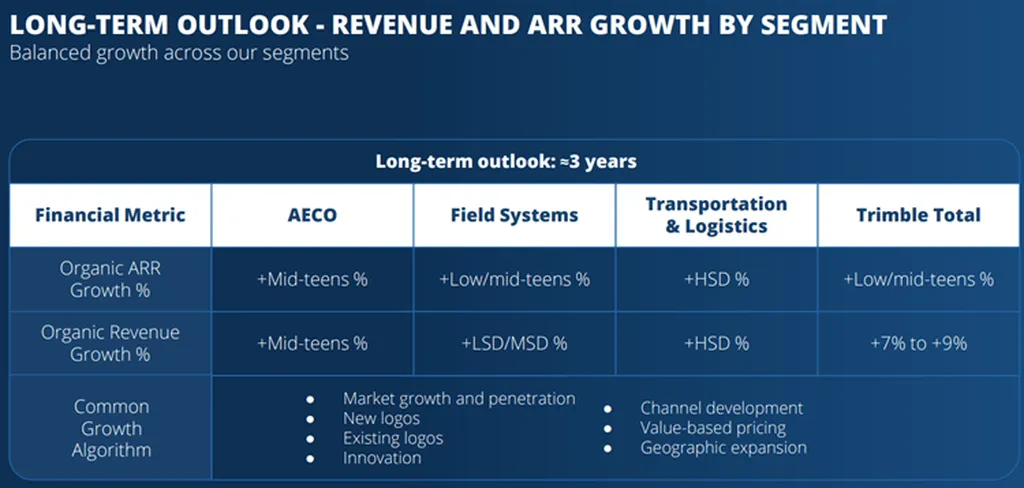
Trimble’s narrative projects $4.1 billion in revenue and $776.4 million in earnings by 2028. This ambitious target requires a 4.3% yearly revenue growth and a substantial increase in earnings from the current $286.7 million. The company’s fair value estimates, ranging from $98.45 to $102.54, suggest a potential 20% upside to its current price. However, investors must weigh these projections against the risk of slow subscription adoption in hardware-centric segments, which could significantly impact long-term performance.
The construction industry is at a crossroads, where the convergence of technology and sustainability is redefining traditional practices. Trimble’s strategic moves, such as the partnership with Southeastern Equipment Company and the focus on AI-driven workflows, are indicative of a broader industry trend towards digital transformation and sustainability. As the sector grapples with labor shortages, environmental concerns, and the need for increased efficiency, the adoption of advanced technologies becomes not just an advantage but a necessity.
The integration of Trimble’s technology into a multi-brand dealer network could accelerate the adoption of these technologies, making it easier for construction firms to upgrade their fleets with minimal disruption. This could be particularly beneficial for mixed fleets, which often face challenges in integrating new technologies across different brands of equipment.
Moreover, the shift towards recurring software and services aligns with the industry’s growing emphasis on data-driven decision-making and predictive analytics. By leveraging AI and cloud-based solutions, construction firms can optimize project timelines, reduce material waste, and enhance safety on-site. This not only improves profitability but also contributes to the industry’s sustainability goals.
However, the path to this future is not without challenges. The slow adoption of hardware-linked subscriptions could pose a significant hurdle. Construction firms, particularly smaller ones, may be reluctant to transition from traditional hardware purchases to subscription-based models. This resistance could stem from concerns about long-term costs, data security, and the need for continuous internet connectivity.
To overcome these challenges, Trimble and other technology providers must demonstrate the tangible benefits of their solutions. This includes not only showcasing the financial advantages but also addressing the environmental and social impacts of their technologies. For instance, the use of AI-driven workflows can reduce material waste and carbon footprints, contributing to the industry’s sustainability goals.
In conclusion, Trimble’s expansion into a dealer-based distribution model is a strategic move that could significantly influence the construction industry’s transition towards higher-margin, recurring software and services. While the immediate impact may be incremental, the long-term implications for the industry are profound. As the sector continues to evolve, the integration of advanced technologies will be crucial in driving efficiency, sustainability, and profitability. However, the success of this transition will depend on the ability of technology providers to address the challenges and concerns of their customers, ensuring a smooth and beneficial shift towards a more digital and sustainable future.