
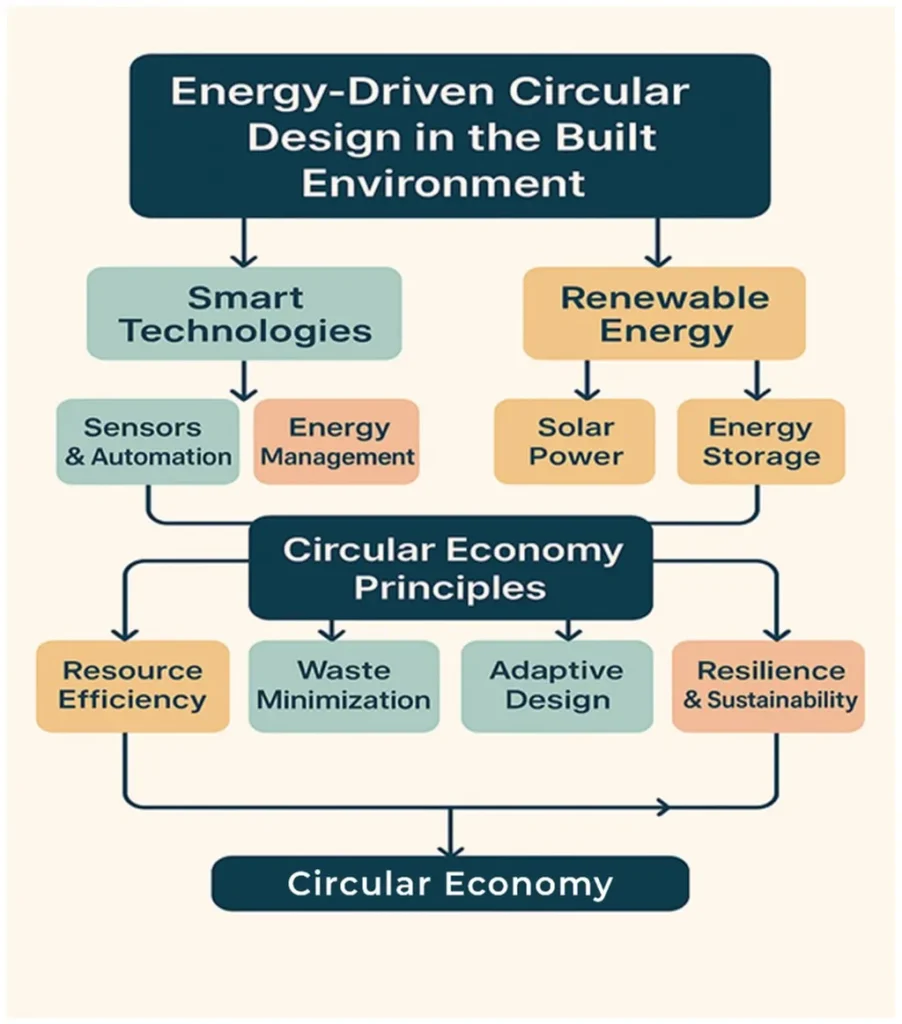
In a world grappling with climate change and resource depletion, a recent study published in the *Journal of Industrial Design and Engineering Graphics* (translated from Romanian as “Journal of Industrial Design and Engineering Graphics”) offers a beacon of hope, highlighting how circular design can revolutionize key industries, including the energy sector. Led by Isabell-Maria Radu, the research delves into the current state of circular design, emphasizing its potential to reduce waste, enhance product durability, and drive climate neutrality.
Circular design, a cornerstone of the circular economy, focuses on creating products and systems that minimize waste and maximize resource efficiency. Radu’s study examines this concept across various industries, including textiles, packaging, electronics, and construction, with a particular emphasis on its implications for the energy sector. The research underscores the importance of methodologies such as Life Cycle Assessment (LCA), ecodesign, biomimicry, and the analysis of renewable materials in achieving these goals.
One of the most compelling aspects of Radu’s work is its practical application. The study highlights several European initiatives that have successfully implemented circular design principles, demonstrating tangible benefits for both businesses and the environment. For instance, in the energy sector, circular design can lead to more efficient use of materials in renewable energy infrastructure, reducing costs and environmental impact.
“Circular design is not just about being environmentally friendly; it’s about creating smarter, more efficient products that can save businesses money in the long run,” Radu explains. This sentiment is echoed in the study’s findings, which show that companies adopting circular design principles can achieve significant cost savings through reduced material use and improved product longevity.
The research also identifies current challenges and innovation opportunities in the field. For example, while LCA is a powerful tool for assessing the environmental impact of products, its complexity can be a barrier to widespread adoption. Similarly, while biomimicry offers exciting possibilities for sustainable design, it requires a deep understanding of both biological systems and engineering principles.
Despite these challenges, the study paints a hopeful picture of the future. By embracing circular design, businesses in the energy sector and beyond can not only reduce their environmental footprint but also gain a competitive edge. As Radu notes, “The transition to a circular economy is not just a necessity; it’s an opportunity for innovation and growth.”
The study’s publication in the *Journal of Industrial Design and Engineering Graphics* underscores its relevance to both academic and industry audiences. As the world continues to grapple with climate change and resource scarcity, the insights offered by Radu’s research could prove invaluable in shaping future developments in the field. By highlighting the commercial impacts of circular design, the study serves as a call to action for businesses to embrace this transformative approach and pave the way for a more sustainable future.