
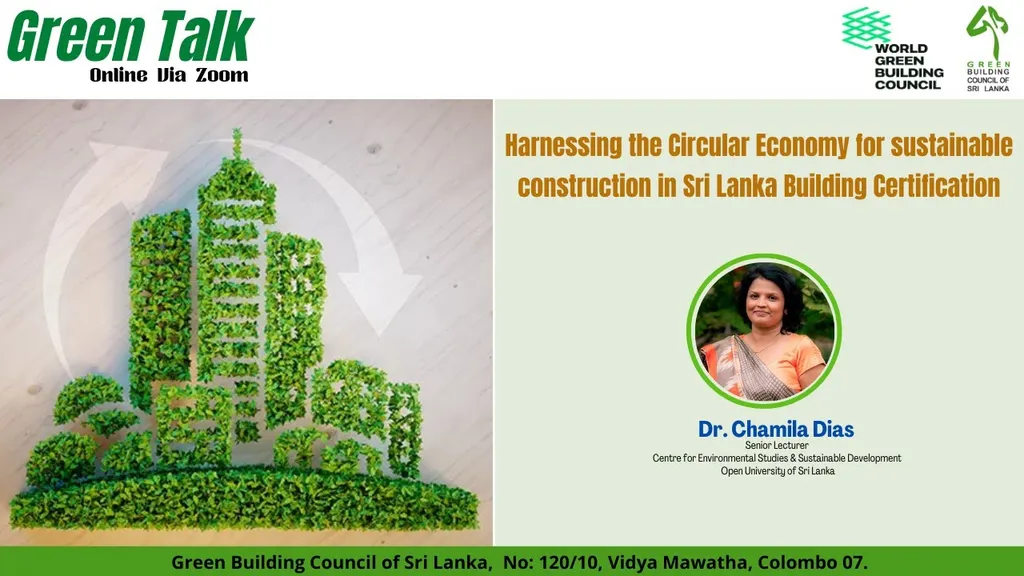
In the heart of South Asia, Sri Lanka’s construction industry is grappling with a pressing challenge: balancing rapid development with environmental sustainability. A recent study published in the *Baltic Journal of Real Estate Economics and Construction Management* (Baltijas Reālu Iezemes Ekonomikas un Celttiesibas Managementa Žurnals) sheds light on how circular economy principles could revolutionize the sector, offering a roadmap for sustainable building performance.
Led by Lokuliyana Chathrika Kawmadi from Riga Technical University in Latvia, the research delves into the current state of the Sri Lankan construction industry, highlighting the urgent need for a shift from linear to circular economic models. “The lack of awareness, education, and training in sustainable practices is a significant hurdle,” Kawmadi notes, pointing to the root causes of the industry’s environmental woes.
The study, which employed a quantitative research approach through questionnaire surveys, identified key issues plaguing the Sri Lankan construction sector. High volumes of waste generation, substantial carbon dioxide emissions, and the absence of a robust legal framework for circular economy implementation were among the most prevalent problems.
Kawmadi’s research underscores the potential of green building technologies, waste recycling, and the use of locally sourced eco-friendly materials to transform the industry. “Promoting green building technologies and improving the legal framework are crucial steps towards strengthening circular economy implementation,” she asserts.
The commercial implications for the energy sector are profound. By adopting circular economy principles, the construction industry can significantly reduce its energy consumption and carbon footprint. This shift not only aligns with global sustainability goals but also opens up new avenues for innovation and investment in green technologies.
The study’s findings serve as a wake-up call for policymakers, industry stakeholders, and educators. It calls for a concerted effort to promote awareness, enhance education and training in sustainable practices, and develop a comprehensive legal framework to support circular economy initiatives.
As the world grapples with the realities of climate change, the Sri Lankan construction industry’s journey towards sustainability offers valuable insights and lessons for other emerging economies. The research by Kawmadi and her team not only highlights the challenges but also provides a clear path forward, emphasizing the importance of collaboration and innovation in achieving sustainable building performance.
In the words of Kawmadi, “A sustainable building industry in Sri Lanka is not just a possibility but a necessity. It’s time to act and embrace the circular economy for a greener, more sustainable future.”