
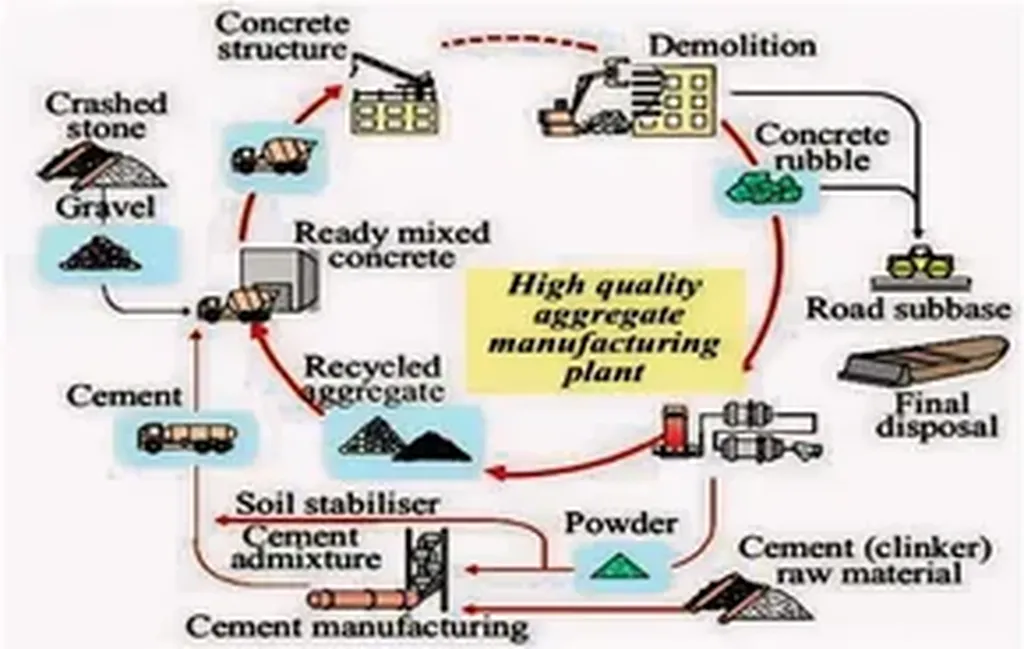
In the heart of Baotou, China, a team of researchers from the Inner Mongolia University of Science and Technology and the Engineering Technology Research Center of Inner Mongolia Autonomous Region on Building Structure Disaster Prevention and Mitigation has unlocked a novel approach to enhancing recycled coarse aggregate (RCA) using CO2 reinforcement. Led by Dr. Cao Fu-bo, the team’s innovative use of response surface methodology (RSM) to optimize the carbonation process is set to revolutionize sustainable construction practices and offer significant commercial impacts for the energy sector.
The study, recently published in the *Journal of Yangtze River Scientific Research Institute* (长江科学院院报), delves into the intricate interactions of CO2 concentration, carbonation temperature, and relative humidity to improve the mechanical strength, porosity, and compactness of RCA. By employing a Box-Behnken design and Design-Expert software, the researchers conducted 17 sets of carbonation tests, meticulously evaluating the effects of these key factors on RCA performance.
“The interaction between carbonation temperature and relative humidity had the strongest effect,” explained Dr. Cao, highlighting the complexity of the process. “Our findings demonstrate that the CO2 concentration-temperature interaction was the most significant, resulting in a parabolic response. This means that while increasing CO2 concentration and temperature initially improves RCA properties, extreme conditions can lead to adverse effects due to reduced CO2 diffusion and calcium ion dissolution.”
The optimization process identified the optimal carbonation conditions as 38% CO2 concentration, 41°C carbonation temperature, and 49% relative humidity. These conditions significantly improved RCA properties, reducing crush value by 18.0%, decreasing water absorption by 20.5%, and increasing apparent density by 0.9%. The accuracy of the RSM-based regression models was confirmed through experimental validation, with relative errors below 5%.
The implications of this research extend beyond the construction industry, offering a sustainable solution for waste concrete recycling and carbon emission reduction. “Our model provides a reliable reference for industrial applications, facilitating the adoption of CO2-modified RCA in concrete production,” said Dr. Cao. This innovation not only enhances the performance of RCA but also contributes to a circular economy by repurposing waste materials and reducing environmental impact.
As the construction industry increasingly embraces sustainable practices, the adoption of CO2-reinforced RCA could significantly reduce the carbon footprint of concrete production. The energy sector stands to benefit from this research as well, as the optimized carbonation process offers a novel method for CO2 utilization, potentially reducing emissions from power plants and industrial facilities.
The study’s application of RSM to decipher complex multi-factor couplings represents a significant advancement in the field. “Previous studies did not fully address the intricate interactions between these factors,” noted Dr. Cao. “Our approach provides a more efficient and reliable framework for enhancing RCA performance, paving the way for future research and industrial applications.”
As the world seeks innovative solutions to address climate change and resource depletion, the work of Dr. Cao and his team offers a promising path forward. By optimizing the CO2 reinforcement of RCA, they have not only improved the sustainability of construction practices but also opened new avenues for CO2 utilization in the energy sector. This research is a testament to the power of interdisciplinary collaboration and the potential of advanced statistical methods to drive innovation in sustainable construction.