
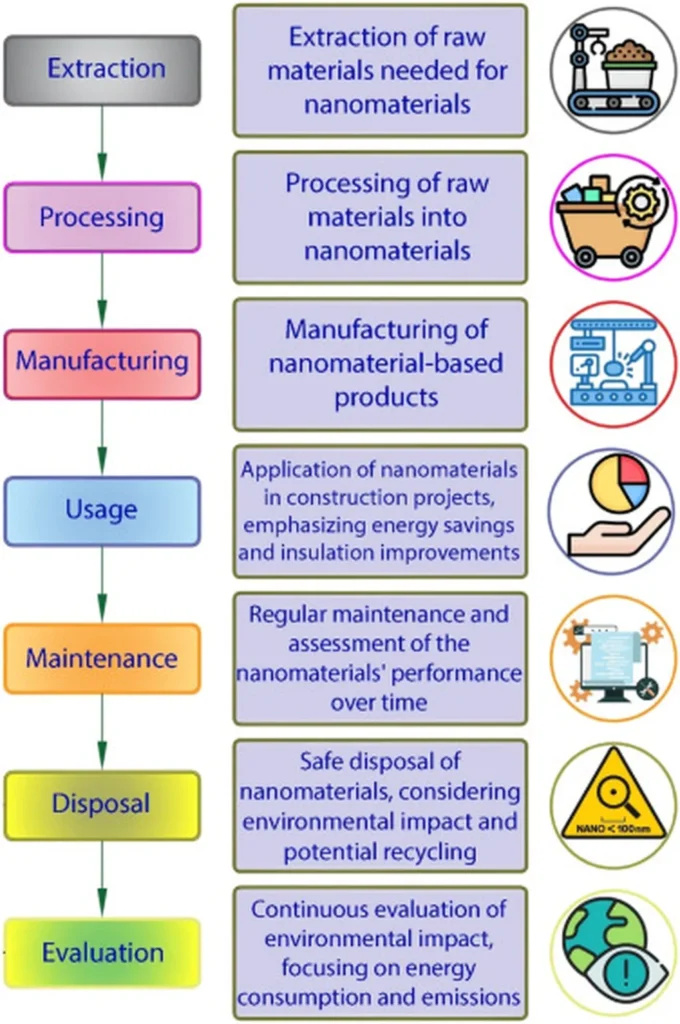
In the quest for sustainable construction materials, researchers have turned to the nanoscale to unlock new possibilities. A recent study published in the journal *Next Materials* (which translates to “Next Materials” in English) explores the integration of nanomaterials into alkali-activated mortars (AAM), offering a promising avenue for enhancing mechanical performance while reducing environmental impact. The research, led by Samuvel Raj R. from the Division of Civil Engineering at Karunya Institute of Technology and Sciences in Coimbatore, India, delves into the potential of nano fly ash (nFA), nano ground granulated blast-furnace slag (nGS), and nano bentonite (nBT) to revolutionize the construction industry.
The study investigates the effects of incorporating these nanomaterials into AAM, evaluating setting time, compressive strength, density, water absorption, and failure patterns. The findings reveal that optimal replacement levels of nFA at 9%, nGS at 12%, and nBT at 6% significantly enhance the mechanical properties of the mortar. “The incorporation of nanomaterials not only improves the compressive strength and density but also contributes to a denser matrix and reduced porosity,” explains Raj. This enhancement translates to more durable and robust construction materials, addressing key challenges in the industry.
Among the nanomaterials tested, nGS demonstrated the most substantial improvement in compressive strength and axial compressive strength, while nFA enhanced bonding and crack resistance. nBT, on the other hand, contributed to microstructural densification. These advancements are crucial for the energy sector, where the demand for sustainable and high-performance materials is growing. “The potential for reducing carbon emissions and dependence on traditional cement is a significant step forward in our journey towards sustainable construction,” Raj adds.
The study also highlights the importance of precise mix design to optimize the benefits of nanomaterials. Scanning electron microscopy (SEM) and energy-dispersive spectroscopy (EDS) investigations confirmed that the incorporation of nFA9, nGS12, and nBT6 significantly enhances the microstructure, gel formation, and elemental reactivity of AAM. This results in a denser matrix and superior mechanical performance compared to the reference mix.
The implications of this research are far-reaching. As the construction industry seeks to reduce its carbon footprint and improve the durability of buildings, the integration of nanomaterials into AAM offers a viable solution. “This study provides new insights into the role of nanoscale additives in advancing AAM for sustainable construction,” Raj notes. The findings pave the way for future developments in the field, encouraging further exploration of nanomaterials and their potential applications in construction.
In conclusion, the research led by Samuvel Raj R. and published in *Next Materials* underscores the transformative potential of nanomaterials in the construction industry. By enhancing the mechanical properties of alkali-activated mortars, these innovations offer a pathway to more sustainable and durable construction materials, benefiting the energy sector and beyond. As the industry continues to evolve, the integration of nanotechnology will play a pivotal role in shaping the future of construction.