
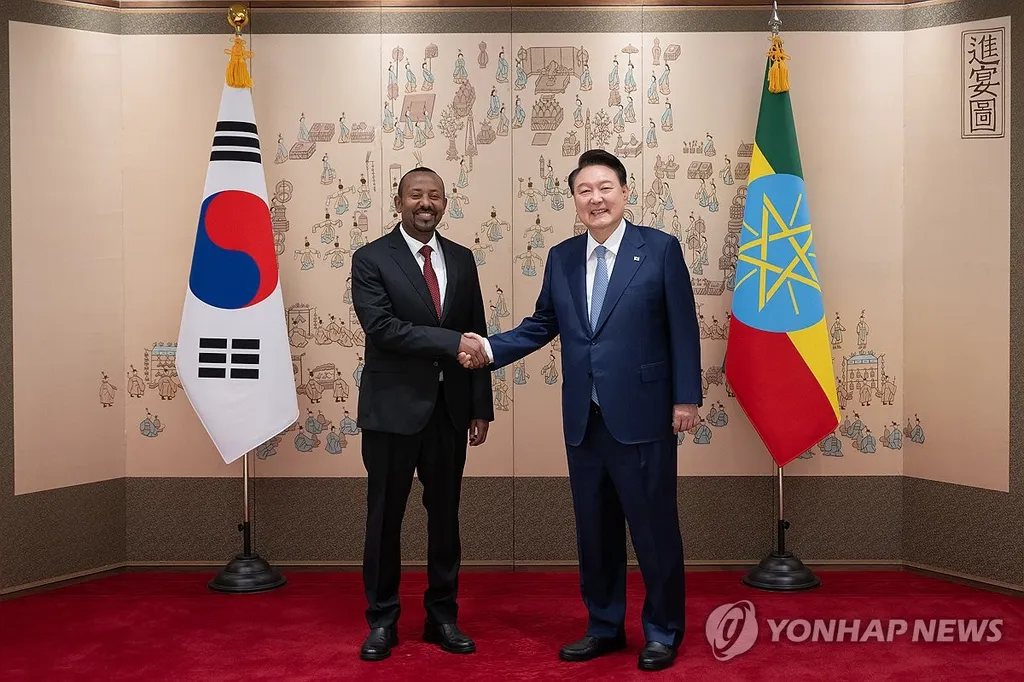
In a bold move to strengthen economic ties and foster sustainable growth, Ethiopia and South Korea are stepping up their collaboration in the construction sector. The Ethio–Korea Specialty Contractors Business Forum, held in Addis Ababa, has set the stage for concrete project implementation, moving beyond mere discussions to real investment momentum. This partnership is not just about building structures; it’s about building a future where technology, skills, and sustainable practices converge to drive long-term economic cooperation.
South Korea has reaffirmed its position as a key strategic partner for Ethiopia, particularly in areas such as manufacturing, infrastructure, energy, ICT, and industrial modernization. The forum highlighted the reputation of Korean contractors for their high-quality construction, engineering excellence, discipline, and accountability—qualities that have set strong benchmarks in Ethiopia. With the Korea Specialty Contractors Association (KOSCA) representing 60,000 companies and 2 million experts, South Korea has committed to sharing advanced construction technology, skills development, education, and training. This commitment directly supports Ethiopia’s ambitious infrastructure expansion, which is crucial for its economic growth and urban development.
Ethiopian officials emphasized that the partnership aims to evolve from individual projects to long-term investment ecosystems. This shift signals a deeper strategic alignment between the two nations, one that goes beyond short-term gains to foster sustained economic cooperation. The Embassy of South Korea pledged full support to ensure a stable and investor-friendly environment, further solidifying the partnership.
The forum marks a high-impact turning point in the relationship between Ethiopia and South Korea. It is a testament to the power of collaboration, where shared growth, technology transfer, and sustained economic cooperation are not just aspirations but actionable goals. As the construction sector in Ethiopia continues to evolve, this partnership could serve as a model for other nations looking to blend infrastructure development with sustainable practices and technological innovation.
The implications of this collaboration are vast. For Ethiopia, it means access to cutting-edge construction technologies and expertise, which can accelerate its infrastructure projects and support its vision of becoming a regional economic hub. For South Korea, it offers a strategic foothold in one of Africa’s fastest-growing economies, providing opportunities for Korean companies to expand their global footprint while contributing to sustainable development.
Moreover, the forum underscores the importance of international partnerships in driving sustainable growth. As the world grapples with climate change and resource scarcity, such collaborations can pave the way for innovative solutions that balance economic development with environmental responsibility. The construction sector, often a significant contributor to carbon emissions, stands to benefit immensely from the integration of advanced technologies and sustainable practices.
In conclusion, the Ethio–Korea Specialty Contractors Business Forum is more than just a meeting of minds; it is a catalyst for change. It challenges the construction industry to think beyond traditional boundaries and embrace a future where technology, sustainability, and international cooperation are the cornerstones of progress. As Ethiopia and South Korea forge ahead, the world watches, learning from their example and recognizing the potential of such partnerships to reshape the global construction landscape.