
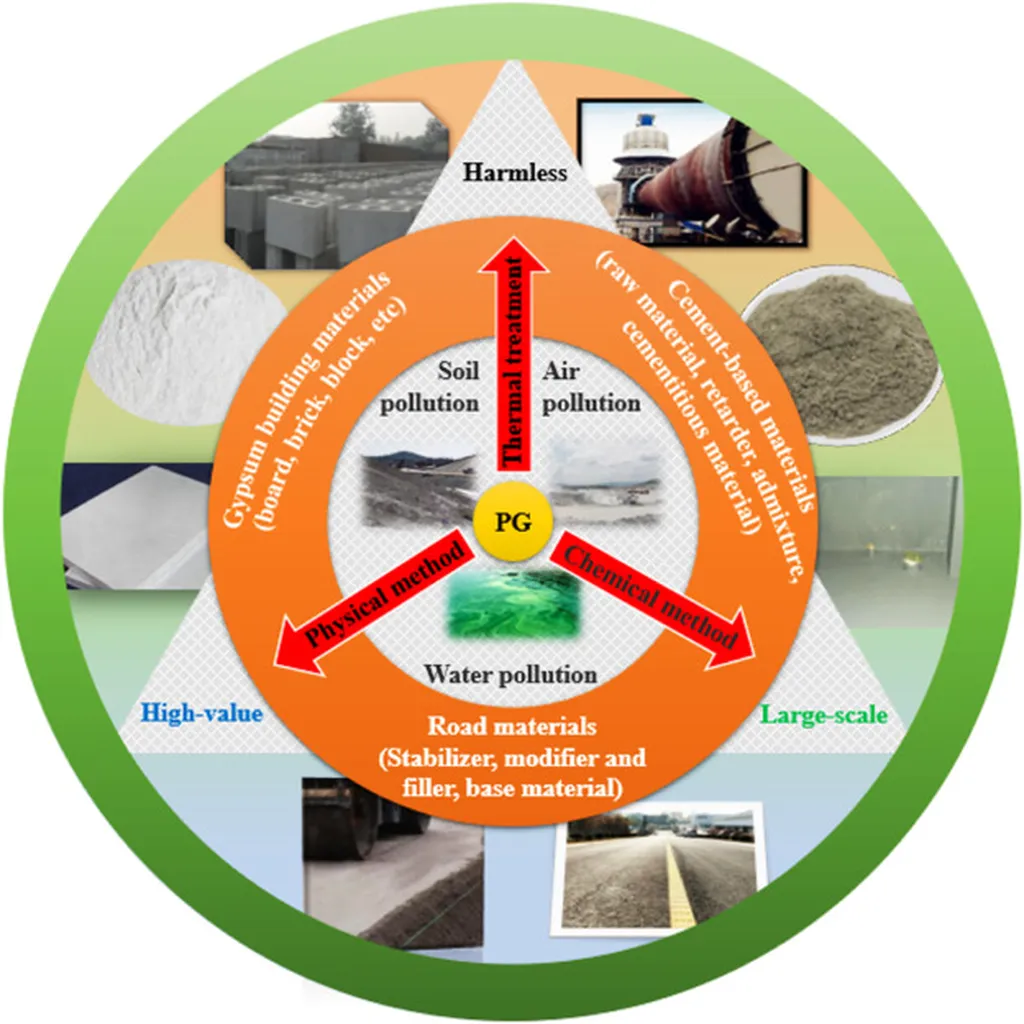
In a groundbreaking study that could reshape the civil construction and energy sectors, researchers have found a promising use for Phosphogypsum (PG), a waste product from fertilizer production. The study, led by João Alexandre Paschoalin Filho from Universidade Nove de Julho, explores the potential of incorporating PG into soil-compacted bricks, offering a sustainable solution to a longstanding industrial waste disposal challenge.
Phosphogypsum, a byproduct of phosphoric acid production, has been a persistent environmental concern due to its large-scale generation and difficult disposal. However, this new research, published in ‘Acta Scientiarum: Technology’ (which translates to ‘Acts of Science: Technology’), suggests that PG can be repurposed in construction, potentially mitigating environmental impacts and reducing waste.
The study involved creating bricks with two different PG concentrations: 4% and 7%. For comparison, bricks without any PG were also produced. Both non-fired and fired bricks (heated to 900°C for 96 hours) were tested to assess their physical characteristics, with a particular focus on compressive strength.
The results were promising. “We found no statistical difference in compressive strength between bricks manufactured with 4% PG and those with no PG,” said Paschoalin Filho. This indicates that up to this concentration, PG does not compromise the brick’s strength. Moreover, fired bricks showed higher strength across all dosages compared to non-fired ones. Importantly, all bricks met the strength requirements outlined in Brazilian Technical Standards, making them suitable for regular construction.
This research opens up new avenues for the construction industry, offering a sustainable material that can help reduce waste and lower environmental impacts. For the energy sector, this could mean a reduction in the need for energy-intensive disposal methods and a shift towards more circular economy practices.
As Paschoalin Filho noted, “Phosphogypsum for brick manufacturing can be an alternative way for its disposal, which can help mitigate the civil construction environmental impacts.” This innovative approach could inspire further research and development in the field, paving the way for more sustainable construction practices and a cleaner environment.
The study’s findings are a significant step forward in the quest for sustainable materials and could have far-reaching implications for both the construction and energy sectors. By turning a waste product into a valuable resource, this research exemplifies the potential of innovative thinking in addressing environmental challenges.