
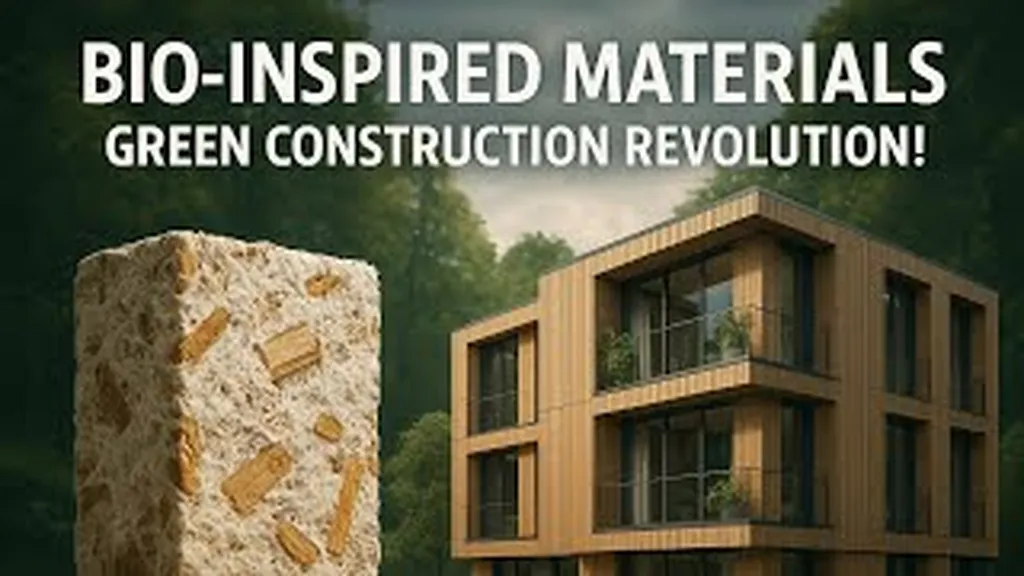
In the quest for sustainable construction materials, a groundbreaking review published in *Cleaner Materials* (translated as “Cleaner Materials”) is shedding light on the potential of wood-cement composites to revolutionize the building industry. Led by Firesenay Zerabruk Gigar from the School of Engineering & Technology at the University of New South Wales, Canberra, the research delves into the material characteristics, mechanical performance, and evolution of wood-cement composites, offering a promising alternative to conventional building materials.
Wood-cement composites are formed by combining wood particles with cementitious binders, utilizing renewable resources and supporting cleaner production practices. This innovative approach not only reduces embodied carbon but also addresses the pressing need for sustainable construction solutions. The review compiles extensive experimental data from various studies, examining the effects of wood species, binder types, fabrication methods, and testing protocols on composite performance.
One of the key findings highlights the influence of binder composition, wood particle size, and mix ratios on critical mechanical properties such as compressive strength, flexural strength, density, and toughness. “These parameters are crucial in governing the structural reliability and functional suitability of the composites,” explains Gigar. By critically assessing these factors, the research aims to establish a robust foundation for the practical implementation of wood-cement composites in environmentally responsible construction.
The review also tackles common challenges in the production of wood-cement composites, particularly the chemical incompatibility between lignocellulosic materials and cement hydrates. It summarizes various approaches developed to mitigate these issues, paving the way for more efficient and effective production techniques. Notably, the research explores recent developments in alkali-activated binders, which hold significant potential for enhancing material performance and supporting cleaner material development.
The implications of this research are far-reaching, particularly for the energy sector. As the demand for sustainable and energy-efficient buildings continues to grow, wood-cement composites offer a viable solution that aligns with global environmental goals. By consolidating existing research and identifying gaps in current knowledge, this review aims to support further technical advancement and inform the practical implementation of wood-cement composites in the construction industry.
As the world grapples with the challenges of climate change and resource depletion, innovative solutions like wood-cement composites are crucial. This research not only advances our understanding of these materials but also underscores the importance of sustainable practices in the building sector. With the insights provided by Gigar and their team, the future of construction looks increasingly green and promising.