
In the dynamic world of construction technology, Procore Technologies, Inc. (NYSE: PCOR) has become a focal point for institutional investors and insiders alike. Recent filings with the Securities and Exchange Commission (SEC) reveal a flurry of activity, with major players adjusting their stakes in the company. Voya Investment Management LLC, for instance, reduced its holdings by 8.1% in the third quarter, while other institutional investors like US Bancorp DE, Federated Hermes Inc., and Fred Alger Management LLC increased their positions. This mixed activity underscores the volatile nature of the construction tech sector, where investors are carefully weighing growth potential against market risks.
The insider activity adds another layer of complexity to the narrative. Director William J.G. Griffith and Chief Revenue Officer Lawrence Joseph Stack recently sold significant shares of Procore stock, reducing their holdings by 6.01% and 5.15%, respectively. These transactions, totaling over $50 million in the last ninety days, raise questions about the company’s short-term trajectory. However, it’s important to note that insiders still hold a substantial 21.50% stake in the company, indicating a long-term commitment to its vision.
Procore Technologies’ stock has been on a rollercoaster ride, with a 52-week range of $53.71 to $88.92. The company’s market capitalization stands at $11.54 billion, and its financial health is reflected in metrics like a debt-to-equity ratio of 0.02 and a quick ratio of 1.33. Despite reporting a loss of $0.19 per share in the last quarter, Procore’s revenue grew to $172.21 million, showcasing its ability to scale operations. Analysts remain cautiously optimistic, with an average rating of “Moderate Buy” and an average price target of $84.67, suggesting a potential upside from its current trading price.
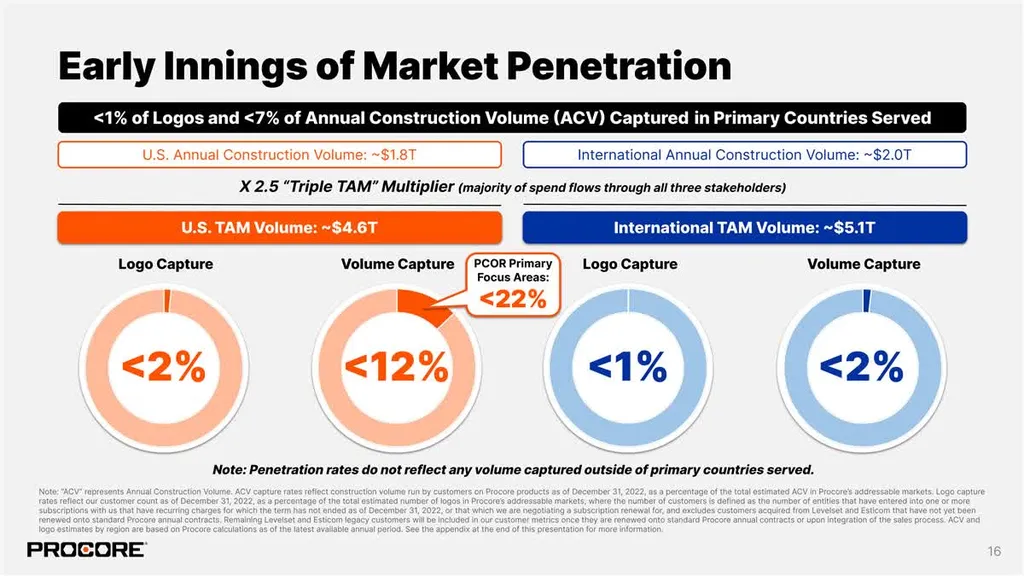
The construction industry is at a crossroads, balancing the need for rapid urbanization with the imperative of sustainability. Procore Technologies, with its cloud-based construction management platform, is at the forefront of this transformation. The company’s tools facilitate collaboration among stakeholders, from preconstruction planning to project execution, enabling more efficient and sustainable building practices. As the global construction market grows, driven by infrastructure investments and technological advancements, Procore’s platform could become even more indispensable.
However, the recent sell-offs by insiders and the mixed activity from institutional investors highlight the challenges ahead. The construction tech sector is highly competitive, and Procore must continue to innovate and deliver value to maintain its market position. The company’s ability to navigate these challenges will be crucial in determining its long-term success.
As the construction industry evolves, the role of technology will only grow in importance. Procore Technologies, with its focus on collaboration and efficiency, is well-positioned to capitalize on this trend. Yet, the recent market activity serves as a reminder that even the most promising companies face uncertainties. For investors, the key will be to monitor Procore’s progress closely, balancing the potential rewards against the inherent risks of the construction tech sector.