
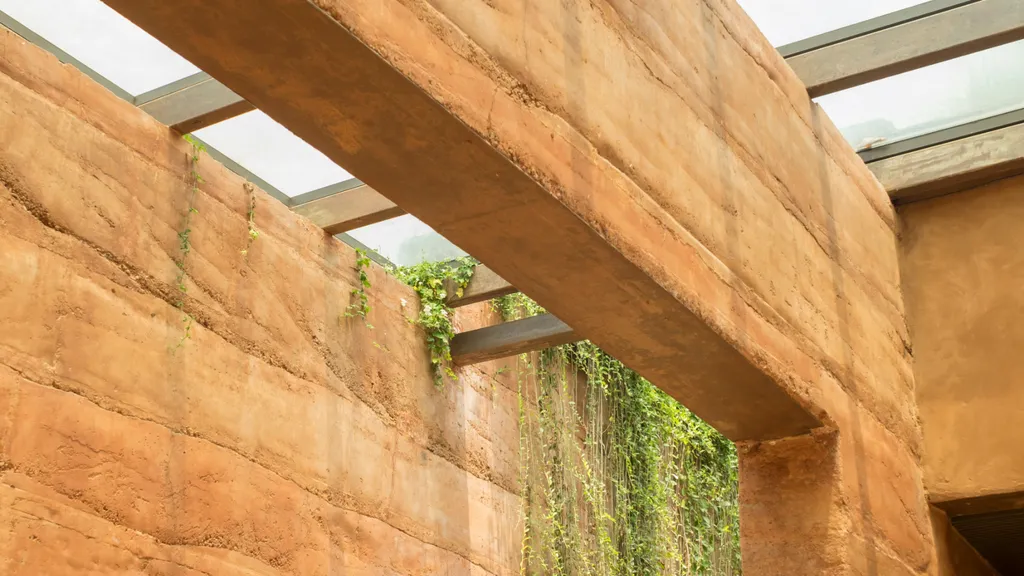
In a groundbreaking study published in the journal *Scientific Reports* (translated from Arabic as “Scientific Reports”), researchers have unveiled a promising advancement in sustainable construction materials that could reshape the energy sector’s approach to building design and thermal efficiency. The research, led by Waleed Fouad from Mansoura University’s Engineering Technology and Environmental Management department, explores the potential of rammed earth (RE) walls stabilized with construction and demolition waste (CDW) and calcium oxide (CaO).
The construction industry is under increasing pressure to reduce its environmental footprint, and this study offers a compelling solution. Traditional masonry and concrete, while durable and widely used, consume significant natural resources and emit substantial CO2. Rammed earth, a sustainable and energy-efficient alternative, has historically been limited by its strength. Fouad’s research addresses this limitation by incorporating CDW and CaO into RE walls, enhancing both their structural integrity and thermal performance.
Fouad and his team designed and tested seven mix designs, varying the proportions of CDW (10–30%) and CaO (2–6%). The optimal mixture, CDW30–C2 (30% CDW and 2% CaO), achieved impressive results. “The CDW30–C2 mixture demonstrated a peak unconfined compressive strength of 9.3 MPa at 28 days, coupled with the lowest thermal conductivity of 0.88 W/m·K,” Fouad explained. This mixture also exhibited moderate embodied energy (705.27 MJ/m3) and reduced carbon emissions (177.73 kg/m3), making it a highly efficient and sustainable option.
To validate the practical applicability of their findings, the researchers constructed a full-scale RE wall using the CDW30–C2 mixture and subjected it to thermal insulation tests in a controlled climate chamber. The results were promising, with a time lag of up to 90 minutes and a decrement factor of 0.85. These findings indicate favorable thermal inertia and effective heat transfer moderation, even under varying relative humidity conditions (40–80%).
The synergistic effects of CDW particles enhanced mechanical interlocking and matrix densification, while CaO contributed to pozzolanic reactivity and void filling. Compared to conventional fired brick and concrete, the optimized RE mix demonstrated competitive performance with significantly lower environmental impact.
This research has profound implications for the energy sector. As buildings account for a significant portion of global energy consumption, the adoption of low-carbon, resource-efficient materials like CDW–CaO stabilized rammed earth could lead to substantial energy savings. The enhanced thermal performance of these walls can reduce the need for artificial heating and cooling, lowering energy bills and decreasing carbon emissions.
Moreover, the use of construction and demolition waste in these mixtures promotes a circular economy, reducing waste and conserving natural resources. “This study demonstrates the viability of CDW–CaO stabilized rammed earth as a climate-resilient, low-carbon, and resource-efficient building solution for sustainable construction,” Fouad stated.
As the construction industry continues to seek sustainable and energy-efficient solutions, this research offers a compelling alternative that could shape future developments in the field. By integrating waste materials and innovative stabilization techniques, the industry can move towards a more sustainable and resilient future.