
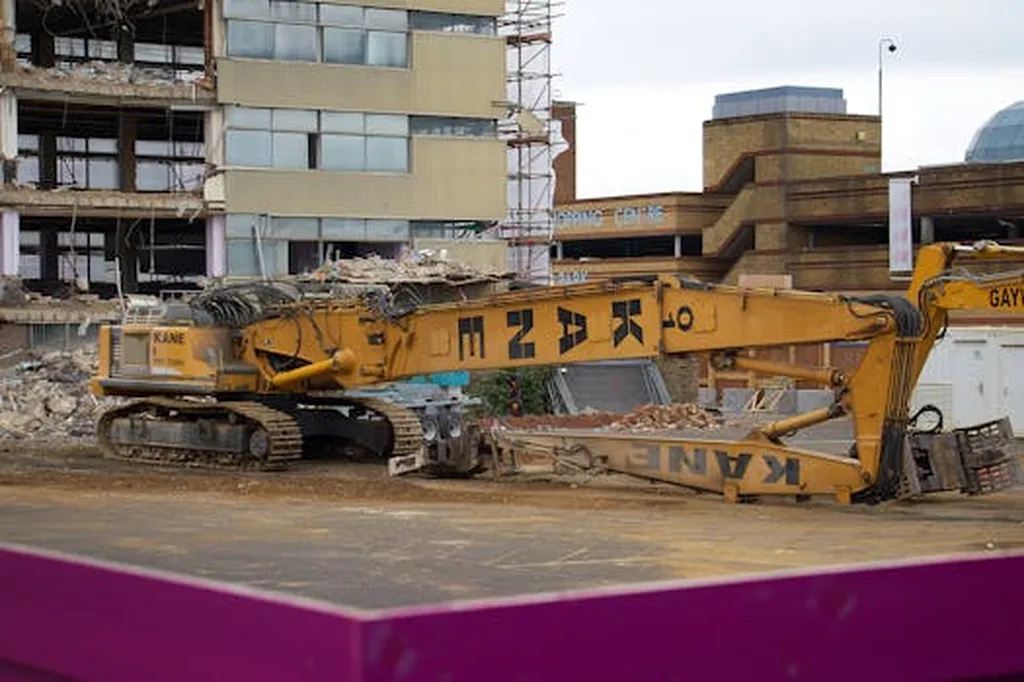
In the heart of Italy, a small municipality named Caivano is quietly making waves in the construction industry, offering a compelling case study that could reshape how we approach building demolition and redevelopment. The research, led by Daniela Menna from the Department of Architecture and Industrial Design at the “Luigi Vanvitelli” University of Campania, sheds light on the economic aspects of demolition, challenging conventional wisdom and paving the way for more sustainable construction practices.
Caivano’s story begins with a building in need of energy efficiency improvements and seismic upgrades. Faced with the decision to renovate or demolish and rebuild, the municipality opted for the latter, a choice that proved economically advantageous and environmentally beneficial. “Through this case study, we aimed to highlight how investments in demolition, if properly planned, designed, assessed, and managed, can effectively contribute to building redevelopment,” Menna explains. The project not only allowed for a 35% increase in volume but also enabled the creation of a greater number of housing units, demonstrating the potential for demolition to drive urban regeneration.
The economic aspects of demolition are complex and multifaceted. Costs vary depending on project size, structural complexity, techniques employed, materials to be removed, and local regulations. However, the indirect impacts—such as the management of construction and demolition waste, the removal of hazardous substances, and potential environmental damage—are equally crucial. Menna’s research underscores the importance of evaluating these factors before proceeding with demolition, a principle emphasized in the EU Construction & Demolition Waste Management Protocol (2024).
The implications for the energy sector are significant. As the world grapples with the challenges of sustainable construction, the lessons from Caivano offer a blueprint for balancing economic, environmental, and technical considerations. The research suggests that demolition, when approached strategically, can be a catalyst for sustainable urban development, supporting the transition towards a circular economy.
Published in the journal ‘Buildings’ (translated from Italian as ‘Edifici’), this study serves as a reminder that the end-of-life phase of a building is not merely an afterthought but a critical aspect of sustainable construction. As the construction industry continues to evolve, the insights from Caivano could shape future developments, encouraging a more holistic approach to building redevelopment. Menna’s work challenges us to think differently about demolition, not as an end but as a beginning—a stepping stone towards a more sustainable and economically viable future.