
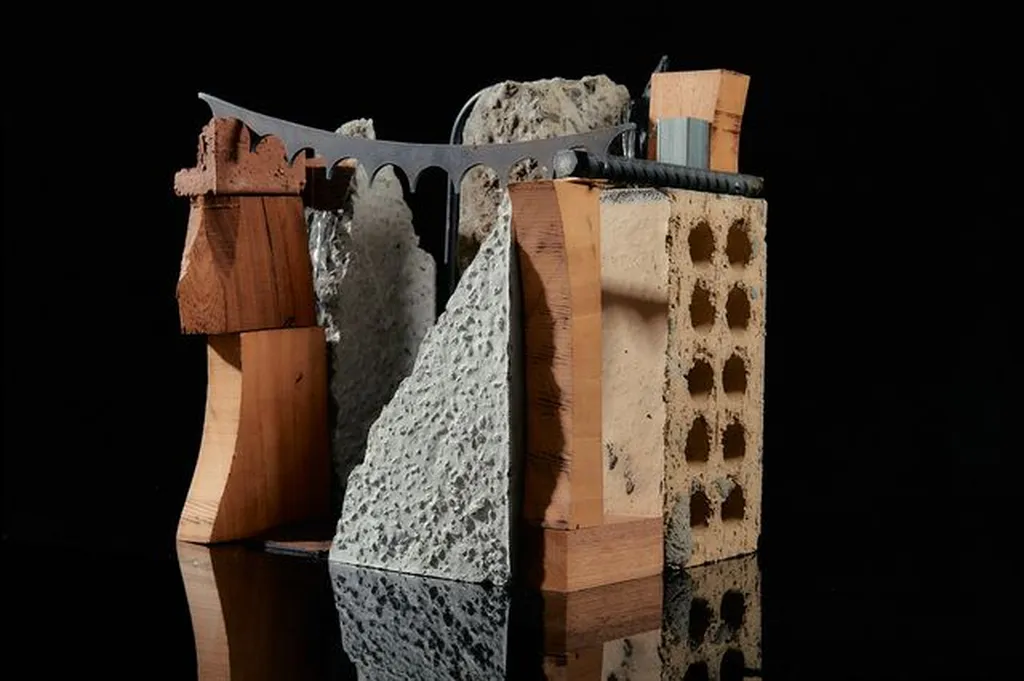
In a significant stride towards sustainable construction, researchers have demonstrated the potential of recycling porcelain and brick waste as viable alternatives to natural sand in concrete production. This innovative approach not only addresses the growing demand for eco-friendly materials but also preserves the mechanical and durability properties of concrete, according to a study published in the journal *Construction Materials* (translated from Arabic).
The research, led by Mustafa Thaer Hasan from the College of Engineering at the University of Wasit in Iraq, explores the feasibility of utilizing porcelain waste powder (PWP) and brick waste powder (BWP) as partial substitutes for natural sand. “The increasing demand for sustainable construction materials has prompted the recycling of construction and demolition waste in concrete manufacturing,” Hasan explains. “Our study investigates the feasibility of utilizing porcelain and brick waste as partial substitutes for natural sand in concrete with the objective of improving sustainability and preserving mechanical and durability characteristics.”
The study conducted an experimental program in three phases. Initially, natural sand was partially replaced with PWP and BWP in proportions of 25%, 50%, and 75% of the weight of the fine aggregate. In the second phase, polypropylene fibers were added to enhance tensile and flexural properties. The final phase involved the use of zinc oxide nanoparticles (ZnO-NPs) as a partial substitute for cement to improve microstructure and strength progression.
The results were promising, with porcelain waste powder outperforming brick waste powder in all mechanical and durability-related characteristics, particularly at 25% and 50% sand replacement ratios. The integration of polypropylene fibers improved fracture resistance and ductility, while the incorporation of zinc oxide nanoparticles enhanced hydration, optimized the pore structure, and significantly boosted compressive and tensile strength over prolonged curing durations.
“The best results were obtained with a mix of 50% porcelain sand aggregate, 1% zinc oxide nanoparticles as cement replacement, and 0.5% polypropylene fibers,” Hasan notes. “The improvements in compressive strength, flexural strength, and splitting tensile strength were 39.5%, 46.2%, and 60%, respectively, at 28 days.”
This research holds substantial commercial implications for the construction and energy sectors. By utilizing recycled materials, construction companies can reduce their environmental footprint while maintaining the quality and durability of their projects. The energy sector, in particular, stands to benefit from the enhanced mechanical properties of the developed concrete, which can lead to more robust and long-lasting infrastructure.
The findings confirm the feasibility of using porcelain and brick waste as sand replacements in concrete, as well as polypropylene fiber-reinforced concrete and polypropylene fiber-reinforced concrete mixed with zinc oxide nanoparticles as a sustainable option for construction purposes. This study paves the way for future developments in sustainable construction materials, offering a viable solution to the growing demand for eco-friendly and high-performance building materials.
As the construction industry continues to evolve, the integration of recycled materials and advanced technologies will play a crucial role in shaping the future of sustainable construction. This research not only highlights the potential of porcelain and brick waste as valuable resources but also underscores the importance of innovation in addressing the challenges of modern construction.