
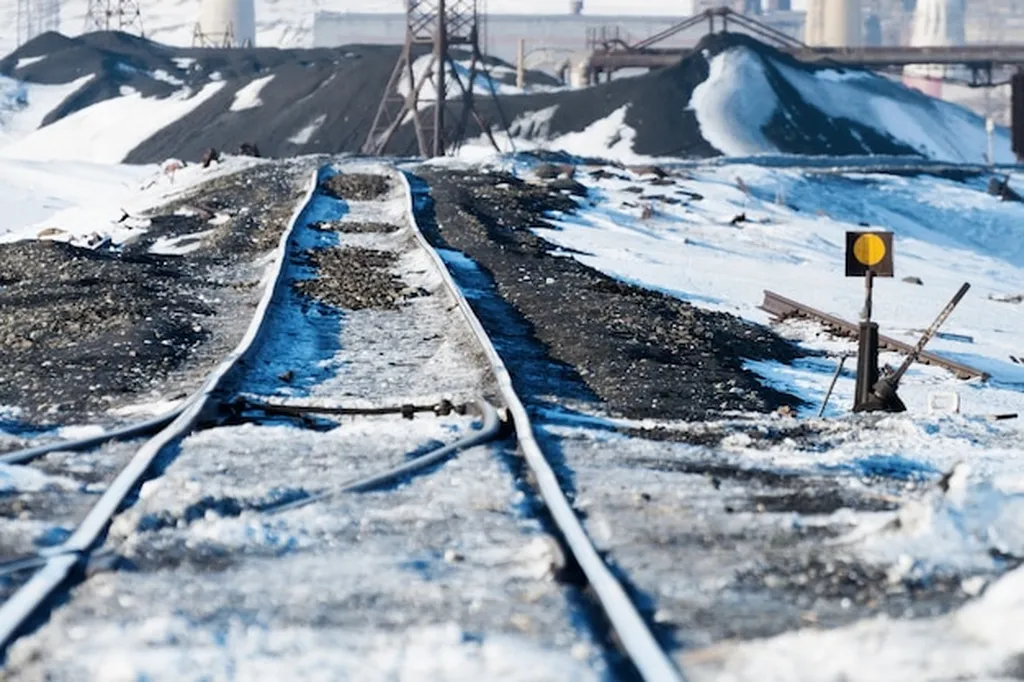
In the vast, frost-laden expanses of Russia’s permafrost regions, constructing railway infrastructure presents a unique set of challenges. The dynamic geological processes, extreme climatic conditions, and the need for precise coordination among project participants demand innovative solutions. Enter Taisia V. Shepitko, a researcher from the Russian University of Transport in Moscow, who has been pioneering a method to integrate intelligent technologies into the design and construction of railway roadbeds on permafrost soils.
Shepitko’s research, published in the journal *Нанотехнологии в строительстве* (Nanotechnologies in Construction), focuses on developing an expert system that can automate and optimize the technological processes involved in railway construction. This system, based on a production knowledge model, decomposes the railway roadbed into constructional elements using graph models. These models formalize the interconnections between subsystems, enabling the generation of construction work nomenclature.
“The development of efficient technological processes is crucial for railway construction in permafrost regions,” Shepitko explains. “Our methodology aims to achieve an optimal balance between timelines, cost, resources, and operational reliability of the structure.”
The practical significance of Shepitko’s work is underscored by the implementation of experimental software modules that incorporate intelligent components. These modules facilitate a transition from traditional variant-based design to adaptive real-time solutions, minimizing errors and time expenditures. “This approach allows us to move beyond conventional methods and adapt to the unique conditions of the cryolithozone,” Shepitko notes.
The implications for the energy sector are substantial. Efficient railway construction in permafrost regions can enhance the transportation of resources, including oil and gas, from remote areas to more accessible markets. This can lead to significant economic benefits and contribute to the sustainable development of the industry.
Shepitko’s research highlights the potential of intelligent information systems in overcoming the challenges posed by permafrost soils. By formalizing processes and automating decision-making, these systems can play a key role in achieving sustainable development in railway construction.
As the energy sector continues to expand into remote and challenging environments, the integration of intelligent technologies into construction processes will become increasingly important. Shepitko’s work offers a glimpse into the future of railway construction, where adaptive, real-time solutions can minimize errors and maximize efficiency. This research not only advances the field of railway construction but also paves the way for innovative solutions in other sectors facing similar challenges.