
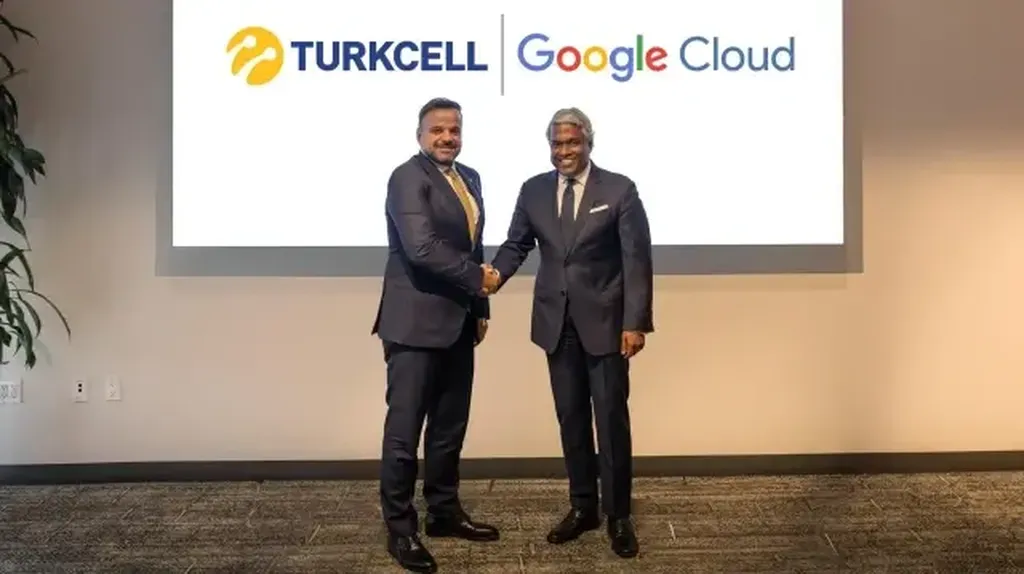
Türkiye is set to become a regional digital hub, thanks to a landmark partnership between Turkcell and Google Cloud. This collaboration, announced recently, will see the construction of hyperscale data centers in Ankara, marking a significant milestone in Türkiye’s digital transformation journey. The project, expected to contribute approximately $5 billion annually to the Turkish economy, underscores the growing intersection of technology, sustainability, and economic growth.
At the heart of this initiative is the concept of a “Sovereign Cloud,” a fully compliant infrastructure aligned with local regulations. This model ensures that locally generated data remains stored and processed domestically, addressing critical concerns around data sovereignty and security. Turkcell CEO Ali Taha Koç emphasized the importance of this aspect, stating, “This investment allows us to say clearly that ‘Türkiye’s data will stay in Türkiye.'”
The data centers, scheduled to begin construction in the first quarter of 2026 and reach full capacity by 2028, will be composed of three synchronized but independent sites. This three-site architecture is designed to ensure redundancy and operational resilience, with data encrypted and stored across all three locations. Encryption keys will be controlled exclusively by customers, further enhancing security.
The implications of this project extend far beyond data storage. The Sovereign Cloud model will enable government institutions and financial entities to leverage cloud services while meeting strict security and regulatory requirements. Moreover, the proximity of the data centers will reduce latency, facilitating faster access to cloud services nationwide. As Koç noted, “The closer you are to the data center, the more efficient the service.”
For startups, the pay-as-you-use cloud model is a game-changer. It eliminates the need for large upfront IT investments, allowing companies to scale efficiently and cost-effectively. Koç highlighted this benefit, stating, “Instead of building infrastructure for 1 million users when you only have 10,000 today, companies will pay only for what they use.” This approach is expected to shorten development cycles and improve cost efficiency, fostering innovation and entrepreneurship.
The project also aligns with Türkiye’s ambitions in the realm of smart cities and advanced telecommunications. Koç pointed out that the rapid growth in data generation driven by 5G and eventually 6G will make hyperscale data centers a critical part of national infrastructure. “With smart cities, everything from homes and meters to traffic lights will be connected,” he said. “By applying AI models to this data, we will add intelligence to our cities through these data centers in Türkiye.”
Sustainability is another key consideration. Turkcell is expanding its renewable energy investments to meet the future demand of the data centers. The company operates an 18-megawatt wind power plant in Izmir and has commissioned 63 megawatts of solar capacity as part of a planned 210-megawatt solar portfolio. Koç emphasized the company’s commitment to renewable energy, stating, “As Türkiye’s Turkcell, we will continue to use our sun and wind.” The goal is to meet the energy needs of the data centers with renewable sources and achieve net-zero emissions by 2050.
This partnership between Turkcell and Google Cloud is not just about building data centers; it’s about building a sustainable, secure, and innovative future for Türkiye. By ensuring that data stays within the country’s borders, fostering entrepreneurship, and committing to renewable energy, this project sets a new standard for digital transformation. It’s a testament to how technology and sustainability can converge to drive economic growth and create a smarter, more connected world.