
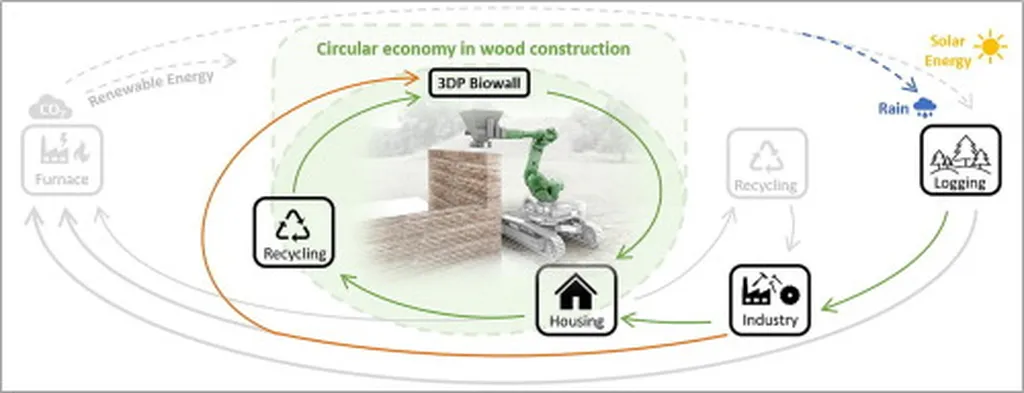
In the quest for sustainable construction practices, a new study sheds light on the pivotal role governments must play in managing timber waste through circular economy principles. Published in the journal *Chemical Engineering Transactions* (translated as *Transactions on Chemical Engineering*), the research, led by Muhammad Alfarizi, explores how policy, incentives, and infrastructure can transform timber waste management on construction sites.
Timber waste from construction sites has long been a thorn in the side of environmental sustainability, with disposal methods like landfilling and incineration contributing to ecological degradation. While recycling and reuse offer promising alternatives, these practices have yet to be fully realized due to limited awareness, weak markets, and inadequate support systems. Alfarizi’s study, which reviewed literature from 2019 to 2024, underscores the need for government intervention to bridge these gaps and foster a circular economy (CE) for timber waste.
“The success of circular economy practices in timber waste management heavily depends on strong government support through regulations, incentives, and education,” Alfarizi asserts. The study highlights that CE principles—such as recycling, reuse, and material recovery—can significantly reduce timber waste. However, without structured policies, public-private partnerships, and increased awareness, these practices remain underutilized.
For the energy sector, the implications are substantial. Effective timber waste management can lead to more sustainable construction practices, reducing the environmental footprint of buildings and infrastructure. This, in turn, can lower operational costs and enhance the sector’s reputation for sustainability, potentially opening new markets and investment opportunities.
The research calls for a more proactive role from governments in creating policies that incentivize circular economy practices. By doing so, they can help construction companies transition towards more sustainable and cost-effective waste management strategies. “A more structured policy approach is needed to promote circular timber management,” Alfarizi notes, emphasizing the importance of collaboration between public and private sectors.
As the construction industry grapples with the challenges of sustainability, this study serves as a timely reminder of the critical role governments play in driving change. By adopting the recommendations outlined in Alfarizi’s research, policymakers can pave the way for a more sustainable future, benefiting both the environment and the energy sector. The findings not only highlight the need for immediate action but also offer a roadmap for achieving long-term sustainability goals in construction.