
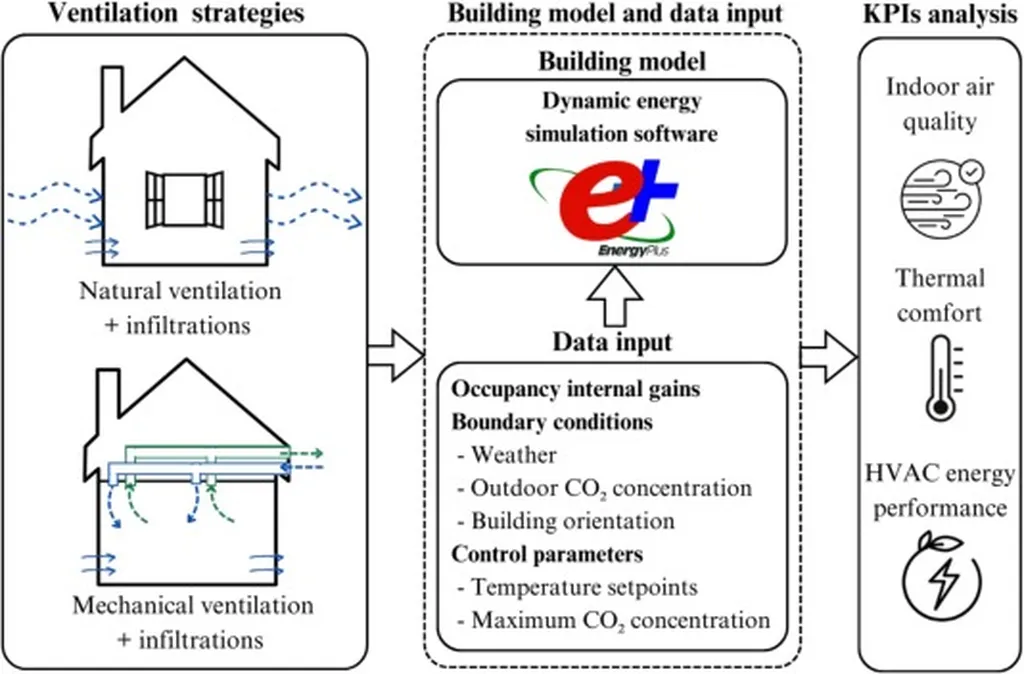
In the ever-evolving landscape of modern construction, energy efficiency and indoor environmental quality are becoming increasingly intertwined. A recent study published in the journal *Energy Engineering and Control Systems* (translated from Ukrainian as *Energy Engineering and Control Systems*) sheds light on an integrated approach to energy certification and quality control of ventilation systems, offering valuable insights for the energy sector and construction industry alike.
Led by Oleksandr Pryimak from the Kyiv National University of Construction and Architecture, the research delves into the critical role of ventilation systems in building performance. Pryimak and his team investigated current methods for evaluating ventilation effectiveness, compliance with energy standards, and the impact of system design on indoor air quality. Their findings underscore the importance of a holistic approach to energy certification and quality control, which could significantly influence future construction practices and energy consumption patterns.
“Our study highlights the interconnection between certification processes and construction quality management,” Pryimak explained. “By systematically monitoring and optimizing ventilation systems, we can reduce energy consumption while maintaining comfort for building occupants.”
The research presents a comprehensive analysis of regulatory frameworks and practical assessment techniques, illustrating how systematic monitoring and optimization of ventilation systems can lead to substantial energy savings. Case studies included in the study demonstrate the potential for reducing energy consumption by up to 30% through improved ventilation system design and management.
For the energy sector, these findings are particularly relevant. As buildings account for a significant portion of global energy consumption, enhancing the energy efficiency of ventilation systems can have a profound impact on overall energy demand. The integrated approach proposed by Pryimak and his team could serve as a blueprint for future developments in the field, promoting sustainable construction strategies and supporting the development of high-performance, energy-efficient buildings.
Moreover, the study’s emphasis on quality control and performance assessment provides a foundation for improving energy certification protocols and quality assurance practices. This could lead to more stringent and effective regulations, ensuring that buildings meet high standards of energy efficiency and indoor environmental quality.
As the construction industry continues to evolve, the insights provided by this research are poised to shape future developments. By adopting an integrated approach to energy certification and quality control, stakeholders can drive innovation and promote sustainable practices, ultimately benefiting both the environment and the bottom line.
In an era where energy efficiency and sustainability are paramount, Pryimak’s research offers a timely and valuable contribution to the field. As the construction industry grapples with the challenges of reducing energy consumption and improving indoor environmental quality, the findings of this study provide a roadmap for achieving these goals.