
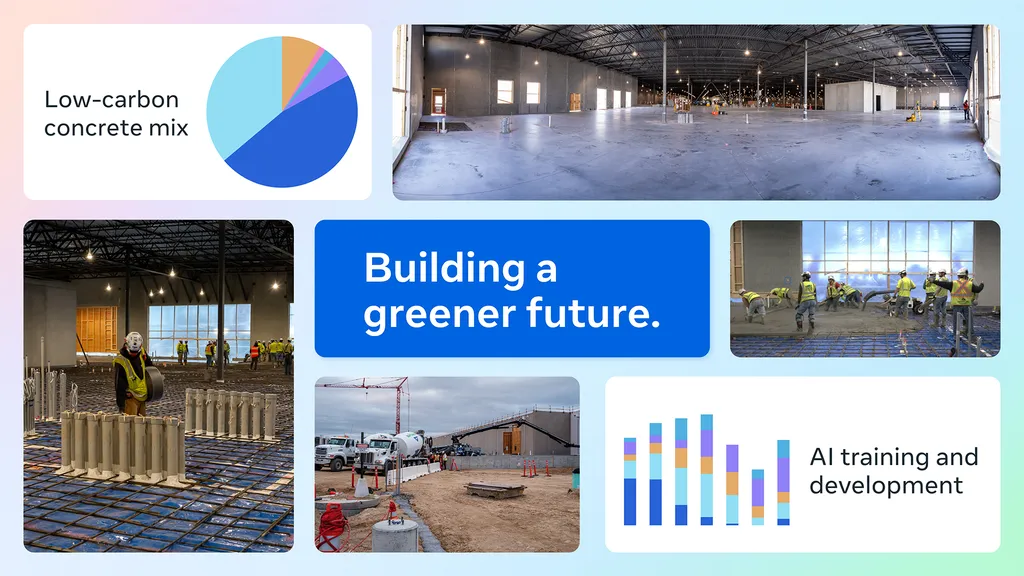
In the quest for sustainable construction materials, researchers have turned to fly ash-based geopolymer concrete (FA-GC) as a promising alternative to traditional concrete. A recent study led by Mohammadreza Noori Sichani from the Faculty of Architecture at Sapienza University of Rome has made significant strides in optimizing this eco-friendly material, with implications that could resonate throughout the energy sector.
The study, published in the journal *Scientific Reports* (translated to English as “Scientific Reports”), focuses on predicting and enhancing the compressive strength (CS) of FA-GC. By leveraging advanced artificial intelligence (AI) models, the research team aimed to improve the mix design of FA-GC for maximum performance. “The goal was to combine cutting-edge AI techniques with metaheuristic optimization to create a more efficient and sustainable concrete solution,” Sichani explained.
Several AI models were employed to predict the compressive strength of FA-GC, including the Tabular Prior-Data Fitted Network (TabPFN), Histogram-based Gradient Boosting (HistGBoost), M5Prime, and Automatic Feature Interaction Learning (AutoInt). Among these, TabPFN emerged as the top performer, achieving the highest accuracy during both training and testing phases. This model demonstrated superior stability and predictive reliability, with the lowest root mean square error (RMSE) and symmetric mean absolute percentage error (sMAPE).
To optimize the mix design, the researchers utilized four metaheuristic algorithms: Harris Hawks Optimization (HHO), Grey Wolf Optimization (GWO), Lyrebird Optimization Algorithm (LOA), and Polar Bear Algorithm (PBA). HHO stood out, yielding the highest compressive strength of 61.56 MPa. “The combination of these advanced techniques allowed us to identify the optimal mix design for FA-GC, significantly enhancing its performance,” Sichani noted.
Sensitivity analysis revealed that the presence of Al₂O₃ (%) and SiO₂ (%) most strongly influenced the compressive strength, followed by the amount of coarse aggregate. These findings were confirmed through partial dependence plots, which also showed that fine aggregate and duration had less impact on the overall strength.
The research highlights the potential of integrating AI models with metaheuristic optimization, sensitivity analysis, and uncertainty evaluation to improve the prediction, stability, and mix design of FA-GC. This approach not only paves the way for more efficient and sustainable construction materials but also offers significant commercial impacts for the energy sector. By optimizing the use of fly ash, a byproduct of coal combustion, this technology can contribute to reducing waste and lowering carbon emissions.
As the construction industry continues to seek sustainable solutions, the findings of this study could shape future developments in the field. “Our research demonstrates the power of combining advanced technologies to address real-world challenges,” Sichani said. “We hope that these insights will inspire further innovation in the development of eco-friendly construction materials.”
With the growing demand for sustainable practices, the integration of AI and metaheuristic optimization in the design of geopolymer concrete represents a significant step forward. This research not only enhances our understanding of FA-GC but also opens new avenues for its application in the energy sector, ultimately contributing to a more sustainable future.