
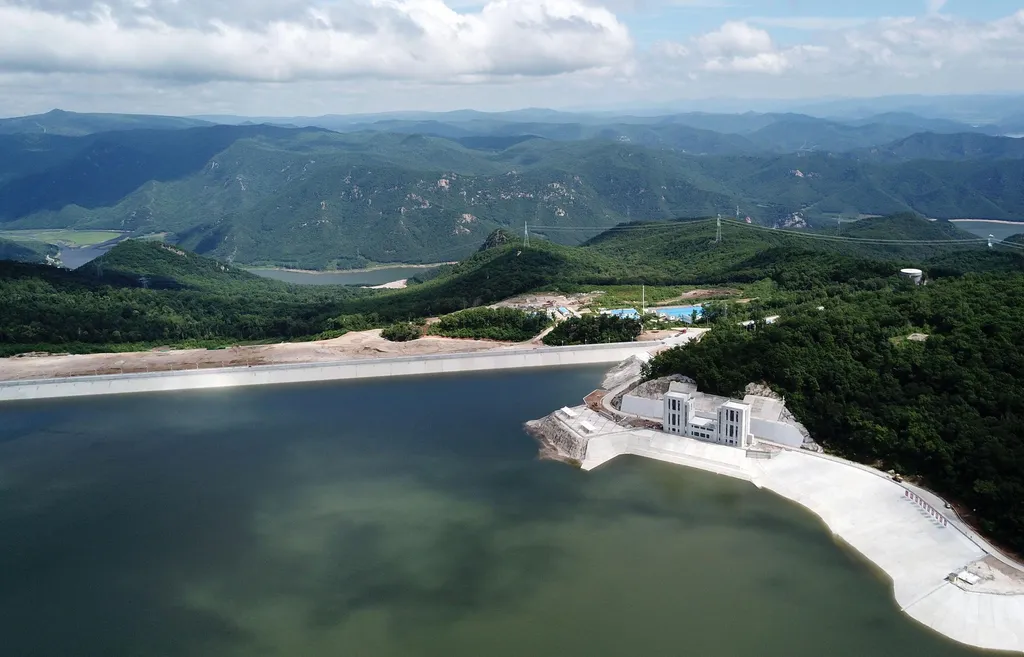
In the pursuit of carbon neutrality, China has been rapidly expanding its pumped storage hydropower infrastructure, a critical technology for balancing the intermittency of renewable energy sources. However, a new study published in *Scientific Reports* (translated as *Nature Communications* in English) sheds light on the often-overlooked environmental impact of constructing these facilities: embodied carbon emissions. The research, led by Zewen Ge from the School of Accounting and Finance at Xiamen University Tan Kah Kee College, offers a comprehensive analysis of these emissions and their driving factors, providing valuable insights for the energy sector.
From 2000 to 2020, China’s cumulative embodied carbon emissions from pumped storage hydropower construction rose from 2.38 million tons to 23.83 million tons, according to the study. This growth was not uniform across regions, with Anhui and Zhejiang provinces contributing the most to total emissions, while Henan and Inner Mongolia had the highest emissions per unit of GDP. “The spatial variation in emissions highlights the need for tailored regional policies to mitigate the environmental impact of these projects,” Ge noted.
The study employed an environmentally extended input-output model combined with decomposition analysis to identify five key driving factors: carbon emission intensity, investment efficiency, energy conversion efficiency, capacity generation efficiency, and economic scale. Using the Logarithmic Mean Divisia Index (LMDI) decomposition model, the researchers found that economic scale, investment efficiency, and energy conversion efficiency were the primary drivers of emission growth. Conversely, carbon intensity of inputs and capacity generation efficiency had significant offsetting effects.
These findings underscore the importance of continuous technical innovation and the promotion of a circular economy to reduce embodied carbon emissions. “Efficient cost management and tailored regional policies are crucial for promoting sustainable energy transitions,” Ge emphasized. The research suggests that by addressing these driving factors, the energy sector can significantly mitigate the environmental impact of pumped storage hydropower projects.
As China and other countries strive to meet ambitious carbon neutrality targets, the insights from this study could shape future developments in the field. By understanding and addressing the embodied carbon emissions of pumped storage hydropower infrastructure, the energy sector can work towards a more sustainable and efficient future. The study’s findings serve as a reminder that the transition to renewable energy requires a holistic approach, considering not just the benefits but also the environmental costs of the technologies involved.