
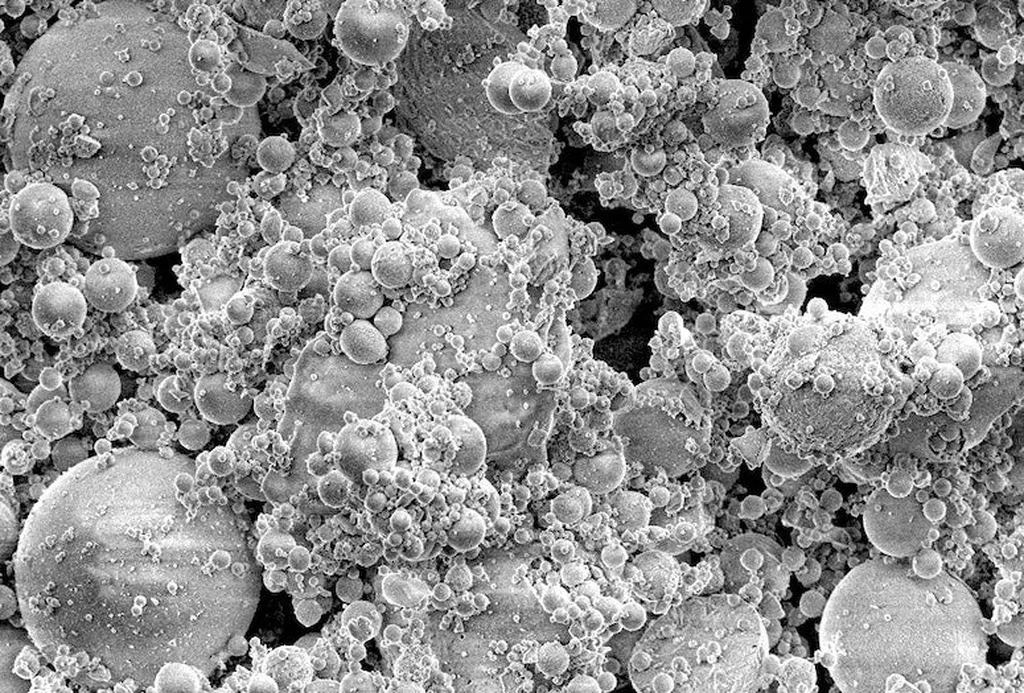
In the quest for sustainable construction materials, researchers have turned their attention to an often-overlooked byproduct of coal combustion: fly ash. A recent study led by Mohammad Alharthai from the Department of Civil Engineering at Najran University in Saudi Arabia has shed new light on the potential of fly ash to revolutionize concrete pavements, offering a greener alternative to traditional materials.
The study, published in the journal “Reviews on Advanced Materials Science” (which translates to “Reviews on Advanced Materials Science”), critically examines the role of fly ash as a sustainable binder and geopolymer precursor in concrete pavements. By synthesizing existing research, Alharthai and his team have uncovered compelling evidence that fly ash can significantly enhance the performance of concrete while reducing its environmental impact.
“Our review reveals that optimal performance is generally achieved with 15–20% fly ash replacement,” Alharthai explained. “But the benefits don’t stop there. Higher dosages, up to 70%, can yield long-term strength benefits, making it a viable option for large-scale infrastructure projects.”
The study compares the behavior of Class F and Class C fly ash, focusing on hydration, geopolymerization, and the interfacial transition zone (ITZ) development. The findings show that fly ash-blended concretes exhibit improved abrasion resistance, reduced permeability, and superior freeze-thaw and sulfate resistance compared to ordinary Portland cement (OPC) mixes. This enhanced durability translates to longer-lasting pavements, reducing maintenance costs and downtime for energy sector facilities.
From an environmental perspective, the benefits are even more striking. Life-cycle assessments confirm that fly ash substitution can reduce embodied CO2 emissions by 40–80% and lower energy consumption by up to 45%. This is a significant step towards low-carbon pavement infrastructure, aligning with global efforts to combat climate change.
The commercial implications for the energy sector are substantial. As the world shifts towards sustainable practices, the demand for eco-friendly construction materials is on the rise. Fly ash, a readily available byproduct of coal combustion, offers a cost-effective and sustainable solution for concrete pavements. By integrating fly ash into their projects, energy companies can reduce their carbon footprint, lower operational costs, and contribute to a greener future.
“This work contributes to the advancement of sustainable construction practices and offers valuable insights for researchers, practitioners, and policymakers in the field of pavement engineering,” Alharthai noted. The study’s findings could shape future developments in the field, paving the way for innovative and sustainable construction materials.
As the energy sector continues to evolve, the integration of fly ash in concrete pavements presents a promising opportunity for sustainable growth. By embracing this technology, companies can stay ahead of the curve, meeting the demands of a rapidly changing market while contributing to a more sustainable future.