
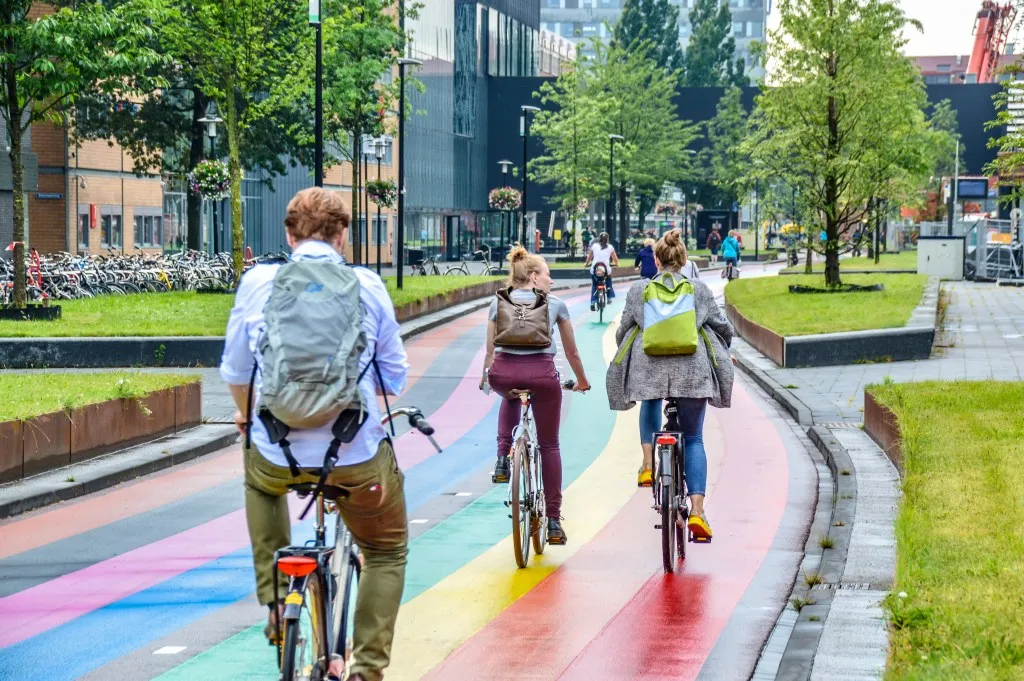
In the heart of Utrecht, the Netherlands, a quiet revolution is underway, not on the streets, but in the data streams flowing from the bikes of its citizens. Yacouba Kone, a researcher at LAET, ENTPE-CNRS-Université Lumière Lyon 2 in France, is harnessing this data to understand how cycling practices are evolving, particularly in the wake of COVID-19. His work, published in the European Transport Research Review (or *European Journal of Transport and Infrastructure Research* in English), offers a glimpse into the future of sustainable urban mobility and the role of citizen participation in shaping it.
Kone’s research focuses on the Sniffer-Bike initiative, a citizen observatory that collects GPS trajectory data from cyclists. This crowdsourced data is a goldmine for understanding changes in cycling routines over time. “The potential of these data to track longitudinal changes in cycling routines is immense,” Kone explains. “It allows us to see not just where people are cycling, but how their habits are shifting in response to external factors like the pandemic.”
The implications for the energy sector are significant. As cities push for more sustainable transportation options, understanding cycling patterns can help optimize infrastructure and reduce reliance on fossil fuels. “By analyzing these data, we can identify key areas where cycling infrastructure can be improved, making it a more viable option for commuters,” Kone adds. This could lead to a reduction in carbon emissions and a shift towards more sustainable energy use in urban areas.
However, the research also highlights the challenges of ensuring representative samples. “While the data is rich, it’s crucial to ensure that it’s representative of the broader population to make accurate inferences and generalize results,” Kone notes. This is a critical point for policymakers and urban planners who rely on data to make informed decisions.
The study’s findings could shape future developments in the field of sustainable mobility. By leveraging participatory sensing data, cities can gain a deeper understanding of cycling practices and make data-driven decisions to promote active micromobility. This could lead to more bike-friendly cities, reduced traffic congestion, and a healthier population.
As Kone’s research shows, the future of urban mobility lies not just in the infrastructure, but in the data. By engaging citizens and harnessing the power of crowdsourced information, we can create more sustainable, efficient, and resilient cities. The journey towards sustainable mobility is just beginning, and the data from initiatives like Sniffer-Bike are lighting the way.