
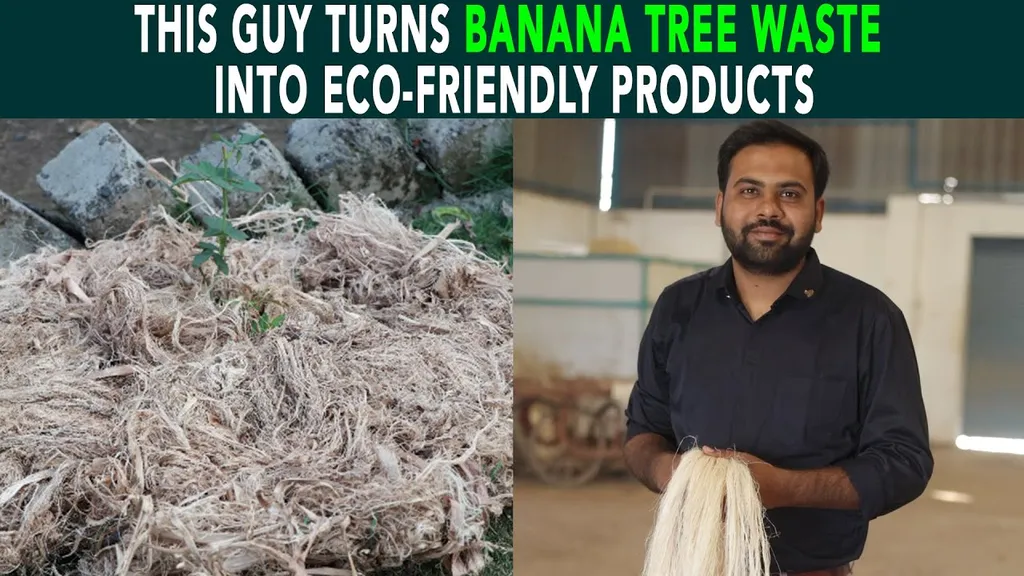
In the heart of India, researchers are turning agricultural waste into a building block for the future of sustainable construction. Sivakumar Sankaralingam, a civil engineering professor at PSNA College of Engineering and Technology in Dindigul, is leading a charge to transform banana waste into high-performance, eco-friendly concrete. His recent study, published in the journal “Advances in Civil and Architectural Engineering” (which translates to “Advances in Civil and Architectural Engineering”), is making waves in the industry, offering a promising solution to two pressing challenges: waste management and sustainable construction.
The research focuses on the synergistic effects of banana fiber (BF) and banana leaf ash (BLA) on concrete’s strength and durability. “We’re not just looking at waste management; we’re exploring a circular economy where agricultural by-products enhance construction materials,” Sankaralingam explains. The study reveals that incorporating BF as natural reinforcement and BLA as a partial cement replacement can significantly improve tensile properties and resistance to environmental degradation, all without substantially compromising compressive strength.
The implications for the construction industry are substantial. With banana fibers added at varying percentages (0.25%, 0.50%, and 0.70%) and banana leaf ash replacing cement at rates of 5%, 10%, 15%, and 20%, the research demonstrates a viable pathway to reducing the carbon footprint of concrete production. This is particularly relevant in the energy sector, where sustainable building practices are increasingly prioritized.
“Imagine constructing energy-efficient buildings with materials that are not only stronger but also more environmentally friendly,” Sankaralingam says. “This research brings us one step closer to that reality.” The study’s findings suggest that the optimal combination of BF and BLA can enhance concrete performance, contributing to a more sustainable and circular construction economy.
As the world grapples with the challenges of climate change and resource depletion, innovations like these are crucial. Sankaralingam’s research highlights the potential of agricultural by-products to revolutionize the construction industry, offering a blueprint for future developments in sustainable building materials. The energy sector, in particular, stands to benefit from these advancements, as the demand for eco-friendly and energy-efficient structures continues to grow.
In a world where sustainability is no longer optional, Sankaralingam’s work serves as a beacon of hope, demonstrating that the solutions to some of our most pressing challenges may lie in the most unexpected places—like the humble banana. As the construction industry continues to evolve, research like this will undoubtedly shape the future of building practices, paving the way for a more sustainable and resilient world.