
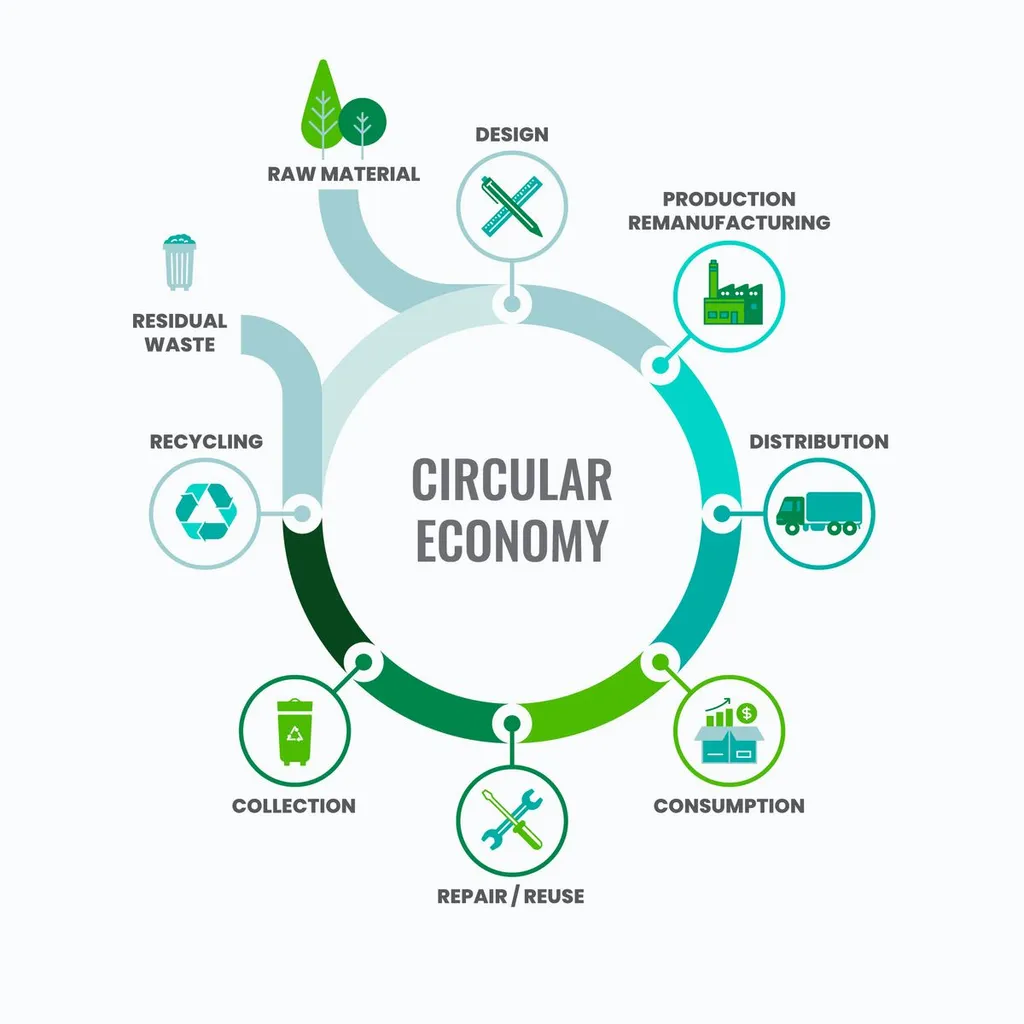
In the rapidly evolving world of logistics and supply chain management, a groundbreaking study led by Iryna Halak from the National Transport University (NTU) in Kyiv, Ukraine, is challenging traditional models and paving the way for a more sustainable and dynamic future. Published in the journal ‘Дороги і мости’ (which translates to ‘Roads and Bridges’), Halak’s research focuses on improving material flow models to better align with the principles of the circular economy and adapt to the dynamic market environment.
The study highlights the limitations of classical material flow models, which primarily focus on the linear movement of resources from supplier to consumer. These models, according to Halak, fail to account for the complexities of modern economic realities, such as reverse logistics, the multiple life cycles of products, and the constant interaction between competing systems. “Rapid changes in the economic environment, the emergence of new technologies, and the need to integrate the principles of sustainable development necessitate a revision of classical approaches,” Halak explains.
The research employs a comparative analysis of various scientific approaches to defining material flow and logistics systems. By critically analyzing existing literature and systematizing different viewpoints, Halak and her team have developed a new model that incorporates reverse logistics and demonstrates how material flow can operate within multiple logistics systems simultaneously.
This innovative model has significant implications for the energy sector, particularly in terms of resource management and sustainability. By considering the entire life cycle of products and incorporating reverse logistics, companies can reduce waste, optimize resource use, and minimize environmental impact. “Material flow should be considered as a dynamic, multidirectional, and theoretically infinite process,” Halak states, emphasizing the need for a more holistic approach to logistics and supply chain management.
The study’s findings could shape future developments in the field by encouraging the adoption of more sustainable and adaptable logistics practices. As the energy sector continues to evolve, the ability to manage material flows efficiently and responsibly will be crucial for companies looking to stay competitive and meet the demands of a dynamic market environment.
In conclusion, Halak’s research offers a compelling vision for the future of logistics and supply chain management, one that is more sustainable, adaptable, and aligned with the principles of the circular economy. As the energy sector continues to grapple with the challenges of resource management and sustainability, this study provides valuable insights and a roadmap for navigating the complexities of the modern economic landscape.