
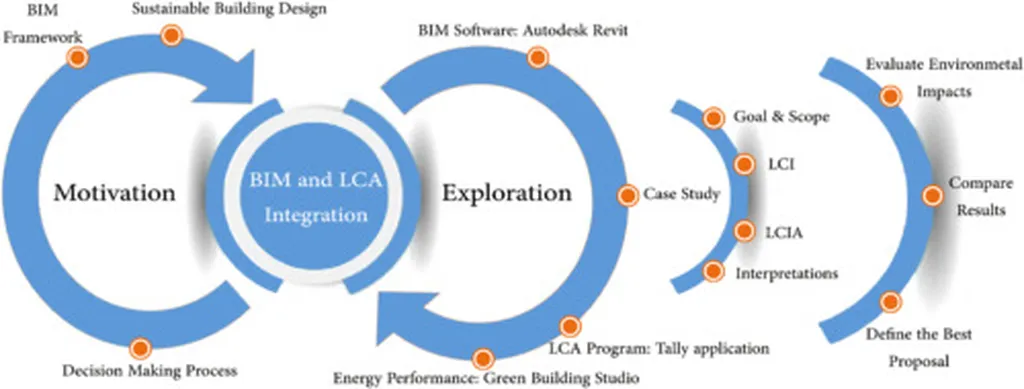
In the quest for sustainable construction practices, a powerful alliance is emerging between two key technologies: Building Information Modeling (BIM) and Life Cycle Assessment (LCA). A recent study published in the journal *Buildings* (translated as “Buildings”), led by Paola Maria Albanese from the Department of Engineering for Innovation at the University of Salento in Italy, sheds light on how integrating these tools can revolutionize the way we build, with significant implications for the energy sector.
The construction industry is a major contributor to environmental degradation, accounting for a substantial portion of global CO2 emissions and waste. To mitigate this impact, architects, engineers, and builders are turning to LCA to evaluate the environmental footprint of materials and processes throughout their life cycles. Meanwhile, BIM has become a staple in modern construction, enabling digital representation and data management of physical and functional characteristics of places.
Albanese’s systematic review of 65 peer-reviewed studies reveals that combining BIM with LCA can significantly enhance decision-making, leading to more sustainable construction practices. “The integration of BIM and LCA offers a holistic approach to assessing and optimizing the environmental performance of buildings,” Albanese explains. “This synergy can guide designers and builders towards more informed choices, ultimately reducing the industry’s ecological impact.”
The study highlights that Autodesk Revit is the dominant BIM authoring tool, used in 77% of the analyzed cases, while the Ecoinvent database is the most cited source for Life Cycle Inventory data. However, the research also identifies critical barriers to widespread adoption, including interoperability issues between software, lack of standardized data, and high implementation costs.
For the energy sector, the implications are profound. By integrating LCA with BIM, energy companies can better assess the environmental impact of building materials and construction processes, leading to more sustainable and cost-effective solutions. “This approach allows energy providers to optimize resource use, reduce waste, and minimize emissions, aligning with global sustainability goals,” says Albanese.
The study suggests that overcoming the identified barriers is crucial for fully exploiting the potential of BIM-LCA integration. As the construction industry continues to evolve, this technological alliance could shape future developments, driving innovation and sustainability in building practices.
In the words of Albanese, “The future of sustainable construction lies in the seamless integration of digital tools and environmental assessments. By embracing this approach, we can build a greener, more efficient, and resilient built environment.”