
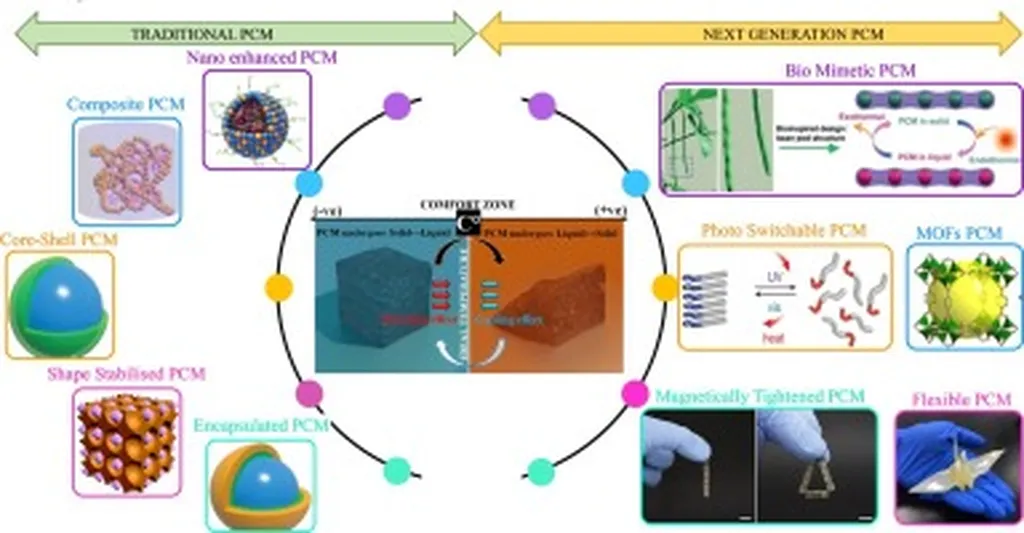
In the quest for more energy-efficient buildings, researchers are turning to Phase Change Materials (PCMs) as a promising solution for passive thermal management. However, a significant hurdle has been the corrosion risk these materials pose to metallic encapsulation, which can compromise their long-term stability and integrity. A recent study published in *Selected Scientific Papers: Journal of Civil Engineering* (Vybrané vedecké práce: Journal of Civil Engineering) introduces a novel methodology that could revolutionize how we assess and mitigate this risk, potentially unlocking the full potential of PCMs in the construction industry.
The Planned Interval Test (PIT) methodology, developed by lead author Dická Zuzana from the Technical University of Košice in Slovakia, offers a standardized approach to systematically analyze metal corrosion processes within dynamic PCM systems. Unlike conventional static tests, PIT enables precise monitoring of corrosion kinetics as a function of total exposure time and the number of thermal cycles, while also identifying individual degradation phases.
“This information is crucial for predicting durability and designing robust encapsulation systems,” Dická explains. By understanding the corrosion behavior of metals in contact with PCMs, researchers can develop safer and more durable solutions, ultimately supporting the widespread adoption of PCMs in sustainable construction.
The commercial implications of this research are substantial. PCMs have the potential to significantly enhance the energy efficiency of buildings, reducing heating and cooling costs and mitigating the environmental burden resulting from premature material failure. However, the corrosion risk has been a major barrier to their implementation. With the PIT methodology, developers can now accurately evaluate the corrosion resistance of metallic encapsulation materials, paving the way for more reliable and long-lasting PCM solutions.
Moreover, the ability to predict the durability of PCM systems can inform better design practices and maintenance strategies, further enhancing their commercial viability. As the construction industry continues to seek innovative solutions to meet sustainability goals, the PIT methodology could play a pivotal role in shaping the future of passive thermal management.
In the words of Dická, “This work is a step towards supporting the development of safer and more durable PCM solutions for sustainable construction.” With the PIT methodology, the industry is one step closer to unlocking the full potential of PCMs, driving forward the energy efficiency of buildings and contributing to a more sustainable future.