
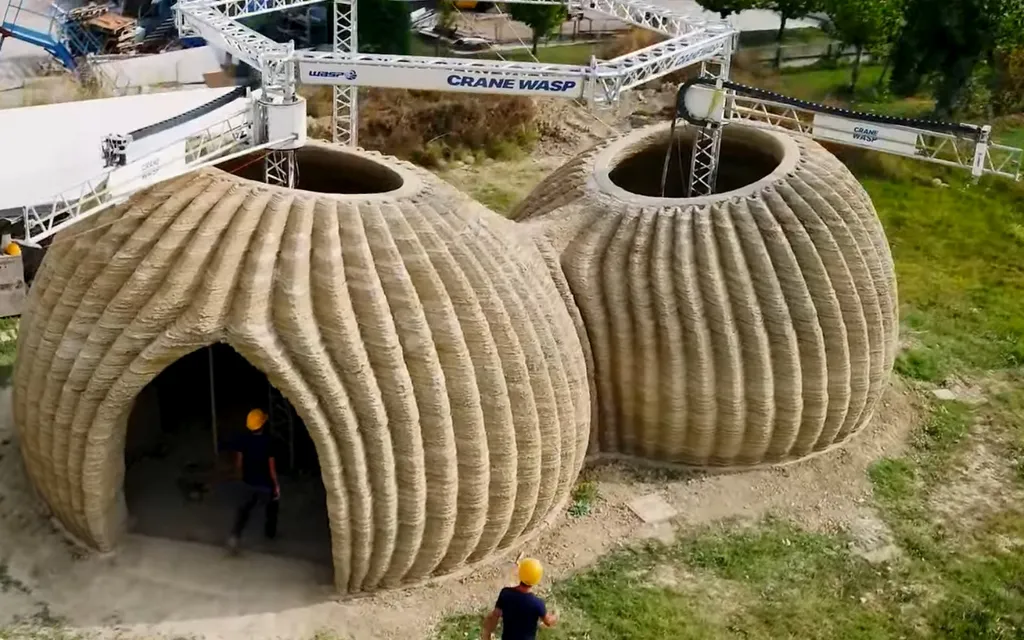
In the quest to make construction more sustainable, researchers have turned to an unlikely ally: glass. A recent study published in *Case Studies in Construction Materials* (translated as *Case Studies in Building Materials*) explores the potential of ultra-fine glass powder (UFGP) as a partial replacement for cement in 3D-printed concrete (3DPC). The findings could reshape how we think about energy efficiency and carbon reduction in the built environment.
Amardeep Singh, lead author of the study and a researcher at the School of Civil Engineering & Architecture at Changzhou Institute of Technology in China, along with Western Sydney University in Australia, explains, “The construction industry is under increasing pressure to reduce its environmental footprint. Our research demonstrates that substituting a small percentage of cement with UFGP can significantly improve the thermal performance of 3D-printed concrete while reducing embodied carbon.”
The study evaluated six mix designs with UFGP replacement levels up to 25%. The results were promising: substituting just 5% of cement with UFGP reduced thermal conductivity by 10.9%, enhancing the material’s insulation capacity. This improvement could lead to substantial energy savings in buildings. EnergyPlus simulations for a residential building in Shanghai showed a potential annual energy savings of 2.6 MJ/m², or 4.85%, thanks to the combined effects of reduced thermal conductivity and increased thermal mass.
“This isn’t just about reducing carbon emissions; it’s about creating more energy-efficient buildings,” Singh notes. “The potential for energy savings is significant, and that’s good news for both the construction and energy sectors.”
While the high binder content in current 3DPC technology remains a limitation, partial cement replacement with UFGP offers a viable strategy for lowering embodied carbon while improving thermal performance. The research suggests that UFGP could play a crucial role in advancing sustainable construction practices, particularly in 3D-printed applications.
However, Singh cautions that further investigation is needed to validate these findings across a broader range of environmental and structural conditions. “This is just the beginning,” he says. “We need to explore how these materials perform in different climates and under various structural demands to fully realize their potential.”
The implications for the energy sector are substantial. As buildings become more energy-efficient, the demand for heating and cooling could decrease, leading to lower energy consumption and reduced greenhouse gas emissions. This research could pave the way for innovative construction materials that not only meet sustainability goals but also enhance the performance of buildings.
As the construction industry continues to evolve, the integration of sustainable materials like UFGP could become a cornerstone of next-generation building practices. The study published in *Case Studies in Construction Materials* offers a glimpse into a future where innovation and sustainability go hand in hand, shaping a more efficient and eco-friendly built environment.