
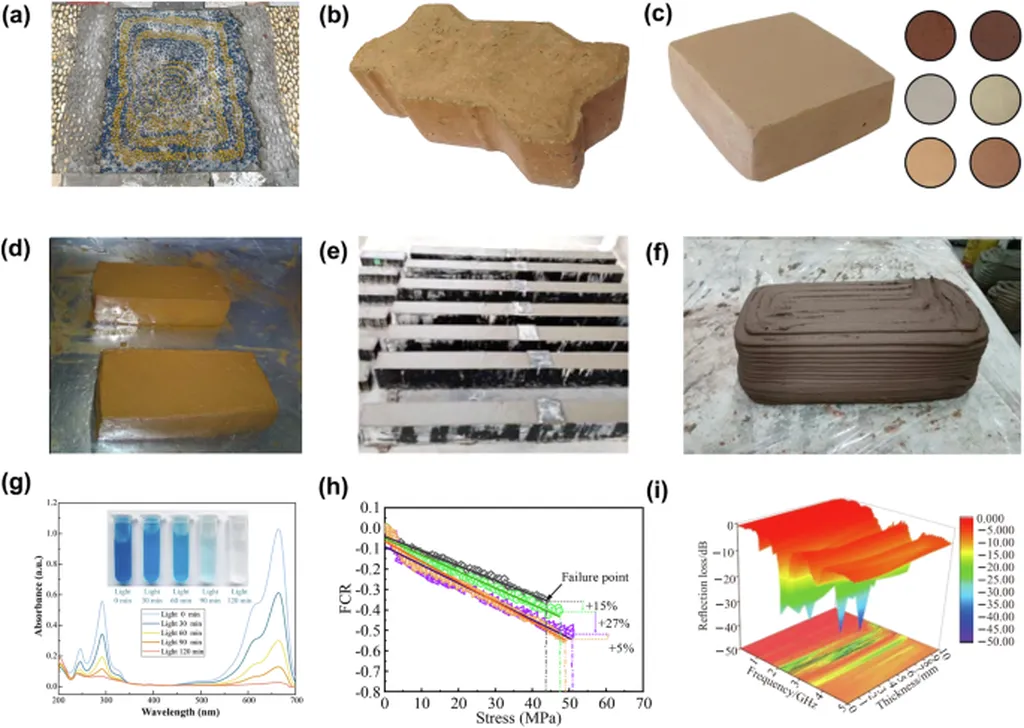
In the quest for sustainable construction materials, researchers have turned an unlikely source into a promising solution: gold mine tailings. A comprehensive review published in *Materials Today Advances* (which translates to *Advanced Materials Today*) highlights how these industrial byproducts can be transformed into valuable components for concrete and supplementary cementitious materials (SCMs), potentially revolutionizing the construction industry and contributing to a circular economy.
Gold mine tailings (GMTs) have long been an environmental challenge, with millions of tons generated annually. However, a new study led by Alaa Maali, an assistant professor in the Department of Civil Engineering at Lakehead University in Thunder Bay, Canada, suggests that these tailings could be a hidden gem for the construction sector. “The mining industry has been grappling with the management of these tailings for decades,” Maali explains. “Our review shows that with the right processing, they can be a valuable resource rather than a waste product.”
The research synthesizes data from over 50 peer-reviewed studies, providing a critical evaluation of GMTs’ physical, chemical, mineralogical, and microstructural characteristics. The findings reveal that GMTs can be effectively used as fine aggregate replacements in concrete, as components in SCMs, and as reactive elements in geopolymer and ultra-high-performance concrete (UHPC). This versatility opens up new avenues for sustainable construction practices.
One of the key challenges addressed in the review is the enhancement of GMT reactivity, particularly in systems where native pozzolanic activity is limited. The study explores various activation methods, including mechanical, thermal, chemical, and combined approaches, to optimize the performance of GMTs in construction materials. “The effectiveness of these activation methods is crucial for unlocking the full potential of GMTs,” Maali notes. “By enhancing their reactivity, we can significantly improve the mechanical properties and durability of the resulting construction materials.”
The environmental behavior of GMTs is another critical aspect of the review. The study confirms that heavy metal mobility can be effectively mitigated through incorporation into stable cementitious matrices, addressing concerns about leaching and environmental impact. This finding is particularly significant for the energy sector, where the use of sustainable and low-carbon construction materials is increasingly prioritized.
The review also highlights the high silica content and favorable alumino-silicate ratios of most GMTs, supporting their integration into alkali-activated and blended binder systems. This compatibility with advanced construction materials positions GMTs as a valuable resource for the development of low-carbon and high-performance construction solutions.
A bibliometric analysis included in the review reveals a critical research gap regarding GMT-specific studies, underscoring the novelty and timeliness of this work. The findings demonstrate that, when properly processed, GMTs can contribute to enhanced performance and sustainability in construction materials, aligning with circular economy goals and regulatory targets.
The implications of this research are far-reaching. By valorizing gold mine tailings, the construction industry can reduce its environmental footprint while also tapping into a previously overlooked resource. “This review offers a unified framework for GMT valorization and provides clear research directions to enable industrial-scale implementation and regulatory acceptance,” Maali states. “The potential benefits for the energy sector are substantial, as the demand for sustainable and low-carbon construction materials continues to grow.”
As the construction industry seeks innovative solutions to meet sustainability targets, the findings of this review offer a promising pathway forward. By transforming gold mine tailings into valuable construction materials, researchers are not only addressing an environmental challenge but also paving the way for a more sustainable and circular future. The study’s publication in *Materials Today Advances* further underscores its significance and potential impact on the field.