
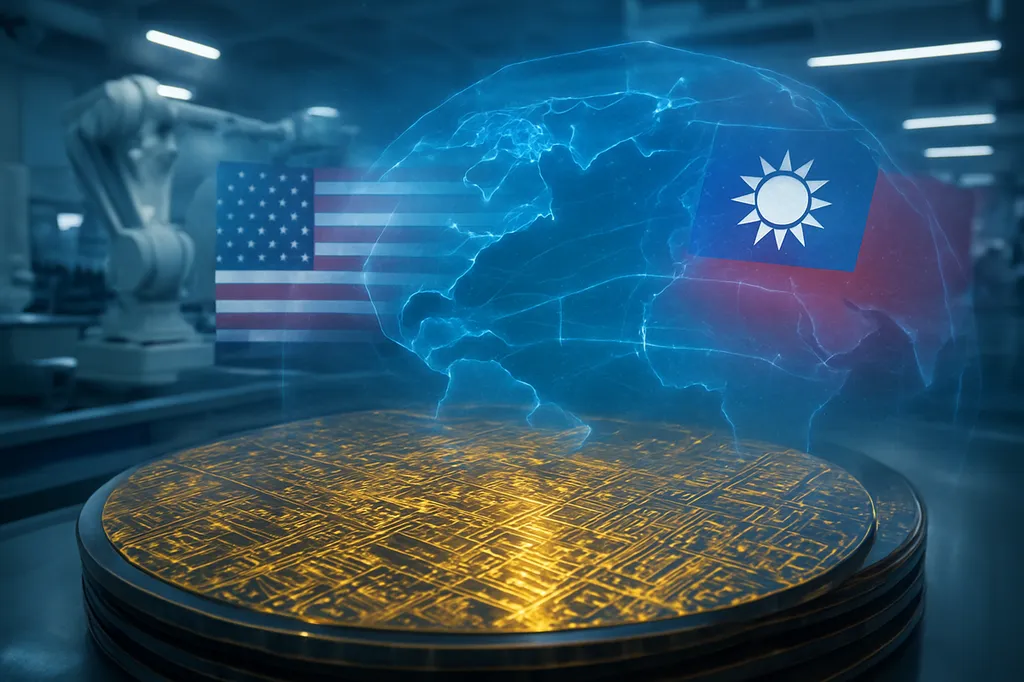
The U.S. and Taiwan have struck a deal that could reshape the global semiconductor landscape, with Taiwanese tech giants pledging to invest $250 billion in American chipmaking facilities in exchange for reduced tariffs. This agreement, announced by the Commerce Department, marks a significant shift in the geopolitics of technology and underscores the growing importance of semiconductor manufacturing in global trade negotiations.
Under the terms of the deal, tariffs on goods from Taiwan will drop from 20% to 15%, a move that will ease the financial burden on Taiwanese exporters. In return, Taiwanese technology companies will invest $250 billion into building and expanding chipmaking facilities in the U.S., with an additional $250 billion in credit support from Taiwan’s government. This investment is expected to bolster the U.S. semiconductor industry, which has been under pressure to reduce its reliance on foreign-made chips.
The deal also includes provisions that allow Taiwanese companies constructing U.S.-based chipmaking factories to import up to 2.5 times their planned capacity without paying extra tariffs during the construction period. Once construction is complete, these companies can import 1.5 times their U.S. production capacity tariff-free. This provision is designed to facilitate the rapid scaling of semiconductor production in the U.S., ensuring that the country can meet growing demand for advanced chips.
Commerce Secretary Howard Lutnik emphasized the strategic importance of the deal, stating that the U.S. could impose a 100% tariff on chips and semiconductors not made in the U.S. if Taiwanese companies do not invest in domestic production. “That’s what they get if they don’t build in America, the tariff’s likely to be 100 percent,” Lutnik told CNBC. This threat underscores the U.S. government’s determination to bring semiconductor manufacturing back to American soil, a priority that has been driven by concerns over national security and economic competitiveness.
The deal also includes the elimination of reciprocal tariffs on a range of goods, including generic pharmaceuticals, their ingredients, aircraft components, and certain natural resources. This move is expected to further strengthen economic ties between the U.S. and Taiwan, fostering greater collaboration in key industries.
When asked about the potential risks posed by China to Taiwan’s chipmaking business, Lutnik told CNBC that Taiwan struck the agreement because “they need to keep our president happy,” adding that “Donald Trump is vital to protecting them.” This statement highlights the complex geopolitical dynamics at play, as Taiwan navigates its relationship with both the U.S. and China.
Taiwan Semiconductor Manufacturing Co. (TSMC), the world’s largest chipmaker, is already a key player in this deal. Last year, TSMC committed to investing at least $100 billion to expand chip manufacturing in the U.S. Bloomberg reports that TSMC will be one of the companies leading the new $250 billion investment. Lutnik told CNBC that TSMC may expand further in the U.S., as it has already purchased hundreds of acres adjacent to its property in Arizona, where the company plans to build six semiconductor fabs.
This deal is not just about economics; it’s about securing the future of a critical industry. Semiconductors are the backbone of modern technology, powering everything from smartphones to advanced AI systems. By investing in U.S.-based chipmaking facilities, Taiwanese companies are not only securing access to a key market but also ensuring the stability of global supply chains.
The implications of this deal extend beyond the semiconductor industry. It sets a precedent for future trade negotiations, demonstrating that countries are willing to make significant investments in exchange for favorable trade terms. It also highlights the growing importance of technology in shaping global economic policies.
As the U.S. and Taiwan forge ahead with this agreement, the world will be watching closely. The success of this deal could pave the way for similar partnerships, reshaping the global technology landscape and reinforcing the U.S. as a leader in semiconductor manufacturing. The stakes are high, and the potential rewards are immense. This is not just a deal about chips; it’s a deal about the future.