
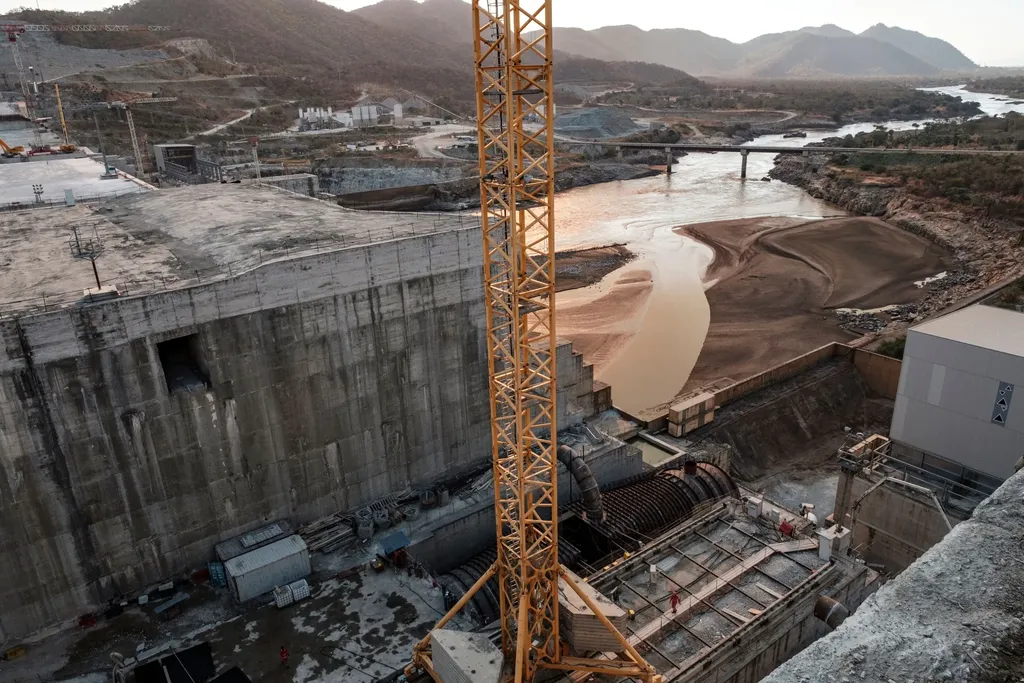
In the heart of Ethiopia’s Shebelle River Basin, a critical assessment of the Bargun Dam site is shedding light on the geological and geotechnical challenges that could shape the future of dam construction in the region. A recent study, led by Birhanu Ermias of Salale University and published in the *Ethiopian Journal of Science and Technology Development* (translated from Amharic), delves into the complexities of ensuring the safety and longevity of the proposed dam.
The study highlights the importance of thorough geological and geotechnical investigations, which have often been overlooked in the past. “The lack of detailed investigations poses significant risks to design integrity, safety, and long-term performance,” Ermias emphasizes. His team conducted extensive field investigations, including geological mapping, test pitting, and soil and rock sampling, followed by laboratory analyses to determine the physical and mechanical properties of foundation materials.
One of the key findings of the study is the variability in rock mass quality at the site. Using the Rock Mass Rating (RMR), Rock Quality Index (Q), Rock Mass Index (RMi), and Hoek–Brown criteria, the researchers assessed the rock mass quality and found values ranging from 46 to 59 for RMR, 1.06 for Q, and 0.48 for RMi. These values indicate a potential risk of differential settlement, which could have significant implications for the dam’s stability.
The study also analyzed slope stability kinematically and estimated bearing capacity (qu) and permeability (Ks) using empirical correlations applicable to data-scarce environments. The results showed qu values ranging from 0.55 to 23.22 MPa and Ks values ranging from 2.14×10⁻² to 3.7×10⁻5 cm/s. The average rock mass deformation modulus ranged from 5.03 to 9.64 GPa, further highlighting the need for careful consideration of the site’s geological conditions.
Ermias notes, “Based on the kinematic analysis, the left abutment slope is susceptible to oblique toppling, requiring slope modification.” However, the site’s low seismicity and manageable sediment conditions are favorable for dam construction. The study recommends detailed subsurface exploration to identify concealed cavities and targeted grouting to mitigate leakage and stability risks, ensuring the dam’s long-term safety and functionality.
The implications of this research extend beyond the Bargun Dam site. As Ethiopia continues to invest in hydropower projects, understanding the geological and geotechnical challenges of potential dam sites will be crucial for ensuring the safety and sustainability of these projects. The study’s findings could shape future developments in the field, emphasizing the need for comprehensive site assessments and targeted mitigation strategies.
For the energy sector, this research underscores the importance of investing in detailed geological and geotechnical investigations. By doing so, developers can avoid costly mistakes and ensure the long-term success of their projects. As Ermias concludes, “Overall, detailed subsurface exploration to identify concealed cavities and targeted grouting are recommended to mitigate leakage and stability risks, ensuring the dam’s long-term safety and functionality.”
Published in the *Ethiopian Journal of Science and Technology Development*, this study serves as a critical resource for professionals in the construction and energy sectors, providing valuable insights into the complexities of dam site assessments and the importance of thorough investigation.