
In the heart of Morocco, a quiet revolution is brewing, one that could redefine the country’s approach to energy efficiency in buildings. Researchers, led by Omar Iken from the Université Moulay Ismail’s Laboratory of Advanced Materials and Applications (LEM2A), are championing the cause of bio-based insulation materials, offering a sustainable and economical alternative to traditional insulation methods. Their findings, published in the journal ‘Next Energy’ (translated as ‘Next Energy’), are not just academic exercises; they hold significant promise for the energy sector and the construction industry at large.
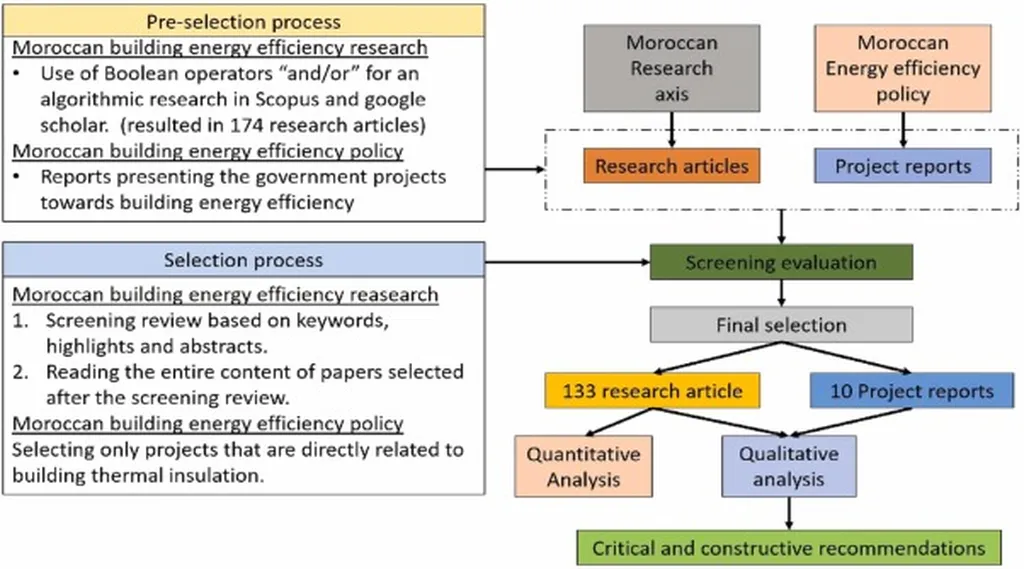
The team’s systematic review, encompassing over 133 studies and 10 projects, has shed light on the potential of thermal insulation materials derived from bio-based composites and textile waste. These materials, not only circular and sustainable but also high-performance, could be a game-changer in Morocco’s energy efficiency landscape. “We’ve identified over 30 different types of eco-friendly materials that have been experimentally and numerically characterized in Morocco over the past 25 years,” Iken explains. “This is a testament to the wealth of research and innovation in our country.”
The research team employed a Preferred Reporting Items for Systematic Reviews and Meta-Analyses (PRISMA) methodology, ensuring a rigorous and comprehensive analysis. They evaluated materials based on U-value and thickness, as well as thermal conductivity and volumetric heat capacity, to determine the most suitable options for energy-efficient buildings.
However, the journey towards widespread adoption is not without its challenges. Iken and his team have highlighted significant hurdles, particularly in terms of regulations, awareness, and market access. “While the research is promising, we need to bridge the gap between innovation and implementation,” Iken notes. “This requires a concerted effort from policymakers, industry stakeholders, and the research community.”
The implications of this research extend far beyond Morocco’s borders. As the world grapples with climate change and the need for sustainable solutions, bio-based insulation materials could play a pivotal role in reducing energy consumption in buildings. This is particularly relevant in the commercial sector, where energy efficiency can significantly impact operational costs and environmental footprint.
The study’s recommendations aim to encourage the adoption of these innovative materials and strengthen public policies in favor of the energy transition. By doing so, Morocco could set a precedent for other countries, demonstrating the viability of bio-based insulation materials in the construction sector.
As the world watches, Morocco’s quiet revolution could soon echo loudly, reshaping the global energy efficiency landscape. With continued research, supportive policies, and industry collaboration, the future of building insulation could indeed be green, sustainable, and bio-based. The findings, published in ‘Next Energy’, serve as a clarion call to action, urging stakeholders to seize the opportunity and drive the energy transition forward.