
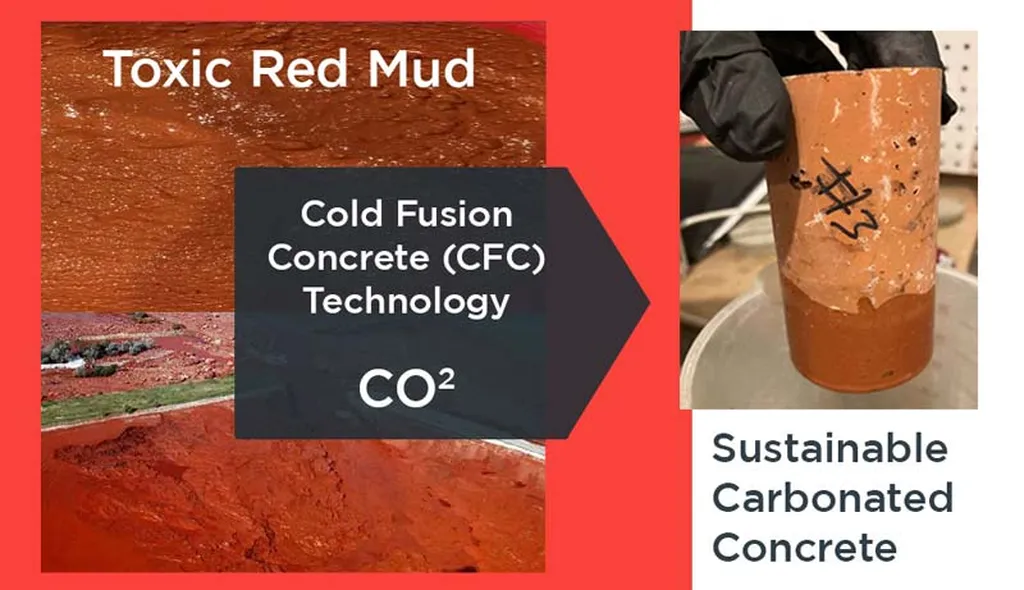
In the heart of Bengaluru, India, a groundbreaking study led by Denzil Mebanker Sun at Christ University’s Department of Civil Engineering is turning heads in the construction industry. The research, published in the journal ‘Next Materials’ (which translates to ‘New Materials’), explores the potential of red mud, a often discarded by-product of the alumina industry, as a sustainable alternative to traditional cement in mortar.
The study, which aligns with the United Nations Sustainable Development Goals (SDGs) 9, 11, and 12, demonstrates that red mud can be effectively used as a partial replacement for cement. “We were pleasantly surprised by the results,” says Sun. “By incorporating red mud along with Ground Granulated Blast Furnace Slag (GGBS) or fly ash, we were able to create a novel tri-component binder system that not only reduces waste but also enhances the performance of the mortar.”
The research team tested various mixes, with red mud making up 10–90% by weight, and found that the optimal performance was achieved with 30–40% red mud and GGBS. This combination yielded a 28-day compressive strength of 19.29 MPa and a flexural strength of 4.55 MPa, outperforming both control and fly-ash-based mixes. “This is a significant finding,” Sun explains. “It shows that industrial by-products can be transformed into high-performance construction materials, promoting resource circularity and carbon reduction.”
The study also revealed that higher levels of red mud increased water absorption and porosity. However, the formation of Calcium Silicate Hydrate (C-S-H), Calcium Aluminate Hydrate (C-A-H), and ettringite phases, as confirmed by microstructural analyses, indicates the potential for long-term durability.
The implications of this research for the energy sector are substantial. As the world seeks to reduce its carbon footprint, the construction industry is under pressure to find sustainable alternatives to traditional materials. This study offers a promising solution, demonstrating that industrial waste can be repurposed to create durable, low-carbon construction materials.
The commercial impact of this research could be significant. By reducing the need for traditional cement, this novel binder system could lower construction costs and minimize environmental impact. Moreover, the use of industrial by-products could open up new revenue streams for industries that currently treat these materials as waste.
As the world grapples with the challenges of climate change and resource depletion, this research offers a beacon of hope. It shows that with innovation and a commitment to sustainability, we can transform waste into wealth and pave the way for a greener future. “This is just the beginning,” Sun says. “We are excited to see how this research will shape the future of sustainable construction.”