
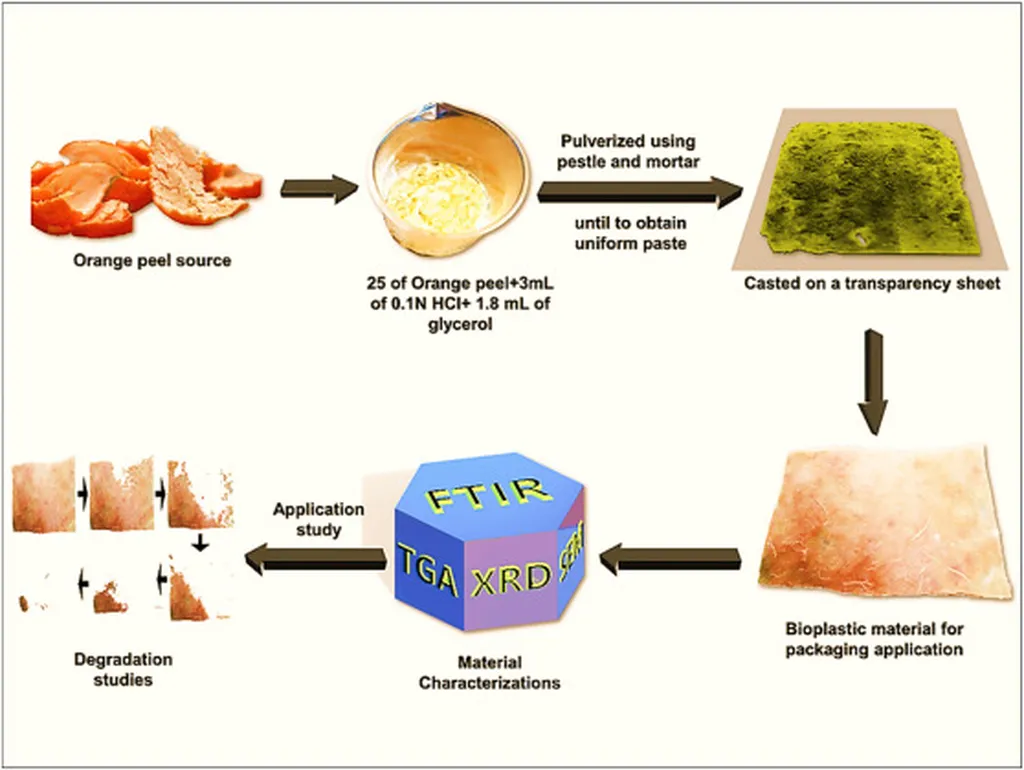
In a world grappling with the scourge of plastic pollution, a team of researchers from Tiangong University in China has made a significant stride towards sustainable alternatives. Led by Ziyuan Bian from the Department of Industrial Design, the team has developed an innovative bio-based composite material using orange peels and gelatin, offering a promising solution to the environmental crisis.
The study, published in the journal *Materials Research Express* (translated as “Materials Research Express”), focuses on creating a fully biodegradable composite material that can potentially replace traditional plastics in various applications, including lightweight handbags. The orange peel gelatin composite material not only addresses the pressing issue of plastic waste but also provides a high-value utilization path for agricultural waste, contributing to a circular economy.
The research highlights the material’s adjustable mechanical properties, making it versatile for different applications. “The orange peel gelatin composite material exhibits a tensile strength of 1.2 MPa and a degradation rate of 91.2%, which meets the strength requirements for daily lightweight handbags,” explains Bian. This adaptability is crucial for industries looking to transition from petroleum-based plastics to more sustainable options.
One of the most compelling aspects of this research is its potential to reduce organic waste and lower carbon emissions. The material’s preparation process is simple, efficient, and reproducible, making it an attractive option for manufacturers aiming to minimize their environmental impact. “This study reflects the broad prospects of bio-based composite materials in the field of sustainable packaging,” Bian adds, underscoring the material’s potential to revolutionize the packaging industry.
The implications for the energy sector are equally significant. As the world shifts towards renewable resources, bio-based composites like the orange peel gelatin material can play a pivotal role in reducing reliance on fossil fuels. The material’s biodegradability ensures that it does not contribute to long-term environmental pollution, aligning with global efforts to achieve sustainability goals.
This research not only provides a new avenue for high-value utilization of agricultural waste but also sets a precedent for future developments in the field of bio-based composites. As industries continue to explore sustainable alternatives, the orange peel gelatin composite material offers a glimpse into a future where environmental responsibility and commercial viability go hand in hand.
The study’s findings are a testament to the innovative spirit driving the search for sustainable solutions. With further research and development, bio-based composites could become a cornerstone of the circular economy, paving the way for a greener, more sustainable future. As Bian and his team continue to refine their material, the potential applications and benefits are likely to expand, offering new opportunities for industries worldwide.