
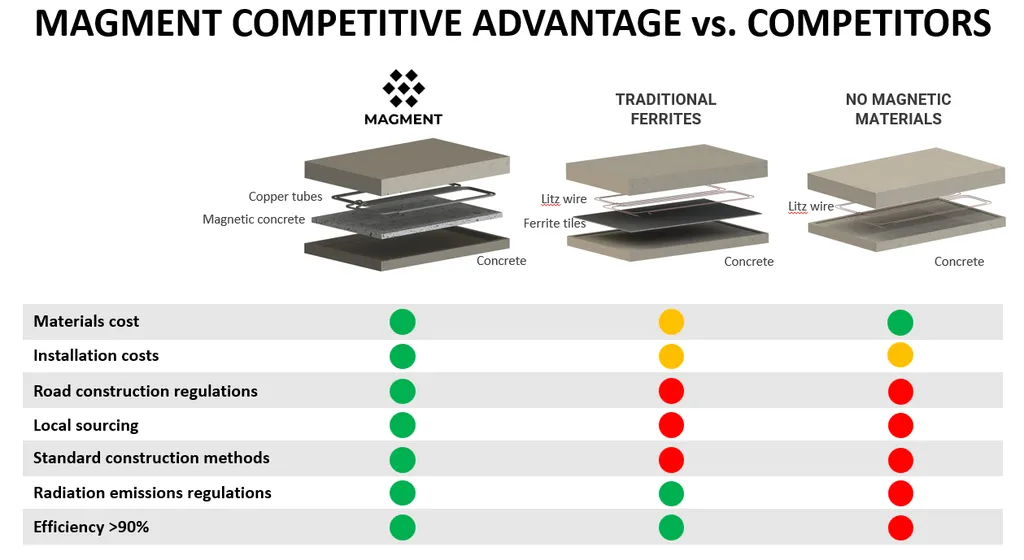
In a groundbreaking development that could revolutionize the energy sector, researchers have successfully integrated natural magnetic materials into cementitious composites, paving the way for advanced wireless power transfer (WPT) systems. This innovative approach not only enhances the functionality of construction materials but also promotes sustainability, a critical factor in today’s environmentally conscious world.
Dr. Hossein Bararjani, a leading researcher from the Department of Civil Engineering at the University of Guilan in Iran, spearheaded the study published in the journal *Results in Engineering* (translated from Persian as “Engineering Results”). The research focuses on the magnetic and mechanical properties of cementitious composites incorporating magnetic sand, magnetite powder, ground granulated blast-furnace slag (GGBFS), and silica fume.
The study explored ten different mix designs, replacing conventional quartz sand with magnetic sand and varying the proportions of magnetite powder, GGBFS, and silica fume. The results were promising, demonstrating that plain Portland cement concrete has a weak magnetic influence. However, the incorporation of natural magnetic sand significantly enhanced magnetic flux density without compromising mechanical strength.
“Our findings indicate that the mix containing 2% magnetite powder and 20% silica fume (MP2SF20) exhibited the highest magnetic flux response and superior strength retention,” Dr. Bararjani explained. This breakthrough could have profound implications for the energy sector, particularly in the development of smart infrastructure such as road pavements and railway slabs capable of wireless power transfer and magnetic sensing.
The integration of silica fume and GGBFS not only improves the microstructural compactness of the composites but also reduces the embodied CO₂ associated with the binder phase by partially replacing Portland cement. This dual benefit of enhanced functionality and reduced environmental impact makes the research particularly relevant for the energy sector, which is increasingly focused on sustainability and efficiency.
The potential applications of these magnetically functional composites are vast. For instance, they could be used in the development of smart roads that wirelessly charge electric vehicles as they drive, reducing the need for stationary charging infrastructure. Similarly, railway slabs embedded with these materials could enable efficient power transfer to trains, enhancing the overall efficiency of rail transport systems.
“This research demonstrates that combining natural ferromagnetic sands with low-carbon supplementary binders can yield structurally sound, sustainable, and magnetically functional composites,” Dr. Bararjani noted. By bridging the gap between traditional stone-based materials and next-generation innovative construction systems, this study opens up new avenues for the energy sector to explore.
As the world moves towards a more sustainable and technologically advanced future, the integration of magnetic properties into construction materials represents a significant step forward. The research conducted by Dr. Bararjani and his team not only highlights the potential of natural magnetic materials but also underscores the importance of interdisciplinary collaboration in driving innovation.
In conclusion, the study published in *Results in Engineering* offers a glimpse into the future of construction materials, where functionality and sustainability go hand in hand. The energy sector, in particular, stands to benefit greatly from these advancements, paving the way for a more efficient and environmentally friendly infrastructure.