
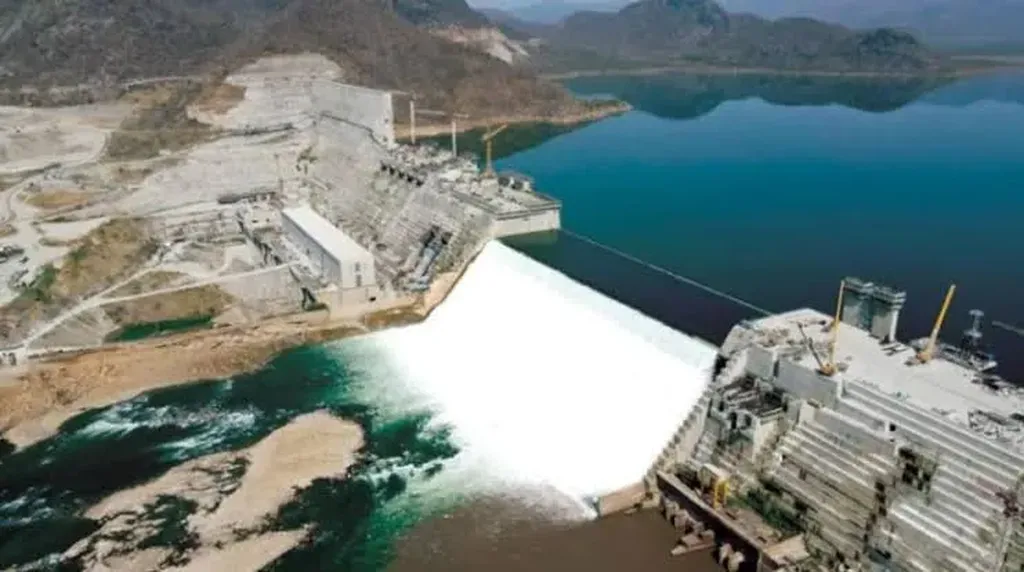
In the heart of Ethiopia’s main rift valley, a critical study is shedding light on the very foundation of the region’s infrastructure. Bekele Ayele, a geologist from Hawassa University’s Department of Geology, has been delving into the quality and suitability of rock construction materials in and around Hawassa, Sidama. His work, published in the East African Journal of Biophysical and Computational Sciences (translated as ‘Journal of Life Sciences and Computational Research’), is not just about rocks; it’s about building a stronger, more durable future for the region.
Ayele’s research focuses on the petrographic description, engineering physical properties, and resistivity characteristics of local rock materials. These factors are crucial in determining the quality, durability, and economic efficiency of infrastructures. The study area, situated in the central and southern parts of the main Ethiopian rift, is a mosaic of volcanic and pyroclastic rocks, widely used in construction but poorly characterized until now.
“The civil engineering infrastructures in Hawassa city and the Sidama regional state are deteriorating due to the inappropriate use of rock materials,” Ayele explains. His comprehensive study aims to change that. By analyzing 24 petrographic descriptions, 10 rocks engineering properties, and 5 resistivity survey data, Ayele has identified several rock types, including andesite, scoria, rhyolitic ignimbrite, ignimbrite, welded tuff, and pumice.
The findings are promising. The vertical electrical sounding results indicate that certain areas, like the Alamora andesite outcrops, the Boricha quarry site, and Gemeto Gale area, contain potential rock layers suitable for various infrastructures. This is a significant discovery for the energy sector, where the integrity of construction materials directly impacts the efficiency and longevity of projects.
Ayele’s research also highlights the varying compressive strengths of these rocks, ranging from 8 N/mm² to 300.5 N/mm². This data is invaluable for engineers and construction companies, providing a foundational dataset for future projects. As Ayele puts it, “This study identified potential rock for sustainable use in various infrastructure developments, providing a foundational data set for researchers and the Sidama Regional State Mining and Energy Bureau.”
The implications of this research extend beyond Ethiopia. In a world where infrastructure development is accelerating, understanding the local geology is crucial. Ayele’s work serves as a model for similar studies in other regions, emphasizing the importance of thorough geological investigations in infrastructure planning.
As the energy sector continues to grow, the demand for high-quality construction materials will only increase. Ayele’s research is a step towards meeting this demand, ensuring that the foundations of our infrastructures are as strong and durable as the rocks they are built upon. In the words of Ayele, “This is not just about rocks; it’s about building a stronger, more durable future.”