
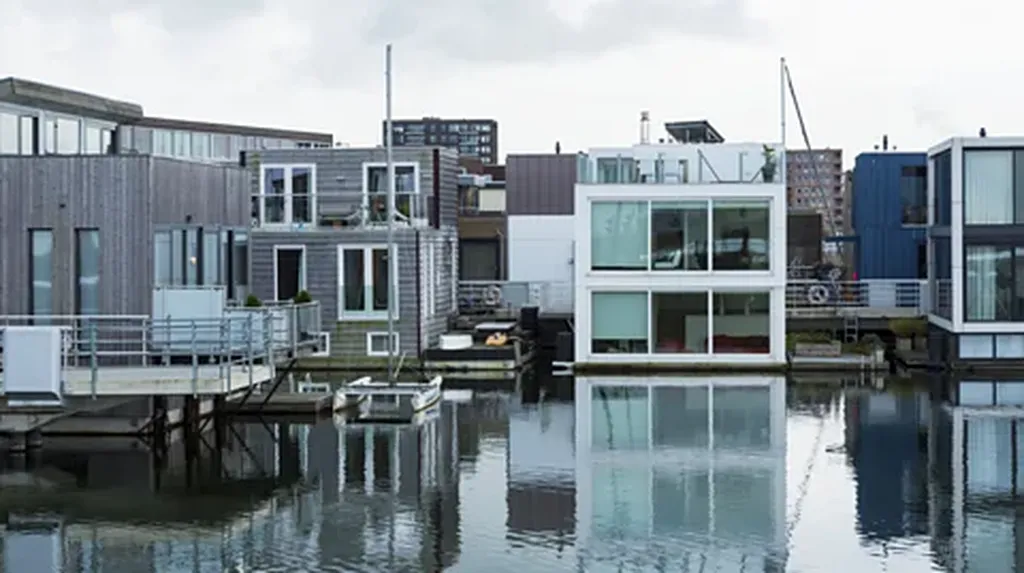
In a world grappling with the realities of climate change, the Netherlands is once again proving itself as a beacon of innovative adaptation strategies. A recent study published in the journal ‘Архитектон’ (translated as ‘Architecton’) by Rafael Antonio Vargas Aceros of RUDN University delves into the country’s pioneering approach to sustainable housing through floating architecture, offering valuable insights for other coastal and flood-prone regions.
The study, which analyzed four completed floating architecture projects in the Netherlands, identifies three main types of residential architecture that could serve as models for sustainable development under climate change: houses on stilts, floating houses, and amphibious houses. These structures not only provide a solution to rising sea levels but also offer a unique opportunity for the energy sector to innovate and expand.
“Floating architecture is not just about adapting to climate change; it’s about reimagining our relationship with water,” says Vargas Aceros. “These structures can integrate renewable energy systems, such as solar panels and wind turbines, creating energy-positive homes that contribute to the grid.”
The study highlights the structural systems of these floating homes, including various types of pontoons, anchoring systems, and building materials. For instance, amphibious houses are designed to float during floods and rest on the ground during normal conditions, providing a resilient and adaptable housing solution.
From a commercial perspective, the energy sector could capitalize on the growing demand for sustainable and resilient housing. By developing and integrating renewable energy systems into floating architecture, energy companies can tap into a new market while contributing to global sustainability goals.
Moreover, the study underscores the importance of a supportive legal framework. The Netherlands’ regulatory environment has been instrumental in the success of these projects, providing a model for other regions to follow.
As climate change continues to pose significant challenges, the insights from this study could shape future developments in the field of sustainable housing and energy. By learning from the Dutch experience, other coastal and flood-prone regions can develop innovative solutions that not only adapt to climate change but also drive commercial opportunities in the energy sector.
In the words of Vargas Aceros, “The future of sustainable development lies in our ability to adapt and innovate. Floating architecture is a testament to this, offering a glimpse into a future where we coexist harmoniously with nature.”