
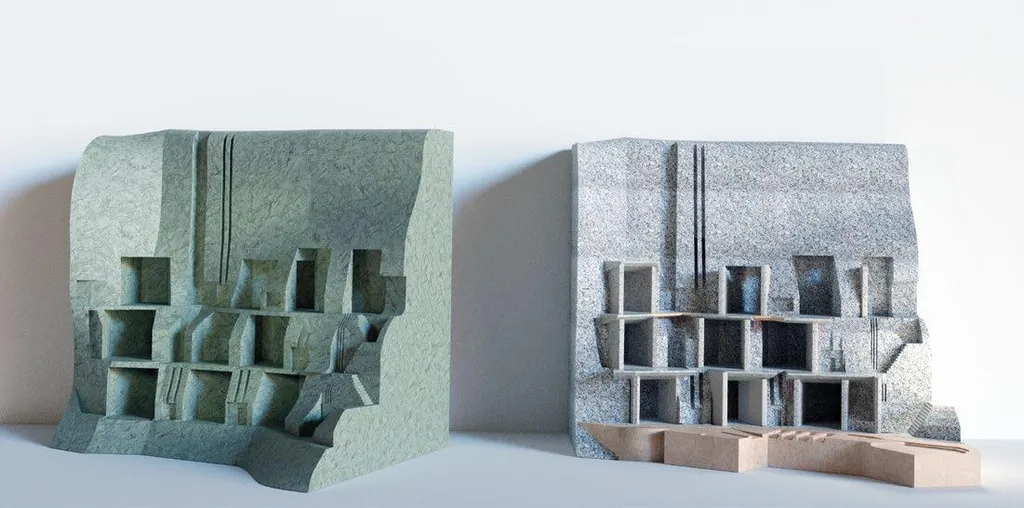
In the heart of Bucharest, Romania, a PhD student named Aida Al Hosni is making waves in the architectural world with her research on smart materials. Her work, recently published in the journal ARCHive-SR (translated from Romanian as “Architectural Archive-SR”), is shedding light on how these innovative materials are set to revolutionize the way we build and interact with our urban environments.
Al Hosni’s research delves into the dynamic world of smart materials—substances that react to external stimuli like temperature, humidity, and stress. These aren’t your average building materials; they’re the superheroes of the construction world, capable of self-healing, adapting to environmental changes, and promoting sustainability.
Take self-healing concrete, for instance. Developed through bacterial processes at Delft University of Technology, this marvel can extend a building’s lifespan and slash maintenance costs. “Imagine a world where cracks in our infrastructure heal themselves,” says Al Hosni. “This isn’t science fiction; it’s a reality that’s just around the corner.”
Then there’s thermochromic glass, a material that regulates light and heat transfer. It’s already making its mark in projects like The Edge in Amsterdam, reducing the need for artificial climate control systems. “These technologies are shifting the paradigm from static to dynamic architecture,” Al Hosni explains. “Buildings can now interact with their environment in real-time.”
The implications for the energy sector are profound. Smart materials can significantly enhance energy efficiency, reducing our dependence on fossil fuels and lowering carbon emissions. This isn’t just good for the planet; it’s a boon for businesses too. Lower energy bills and reduced maintenance costs mean better bottom lines.
However, the path to widespread adoption isn’t without its hurdles. Cost, durability verification, and a lack of awareness in professional education are all challenges that need to be addressed. Al Hosni advocates for specialized academic coursework that integrates materials science and architecture, ensuring that future designers are equipped to harness the power of smart materials.
As we look to the future, it’s clear that smart materials will play a pivotal role in shaping our cities. They promise not just efficiency, but also resilience and sustainability. In the words of Al Hosni, “We’re paving the way towards cities that are regenerative and responsive to their environments.”
So, what does this mean for the construction industry and the energy sector? It’s a call to action—to embrace innovation, to invest in research, and to prepare for a future where our buildings are not just structures, but dynamic, living entities that interact with and enhance our urban landscapes. The future is smart, and it’s just beginning to take shape.