
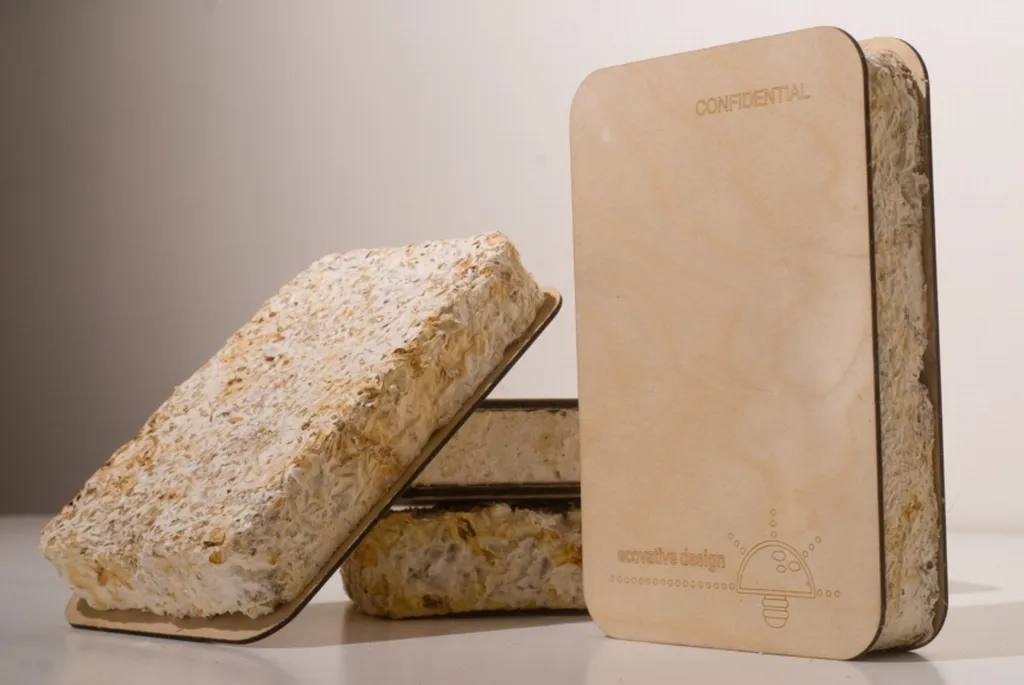
In the quest for sustainable construction materials, a groundbreaking study led by Joni Wildman from the Department of Civil Engineering and Architecture at the University of Bath has shed new light on the potential of mycelium-based composites (MBCs) as effective insulation materials. Published in the journal *Scientific Reports* (which translates to *Nature Research Reports* in English), the research delves into how different fungal species can influence the thermal conductivity and chemical composition of MBCs, offering promising insights for the energy sector.
The construction industry is under increasing pressure to reduce its carbon footprint and minimize waste. Traditional insulation materials often fall short in these areas, but MBCs present a compelling alternative. Derived from the growth of fungal mycelium on lignocellulosic substrates, these bio-based materials boast low embodied carbon and the ability to utilize agricultural waste, making them an attractive option for sustainable construction.
Wildman’s study explored the thermal performance of MBCs produced using 18 different fungal strains, revealing that all specimens exhibited good insulation properties. The thermal conductivity values ranged from 0.0376 to 0.0451 W/m·K, with statistically significant differences observed among the species. “This variability highlights the importance of species selection in optimizing the thermal properties of MBCs,” Wildman noted.
The research also employed advanced analytical techniques, including Fourier Transform Infrared Spectroscopy with Attenuated Total Reflectance (FTIR-ATR) and multivariate analysis, to assess chemical differences among the specimens. While the analysis uncovered species-specific variations in the FTIR spectra, no significant correlation was found between these spectral features and thermal conductivity. This suggests that physical structure and density play a more dominant role in heat transfer properties.
The implications of this research are far-reaching for the energy sector. As the demand for sustainable and energy-efficient buildings grows, the development of effective insulation materials becomes increasingly critical. MBCs offer a promising solution, and the findings of this study provide valuable insights into how different fungal species can influence their performance.
“By improving our understanding of species selection and its impact on thermal performance, we can advance MBCs as effective insulation materials for sustainable construction,” Wildman explained. This research not only contributes to the growing body of knowledge on bio-based materials but also offers a framework for characterizing chemical modifications in sustainable insulation materials.
As the construction industry continues to evolve, the adoption of innovative materials like MBCs could play a pivotal role in reducing carbon emissions and promoting a circular economy. The study’s findings underscore the potential of MBCs to shape the future of sustainable construction, offering a glimpse into a more eco-friendly and energy-efficient built environment.