
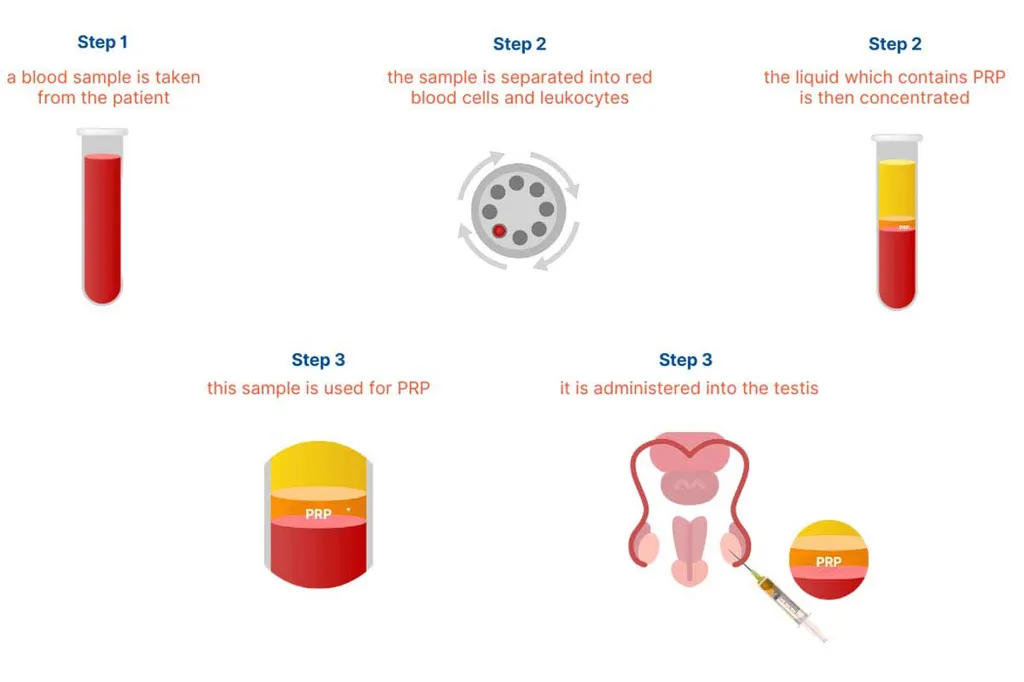
In a groundbreaking development that could reshape the landscape of male infertility treatments, researchers have turned to an unexpected ally: platelet-rich plasma (PRP). A recent study, led by Ziyad S Haidar of Clínica Universidad de los Andes Hospital in Chile, has shed light on the promising potential of PRP in addressing various aspects of male infertility. Published in the journal *Biofunctional Materials* (which translates to English as *Biofunctional Materials*), the research offers a comprehensive review of the current state of PRP applications in this field.
Platelets, tiny cell fragments in our blood, are renowned for their role in clotting and wound healing. PRP, a concentration of platelets derived from a donor’s blood through a process called apheresis, has been gaining traction for its regenerative properties. “PRP contains a rich cocktail of cytokines and growth factors that have shown notable effects on sperm quality and function,” Haidar explains. This has sparked extensive research into its potential applications, including in the realm of human reproduction.
The study identified nine key publications over the last five years, highlighting the diverse applications of PRP in male infertility. One of the most promising findings is the enhancement of sperm parameters when PRP is added to cryopreservation media. This could have significant implications for fertility clinics and sperm banks, potentially improving the success rates of artificial insemination and in vitro fertilization (IVF) procedures.
Moreover, PRP has demonstrated a heightened antioxidant capacity, which could be a game-changer in managing oxidative stress—a common issue in male infertility. “PRP-incubated samples exhibit a significant increase in antioxidant capacity,” Haidar notes. This could lead to improved sperm quality and function, offering new hope to couples struggling with infertility.
The research also explored the potential of PRP in cultivating spermatogonial stem cells and addressing azoospermia, a condition characterized by the absence of sperm in the ejaculate. The findings suggest that PRP could facilitate sperm recovery in non-obstructive azoospermia cases, where the problem lies within the testes themselves.
While the results are promising, Haidar cautions that more research is needed. “Larger sample sizes are warranted to delineate optimal protocols and ascertain the clinical safety, efficacy, and predictability of PRP therapy in male infertility management,” he says.
The commercial implications for the energy sector might seem tangential, but the underlying technology and the principles of regenerative medicine could inspire innovations in other fields. For instance, the use of biofunctional materials like PRP could lead to advancements in tissue engineering and regenerative medicine, which in turn could have applications in areas such as bioenergy and biotechnology.
As we stand on the cusp of a new era in reproductive medicine, the work of Haidar and his team offers a glimpse into a future where PRP could play a pivotal role in overcoming male infertility. The journey is far from over, but the potential is undeniable, and the implications are far-reaching.