
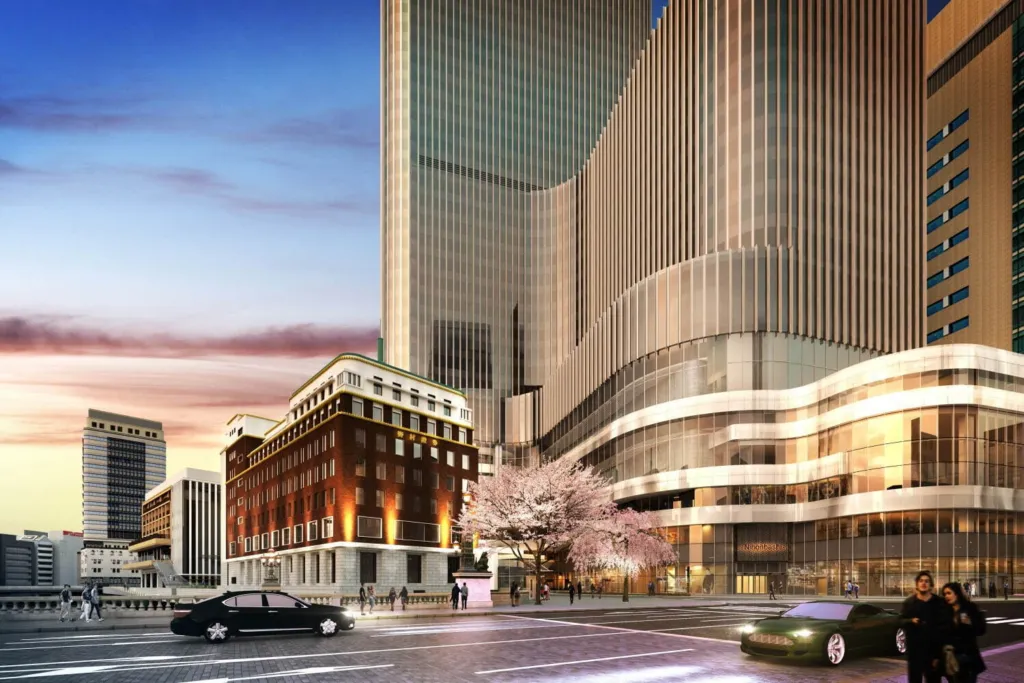
In the heart of Tokyo, a historic district is undergoing a high-tech transformation, offering a blueprint for cities worldwide to slash carbon emissions and embrace sustainability. Researchers, led by A. H. Alorabi of the Eco Urban Lab at the Georgia Institute of Technology, have pioneered a data-driven approach to retrofitting urban areas, using cutting-edge technology to balance environmental, financial, and social goals. Their work, published in the International Archives of the Photogrammetry, Remote Sensing and Spatial Information Sciences (known in English as the International Archives of the Photogrammetry, Remote Sensing and Spatial Information Sciences), could reshape how cities approach urban regeneration and energy efficiency.
The Nihonbashi district, a dense urban area with 154 existing buildings, presented a unique challenge. “We needed a way to address the complex constraints of high-density urban environments while pushing for carbon neutrality,” Alorabi explained. The team’s solution integrated Generative Design (GD), Multi-Objective Optimization (MOO), and interactive Urban Digital Twins to create a flexible, data-driven framework.
The process began with a baseline performance assessment using Urban Building Energy Modeling (UBEM). Buildings were then categorized into three retrofit strategies—Reconstruction, Renovation, and Maintenance—based on structural condition, age, and energy performance. The team generated and evaluated alternative design scenarios through parametric modeling and optimization, focusing on four key criteria: Resilience, Energy Performance, Financial Feasibility, and Social Impact.
One of the most innovative aspects of the project was the use of an interactive digital twin, allowing real-time scenario exploration. “This isn’t just about reducing energy use; it’s about creating a resilient, sustainable urban environment that works for everyone,” Alorabi said. Additional modeling layers, including occupancy analytics and renewable energy simulations, further enhanced the framework’s accuracy and applicability.
The results were impressive. Coordinated redevelopment and hybrid energy strategies could achieve significant reductions in energy use intensity, with some scenarios reaching up to 99 kWh/m²/year. On-site generation potential was also substantial, with up to 42.5 kWh/m²/year possible.
For the energy sector, this research opens up new avenues for commercial impact. The framework provides a scalable approach to carbon-neutral urban regeneration, offering a balanced solution that considers technical, environmental, and human-centered goals. As cities worldwide grapple with the challenges of sustainability and climate change, this data-driven approach could become a vital tool for urban planners and energy providers alike.
The implications of this research extend beyond Tokyo. As Alorabi noted, “This framework can be adapted to other high-density urban areas, providing a roadmap for achieving carbon neutrality in cities around the world.” With the energy sector playing a crucial role in urban development, this innovative approach could pave the way for smarter, more sustainable cities of the future.