
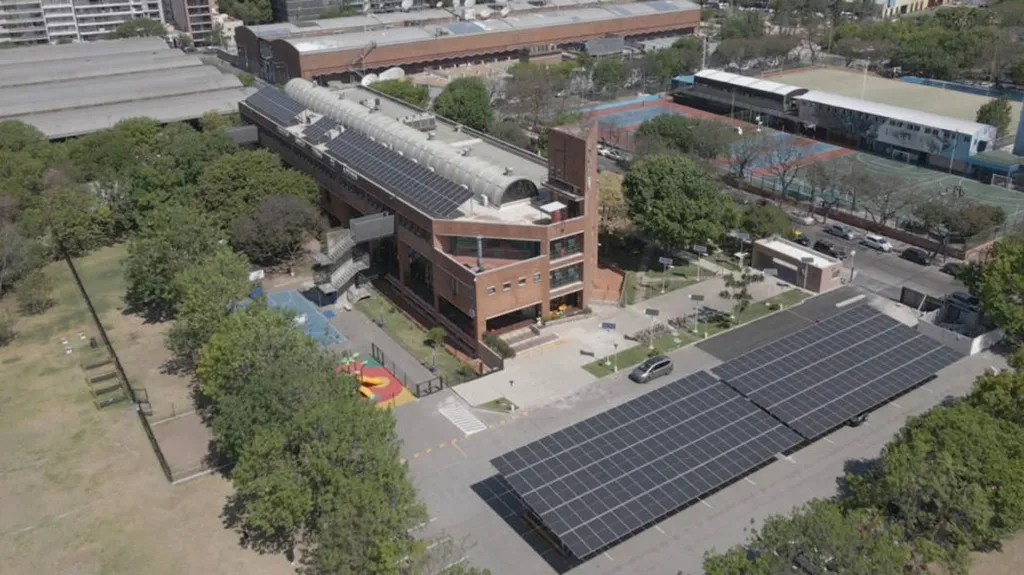
In a significant stride towards sustainable transportation and energy independence, researchers from the Centro de Investigación y Transferencia de Rafaela CONICET-UNRaf in Argentina have designed a standalone electric vehicle (EV) charging station for the Universidad Nacional de Rafaela (UNRaf) campus. This innovative project, led by Juan Pablo Cecchini, not only addresses the growing demand for EV infrastructure but also serves as a model for off-grid, renewable energy solutions.
The charging station, designed to cater to both bicycles and light electric vehicles, will be situated in an area of the campus earmarked for future development. Instead of relying on the public power grid, the station will operate as an isolated microgrid, powered entirely by solar energy. This approach not only promotes sustainable transportation but also reduces greenhouse gas emissions, aligning with global efforts to combat climate change.
The research, published in the International Journal of Renewable Energy Development (translated as ‘International Journal for the Development of Renewable Energy’), highlights the economic viability of renewable energy solutions. Using Homer Pro software for calculations, the team found that a 100% renewable solution was the most cost-effective option. The proposed system includes a 15-kW solar array expected to generate 22,922 kWh per year, along with a battery bank consisting of 30 batteries of 3 kWh each and a single battery of 1 kWh.
“This project demonstrates that renewable energy can be a practical and economical solution for powering EV charging stations,” said Cecchini. “By integrating renewable energy into campus infrastructure, we can promote sustainable practices and reduce our carbon footprint.”
The implications of this research extend beyond the university campus. As the demand for EVs continues to grow, so does the need for innovative charging solutions. Off-grid, renewable energy-powered charging stations could play a crucial role in expanding EV infrastructure, particularly in remote or underserved areas. Moreover, this model could be replicated in other settings, such as parking lots, rest areas, and commercial centers, contributing to a more sustainable and resilient energy landscape.
“This is not just about providing a convenient place to charge vehicles,” explained Cecchini. “It’s about showcasing the potential of renewable energy and inspiring others to adopt similar solutions. By doing so, we can accelerate the transition to a low-carbon future.”
As the energy sector continues to evolve, projects like this one serve as a testament to the power of innovation and the potential of renewable energy. By thinking outside the box and embracing new technologies, we can create a more sustainable and resilient energy future for all.