
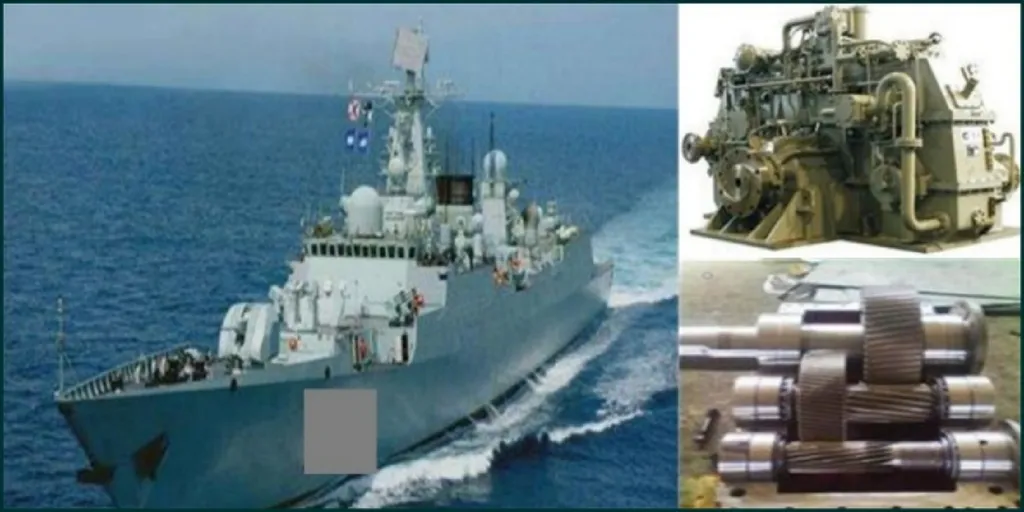
In the world of naval engineering, the quest for efficiency and durability in power transmission systems is unending. A recent study published in *Mechanical Sciences* (translated from Chinese as *机械科学*) by J. Ruan of Huaqiao University’s School of Mechatronics and Automation sheds new light on how micro-textured surfaces can enhance the performance of warship power rear transmission systems (PRTS). The research focuses on the meshing load-bearing characteristics of micro-textured thermoelastic hydrodynamic lubrication (TEHL) interfaces, a critical component in the PRTS.
Gears in these systems are subjected to alternating loads, which can lead to significant contact stresses. Traditional models often overlook the dynamic changes in the micro-convex peak (MCP) base diameter, treating it as a constant. This oversight can result in analytical values that deviate from real-world data. Ruan’s study addresses this gap by proposing a generalized TEHL contact load-bearing model that accounts for interface micro-texture (IMT).
“The current elastoplastic interface load-bearing contact model ignores the time-dependent changes in the textured element micro-convex peak base diameter,” Ruan explains. “This inconsistency leads to deviations in the load-bearing analytical values from actual data. Our model aims to correct this by representing the contact area between all MCPs across the MTMI with an equivalent scale factor parameter and modifying the shape distribution density function.”
The research derives a mathematical model of meshing anti-scuffing load-bearing capacity (ASLBC) in a TEHL steady state, revealing the correlation between contact stiffness and damping of the meshing MTMI under alternating loads. This provides a theoretical basis and data reference for improving the homogeneous interface enriched lubrication (IEL) effect and enhancing the meshing ASLBC of the contact IMT for the PRTS.
The implications for the energy sector are substantial. Improved load-bearing models can lead to more efficient and durable transmission systems, reducing maintenance costs and downtime for naval vessels. As Ruan notes, “This research offers a pathway to enhancing the performance and longevity of critical components in power transmission systems, which is crucial for both military and commercial applications.”
The study not only advances our understanding of micro-textured surfaces but also sets the stage for future developments in lubrication and load-bearing technologies. By providing a more accurate model, Ruan’s work could inspire innovations in material science and engineering, ultimately benefiting a wide range of industries beyond naval engineering.
As the energy sector continues to evolve, the insights from this research will be invaluable in driving progress and ensuring the reliability of power transmission systems. The publication in *Mechanical Sciences* underscores the significance of this work, highlighting its potential to shape the future of mechanical engineering and beyond.