
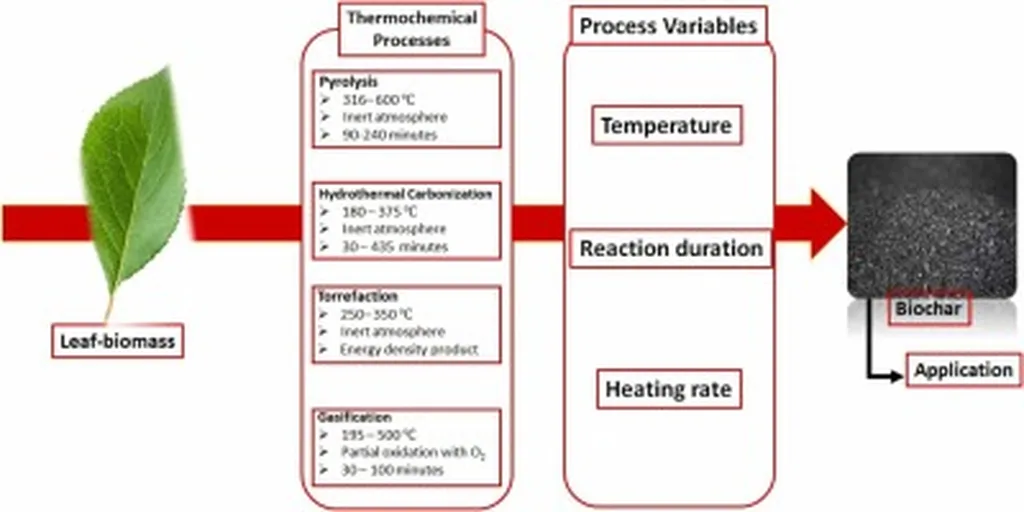
In a significant stride towards harnessing renewable energy, researchers have demonstrated the potential of biochar derived from mixed tree leaves as a viable substitute for conventional fuels in high-temperature industrial processes. The study, led by Segun E. Ibitoye from the School of Technology at Woxsen University in Hyderabad, India, explores the energy potential of biochar produced through slow pyrolysis in a pilot-scale fixed-bed reactor.
The research, published in the International Journal of Renewable Energy Development (translated as “Journal of Renewable Energy Development”), focuses on the thermochemical conversion of biomass, a process that offers a promising alternative to fossil fuels. By subjecting mixed tree leaves to pyrolysis at temperatures of 400, 500, and 600 °C, the team observed notable trends in the yields of bio-oil, syngas, and char. As the temperature increased, bio-oil and syngas yields rose, while char yield decreased.
The biochars produced, particularly at 600 °C, exhibited high heating values (HHV) of up to 23.32 MJ/kg, a significant figure for the energy sector. “The biochars, especially Char600, showed enhanced porosity and carbon content, making them suitable for partial substitution or co-injection in metallurgical processes,” Ibitoye explained. While slightly lower than traditional metallurgical coke, the biochars’ potential to reduce carbon footprints in heavy industries is substantial.
The study’s findings suggest that biochar from mixed tree leaves could play a pivotal role in the energy transition. “This research opens up new avenues for utilizing biomass waste, transforming it into a valuable resource for energy generation,” Ibitoye added. The enhanced properties of the biochars, including improved fixed carbon and surface areas, highlight their potential as renewable solid fuels.
As the world seeks sustainable solutions to meet energy demands, this research offers a glimpse into the future of biomass energy. The commercial impacts for the energy sector are profound, with biochar presenting a cost-effective and eco-friendly alternative to conventional fuels. By leveraging the energy potential of biochar, industries can reduce their reliance on fossil fuels and contribute to a greener, more sustainable future.
The study’s insights are particularly relevant for heavy industries looking to lower their carbon emissions. The enhanced porosity and carbon content of the biochars make them ideal for high-temperature processes, offering a renewable and efficient energy source. As the energy sector continues to evolve, the integration of biochar from mixed tree leaves could become a cornerstone of sustainable energy practices.
In conclusion, this research not only advances our understanding of thermochemical conversion processes but also paves the way for innovative energy solutions. The potential of biochar as a renewable solid fuel is immense, and its commercial impacts could reshape the energy landscape. As industries strive for sustainability, the findings of this study offer a promising path forward, highlighting the importance of biochar in the energy transition.